
Last updated September 20, 2026
Full 25-point door and opener safety check with every visit - springs, cables, rollers, tracks, and your LiftMaster or Chamberlain opener included
You get a price before we start. It does not change when the truck arrives.
 Before
 After
After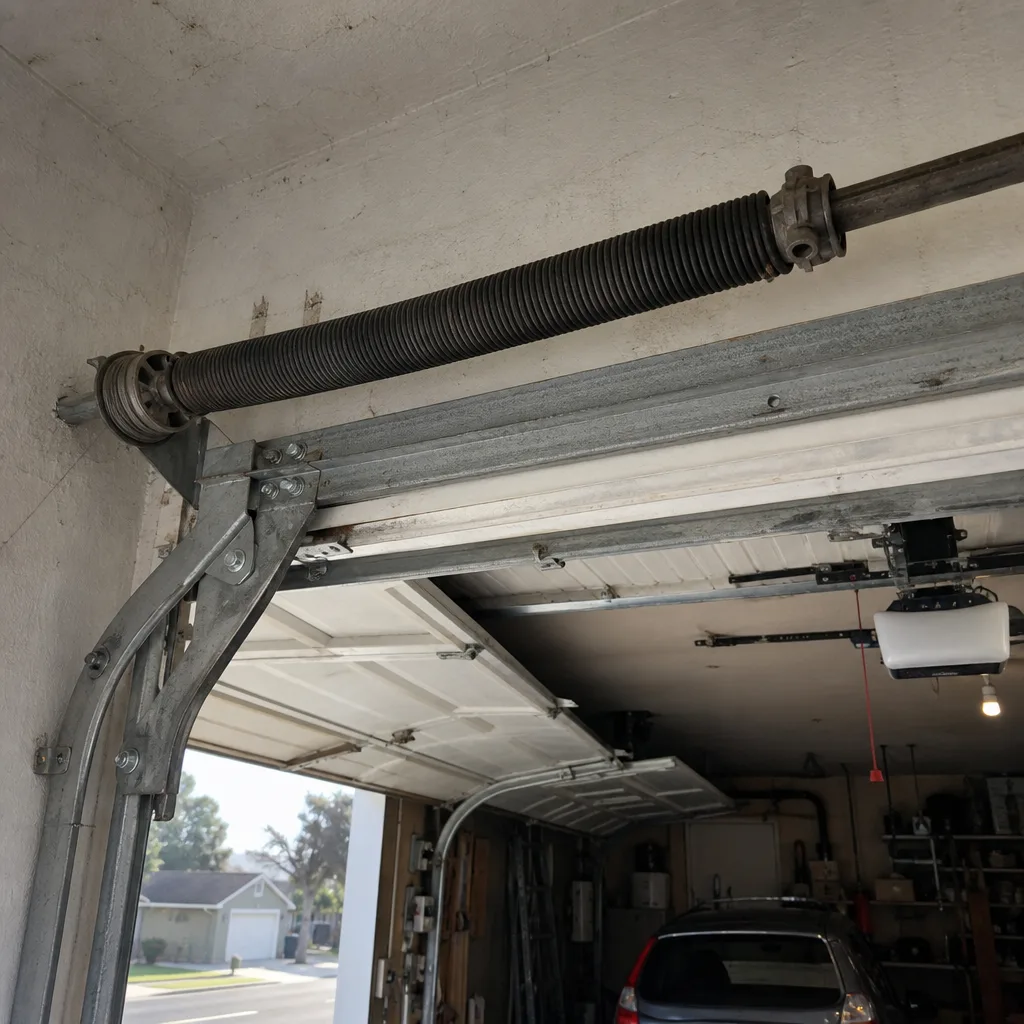 Before
 After
After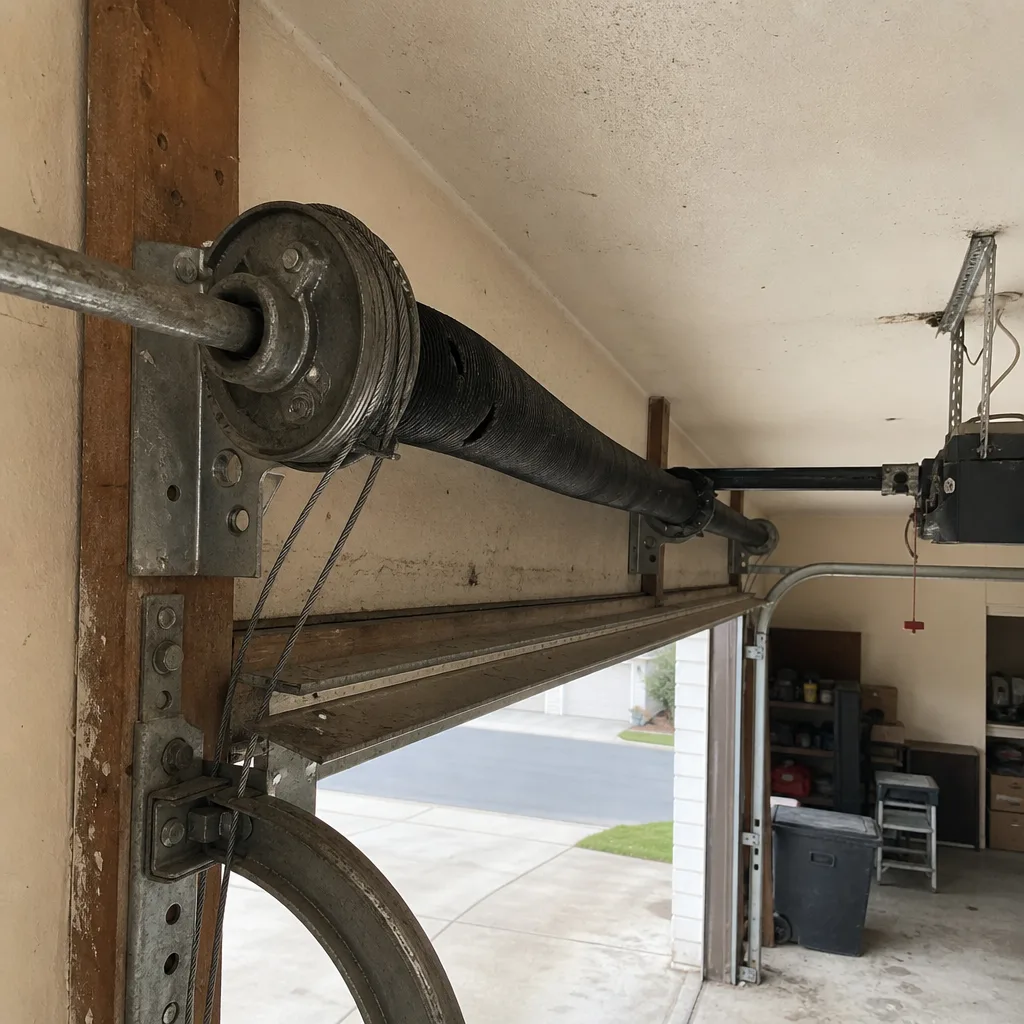 Before
 After
AfterGarage Door Warning Signs: A Ontario Homeowner’s Reference Guide
Here’s a number most Ontario homeowners don’t expect: a garage door spring rated for 10,000 cycles lasts between seven and nine years in a typical household. Most doors in Ontario neighborhoods like Creekside and Park Place are cycling well past that mark by the time anyone notices something’s off. This guide maps each warning sign to the component that’s actually failing, explains how urgent the repair is, and gives you a dollar range before you pick up the phone. By the time you finish reading, you’ll know whether you’re looking at a $15 alignment or a $350 spring replacement, and you’ll know exactly which questions to ask any technician who shows up at your door.
Quick Answer
The most common garage door warning signs in Ontario are a door that reverses mid-travel, a visible gap in a torsion spring, grinding or squealing noises during operation, a door that moves unevenly or sags on one side, and an opener that runs but doesn’t move the door. Each symptom points to a specific component: springs, cables, rollers, limit switches, or the opener’s drive mechanism. Repair costs in Ontario typically range from $85 for a photo-eye realignment to $350 for a torsion spring replacement, and safety-critical failures like asymmetric cable tension or a broken spring require immediate work stoppage, not monitoring.
Table of Contents
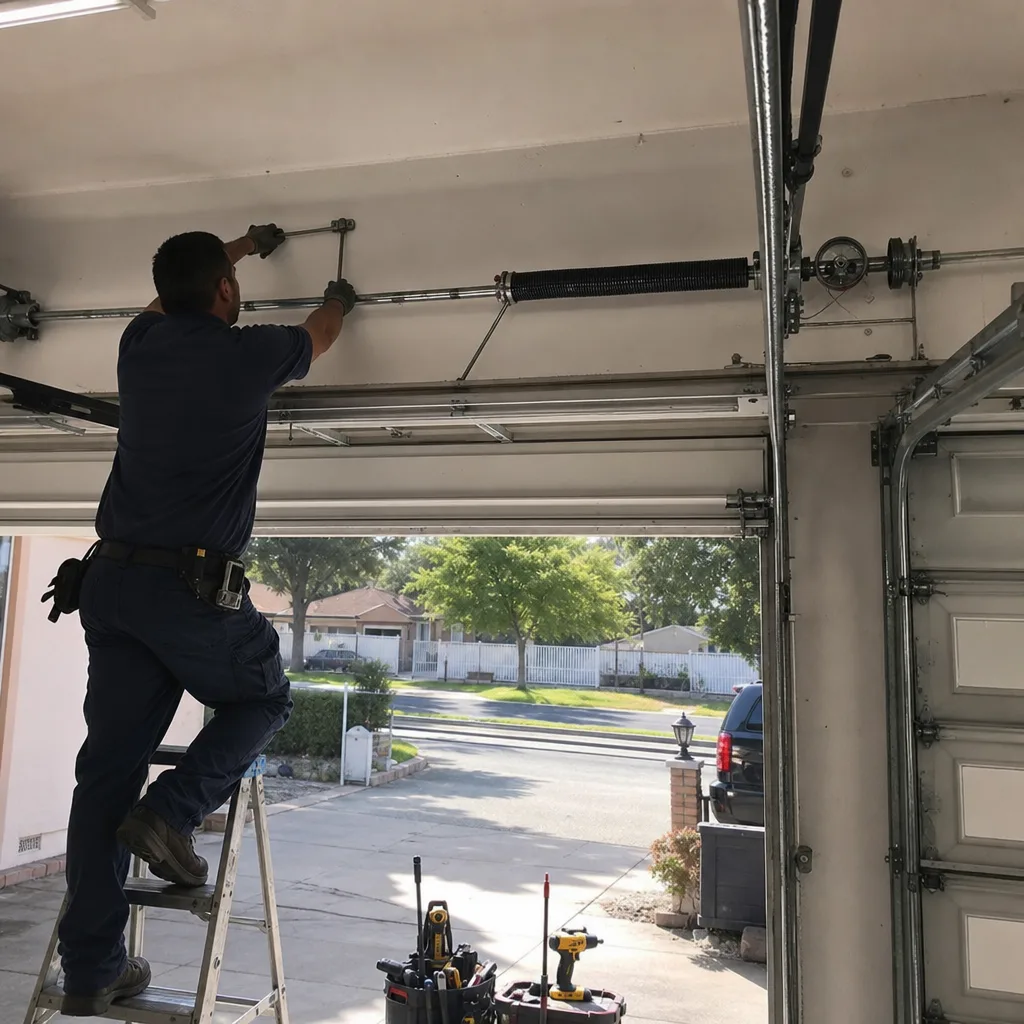
- Symptom-to-Component Mapping: What’s Actually Failing
- Slow vs. Struggling: The Difference That Saves You a Spring
- Noise Classification: Grinding, Squeaking, and Popping
- Visual Indicators on the Spring: What an Imminent Break Looks Like
- Safety-Critical Warning Signs: When to Stop Using the Door
- Opener-Specific Warning Signs
- Common Mistakes to Avoid
- When to Call a Professional
- Frequently Asked Questions
- The Bottom Line
BeforeAfterSymptom-to-Component Mapping: What’s Actually Failing
A garage door rarely fails without warning, but the warning usually points somewhere other than where homeowners assume. When your door reverses halfway up in Ontario, the cause isn’t always the spring. It can be a limit switch on the opener, a misaligned photo eye, or a small obstruction in the track, and the diagnostic step you skip first determines whether you pay $15 or $350. The table below maps each symptom to its most likely failed part, the secondary possibility, and how urgently you need to act.
| Symptom | Most Likely Component | Secondary Possibility | Urgency Tier |
|---|---|---|---|
| Door reverses before closing fully | Misaligned photo eye sensors | Obstruction in track or worn limit switch | Safety-stop (same day) |
| Door opens slowly, then stops | Worn torsion spring (loss of tension) | Opener motor capacitor failing | Schedule soon (within 2 weeks) |
| Loud popping or snapping sound | Torsion spring break | Cable snap | Safety-stop (do not operate) |
| Door sags on one side when open | Asymmetric cable tension | Bent track section or worn roller | Safety-stop (do not operate) |
| Squeaking during operation | Dry or worn rollers | Loose hinge hardware | Monitor (schedule at convenience) |
| Grinding noise with vibration | Worn roller bearings | Opener drive gear stripped | Schedule soon (within 1 week) |
| Opener runs, door doesn’t move | Disconnected trolley carriage | Stripped drive gear or broken spring | Safety-stop (same day) |
| Visible gap in spring coil | Torsion spring fracture | N/A (single failure point) | Safety-stop (do not operate) |
One pattern stands out when you read the table top to bottom: four of the eight most common symptoms are safety-stop tier. In Ontario, where summer heat accelerates metal fatigue on springs and rollers, we see these failures cluster between June and September. A spring that sits in a 95-degree garage all day loses tension faster than one in a 70-degree garage. The takeaway is simple: if the door behaves differently than it did last month, figure out which component is talking before you keep using it.
For a deeper look at what happens during a repair visit, our Garage Door Repair in Ontario guide walks through the diagnostic process step by step.
Slow vs. Struggling: The Difference That Saves You a Spring
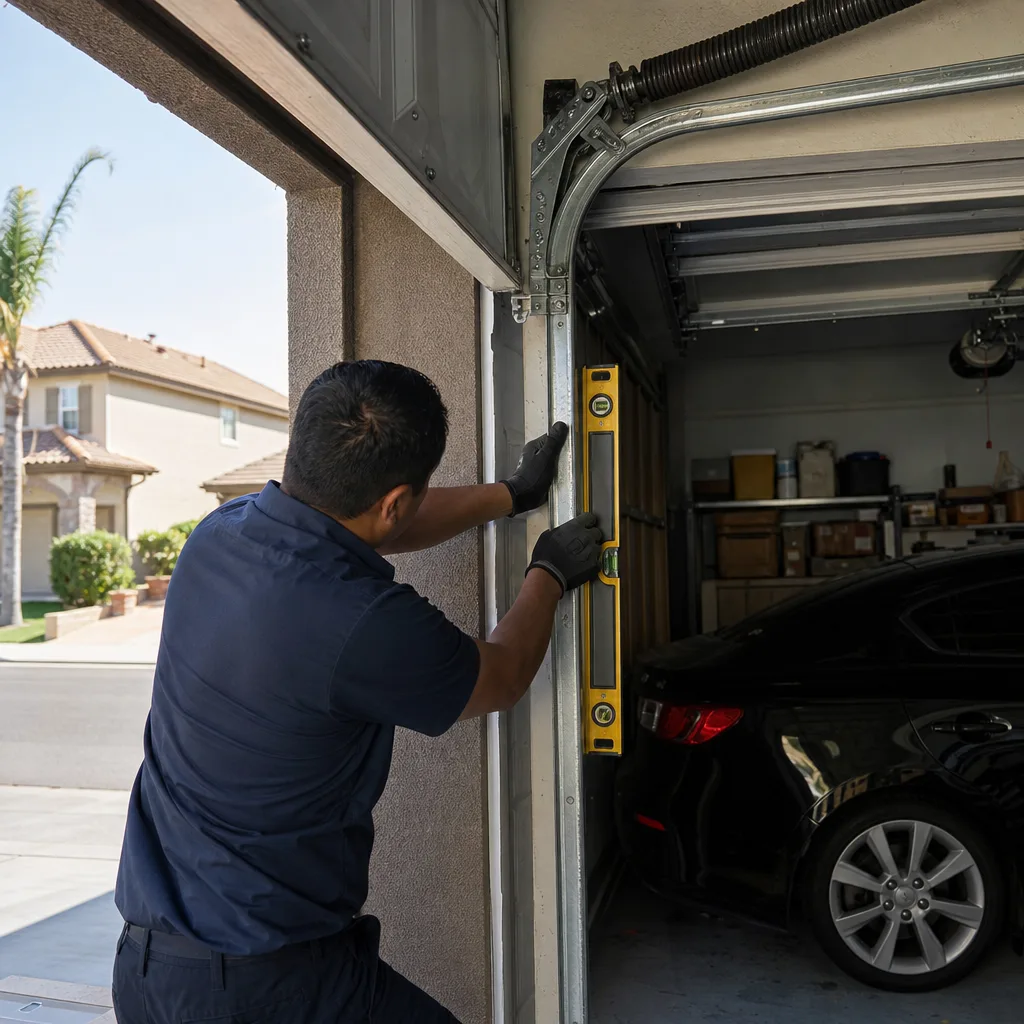
A slow door and a struggling door are not the same thing, and the distinction matters more than most homeowners in Ontario realize. A slow door moves at a consistent pace: it’s slower than it used to be, but it travels smoothly from closed to open. A struggling door hesitates, stutters, or slows noticeably at specific points in its travel. The first condition points to an opener issue. The second points to a spring nearing end-of-life.
Here’s why this matters. A torsion spring works by storing mechanical energy under tension. When the spring is healthy, it does most of the lifting and the opener motor just guides the door along the track. As the spring loses tension through normal cycling, the opener motor picks up more and more of the load. A struggling door is a spring that’s asking the motor to do a job it was never sized for. You’re not hearing an opener problem when the door hesitates halfway up. You’re hearing a spring that’s lost roughly 40 to 60 percent of its tension.
In our experience across Ontario, a door that struggles at the halfway point is the single most reliable predictor of a spring break within the next 60 to 90 days. The spring hasn’t failed yet, but the smooth motion you remember is gone and it’s not coming back. The replacement cost for a standard torsion spring in Ontario runs between $180 and $340 installed, depending on wire diameter and cycle rating. That’s a small price compared to the alternative: a door that lets go while open, drops onto a car or a person, and turns a $300 spring job into a $1,200 track-and-panel replacement.
One more distinction worth making. A slow door with a humming opener and no visible spring damage usually points to a worn capacitor or a tired motor on the opener unit itself. That’s a different diagnostic path and a different cost tier. If you’re unsure which category yours falls into, watch the door move twice: once from inside the garage, once from outside. A struggling door will show visible hesitation on the track. A slow door won’t. That single observation tells a technician more than you might expect, and it’s exactly the kind of information that makes a phone call shorter and a repair visit faster.
If you’re seeing signs of spring wear and want to understand the replacement process before committing, our guide to Garage Door Installation in Ontario covers spring sizing, cycle ratings, and what a documented replacement looks like.
Noise Classification: Grinding, Squeaking, and Popping
Garage doors make three distinct families of noise, and each one maps to a different component and a different cost tier. Learning to identify which sound you’re hearing is the fastest way to know whether you’re dealing with a $15 maintenance item or a $350 mechanical failure.
Grinding: The Sound of Metal Wearing Against Metal
Grinding is the noise that makes you wince because you can feel it in the wall. It’s low-pitched, rough, and accompanied by vibration. The most common cause is a roller bearing that has failed: the steel wheel still turns, but the internal ball bearings are shot, and the roller is now scraping along the track instead of rolling. Grinding can also come from a stripped drive gear in a chain-drive opener, where the plastic gear teeth have worn down and the chain is slipping over them. Roller replacement in Ontario typically runs $85 to $150 for a full set of ten to twelve rollers. A stripped drive gear is more expensive: $150 to $250 for the gear itself plus labor, because the opener must be disassembled to access it. Continued operation with a grinding roller will score the track, and a scored track means a track replacement, which pushes the total repair past $400.
Squeaking: Friction Without Lubrication
Squeaking is high-pitched, repetitive, and usually tied to the door’s speed. It comes from dry hinges, dry rollers, or a lack of lubrication where the torsion spring coils rub against themselves. The fix is often a service visit: clean the tracks, lubricate the moving parts with a garage-door-specific lithium or silicone lubricant, and tighten any loose hinge bolts. This is the least urgent noise category and the least expensive to address. In Ontario, a full lubrication and hardware tightening visit runs $75 to $120. The caveat: if the squeak persists after lubrication, the roller bearings are already worn, and you’re back in the grinding category. Lubrication masks wear. It doesn’t reverse it.
Popping: The Sound You Never Want to Hear
A popping or snapping sound is the unmistakable signature of a torsion spring breaking. When the spring fractures under tension, the stored energy releases instantly and produces a sound like a gunshot or a heavy door slam. After the pop, the door often won’t lift at all, or it lifts a few inches and drops. If you hear a pop, stop using the door immediately. Do not try to open it manually. Do not run the opener. Call for Garage Door Repair in Ontario service, and be prepared to describe the sound exactly as you heard it. A technician who knows the spring broke can arrive with the correct replacement parts on the truck. That’s the difference between a one-visit repair and a two-visit one.
Our team at Servo Garage Doors Ontario always asks the same question when someone reports a noise: what does it sound like when you’re standing at the wall, not outside the garage? The answer to that question tells us which parts to load before we drive out, and it saves you time on a second trip for parts.
Visual Indicators on the Spring: What an Imminent Break Looks Like
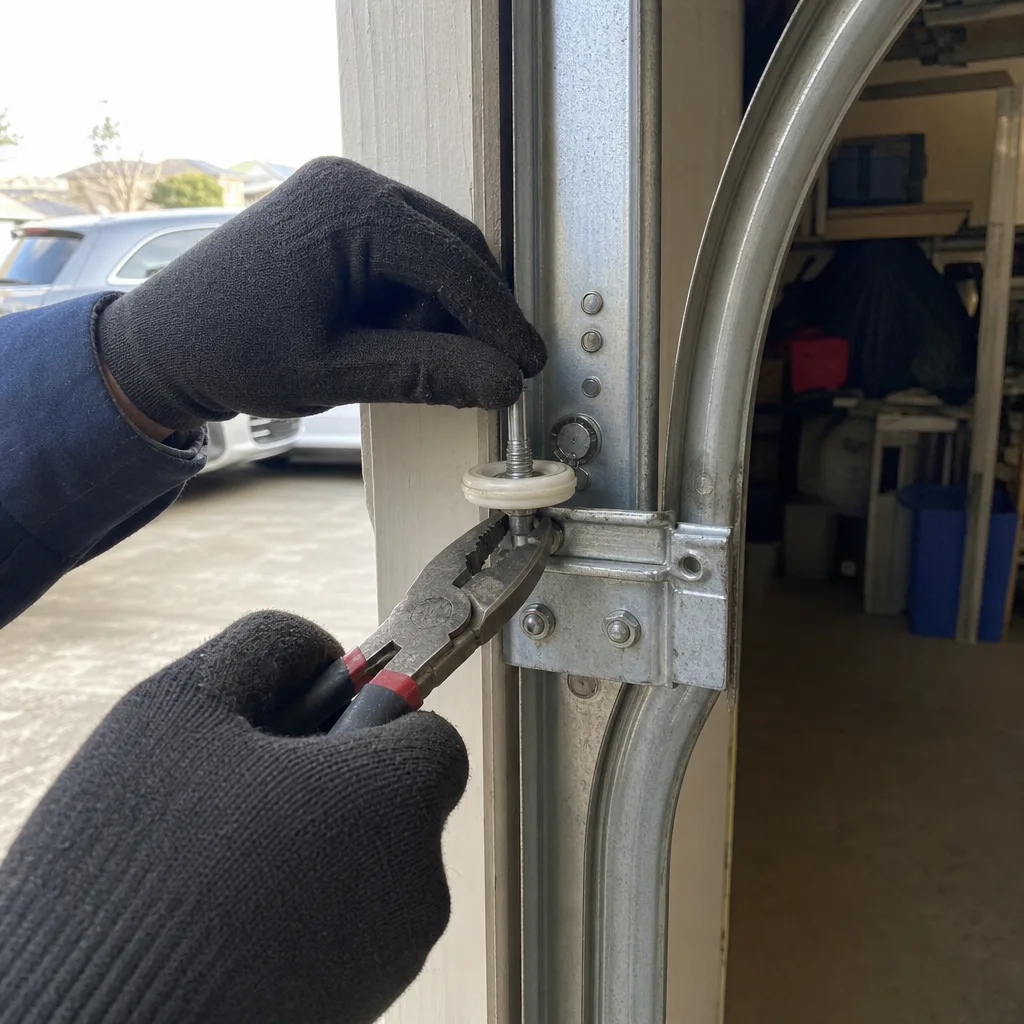
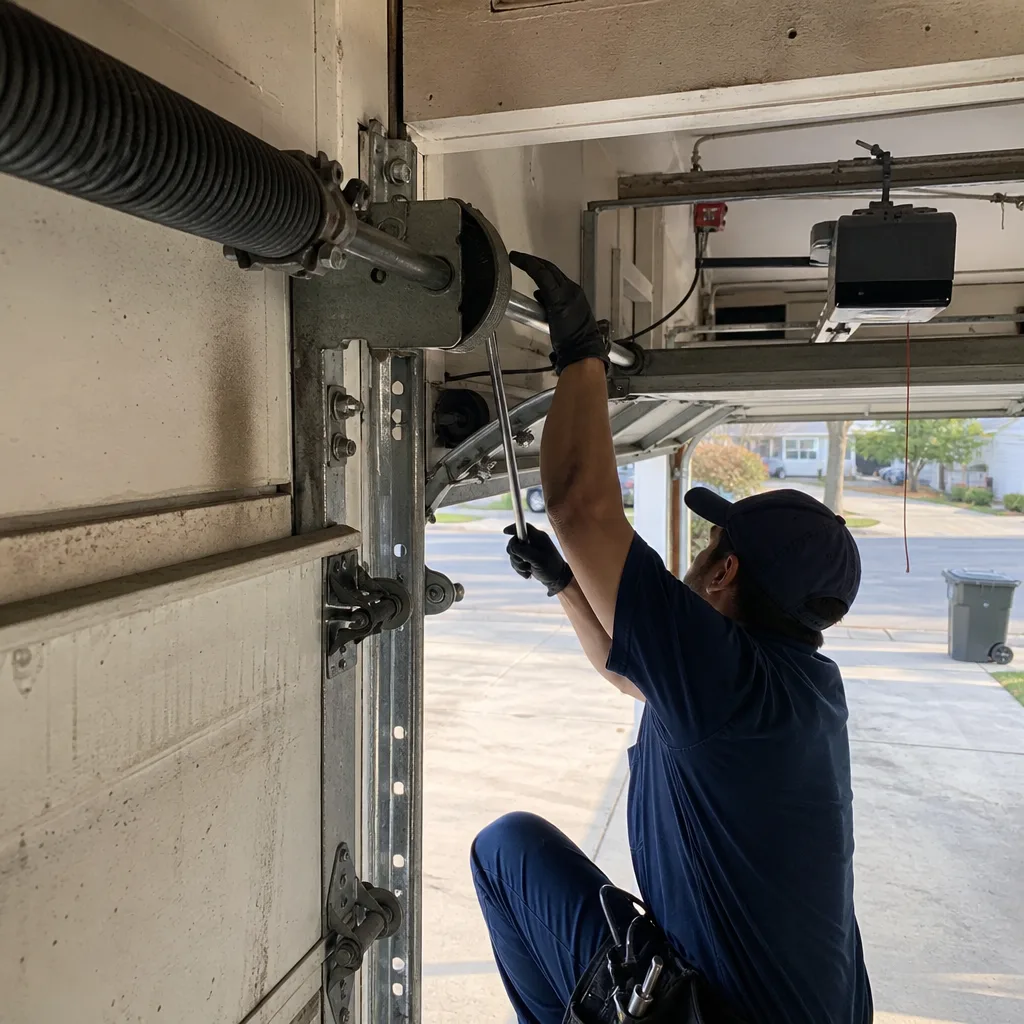
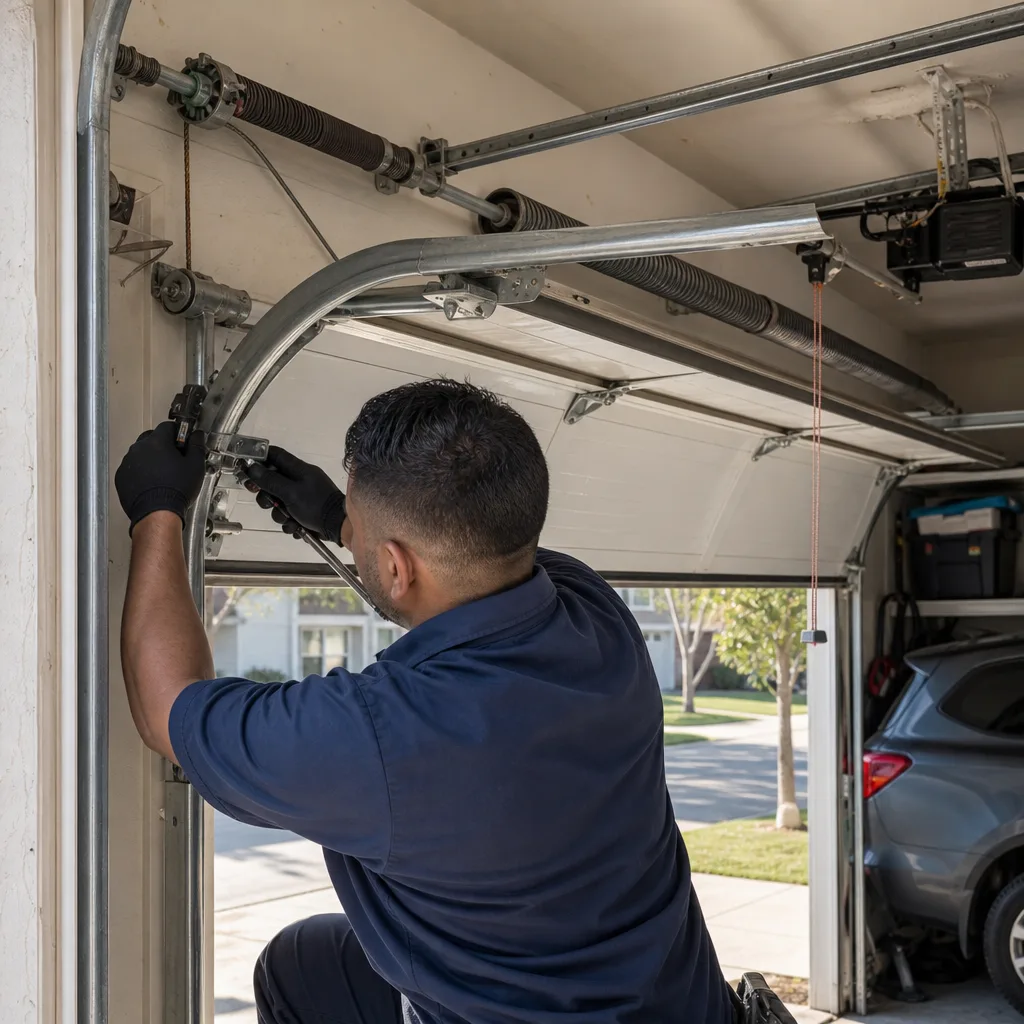
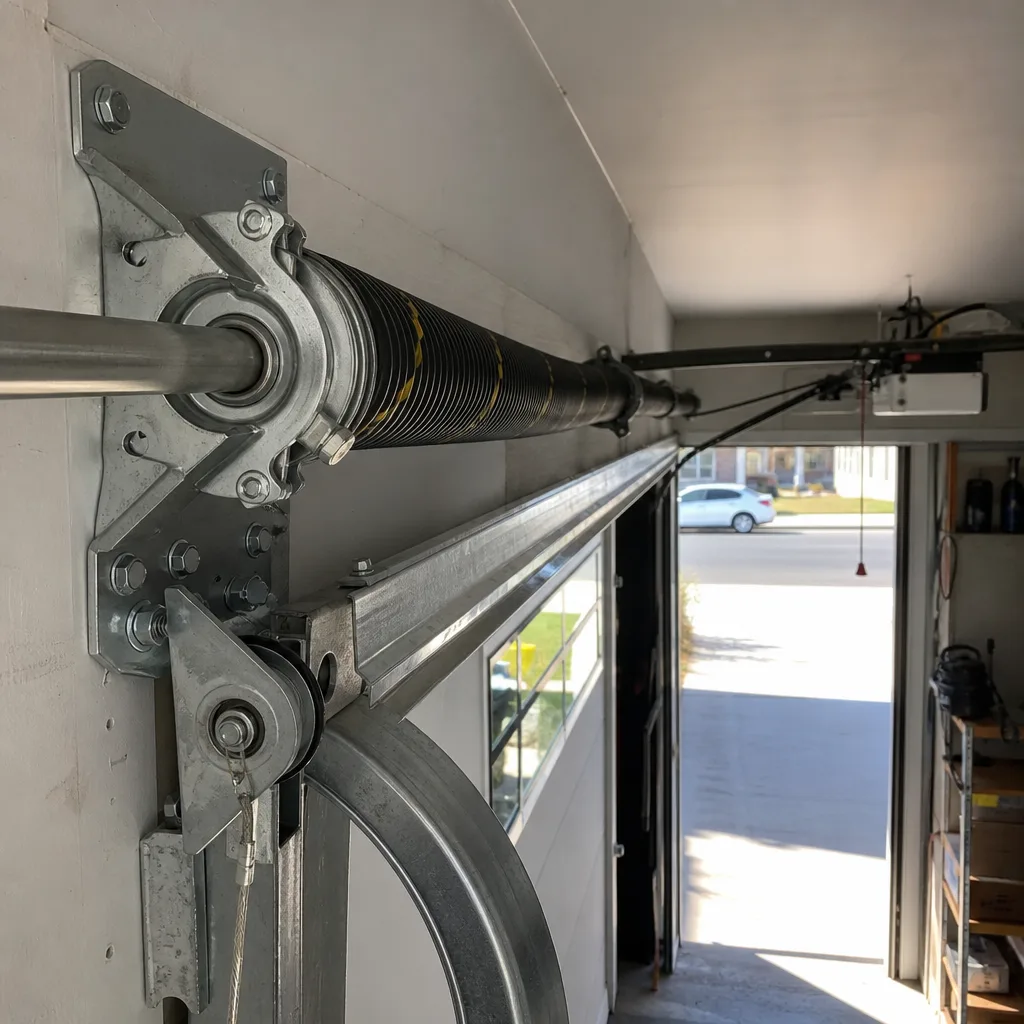
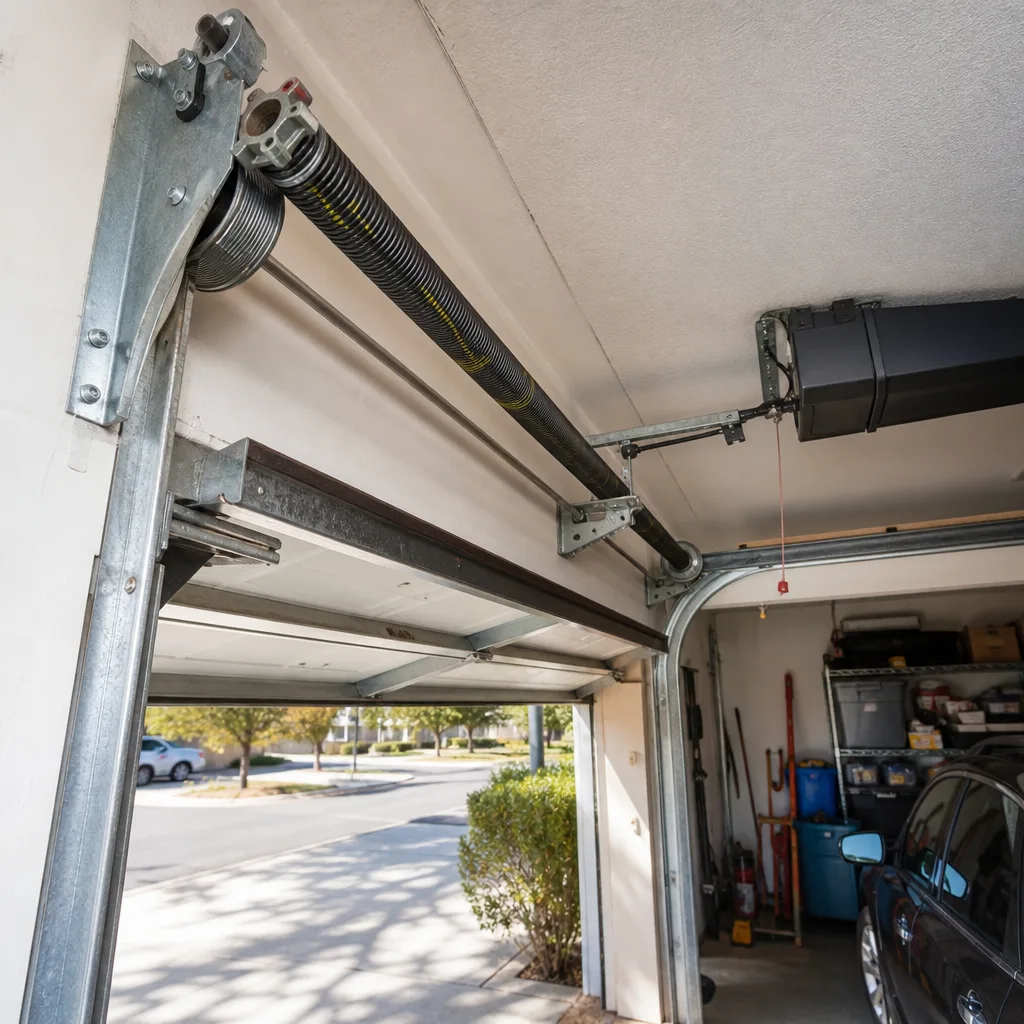
You don’t need to touch the spring to assess it. You need to look at it, and you need to know what you’re looking for. A torsion spring is the long, tightly wound coil mounted above the door opening, usually on a steel shaft. When it fails, it fails at the coil, and the warning signs are visible long before the break happens.
Here’s a numbered inspection you can do in under five minutes, standing safely on the garage floor with the door closed. We never recommend removing the spring or touching it while under tension. This is a look, not a touch.
- Check for a visible gap in the coil. A healthy torsion spring is a continuous spiral with no daylight between the coils. If you can see a gap, the spring has already fractured and is no longer holding tension. This door is not safe to operate. Stop using it immediately.
- Look for rust pitting on the wire surface. Rust is not cosmetic. Pitting creates stress risers in the steel wire, and stress risers are where fatigue cracks start. A spring with visible rust pitting is a spring that’s borrowed time you didn’t know you were spending. In Ontario’s dry summer heat, rust forms from humidity swings between day and night, then accelerates when the metal cools.
- Compare both springs if you have two. Most modern doors use a two-spring system, one on each side of a center plate. If one spring shows a gap or heavy rust and the other doesn’t, the door is now unbalanced even if it still moves. Unbalanced doors wear out rollers, cables, and hinges faster, and they’re more likely to drop during operation.
- Look at the spring mounting cone. The cone is the cast-metal piece at each end of the spring that connects it to the shaft or the center plate. If the cone has pulled away from the spring end, the spring has unwound on that side. This is just as serious as a visible gap in the coil, even if the spring itself looks intact.
The cycle rating matters here too. A standard spring in Ontario is usually a 10,000-cycle spring, and most garage doors cycle four to six times per day. That’s roughly five to seven years of life. If your door was installed in 2016 and you’ve never replaced the springs, you’re at or past the expected service life, and the visual inspection is the way to confirm it before the break confirms it for you.
We photograph every spring we replace and include that photo in the record we leave with you. Clause 4 of The Haven Standard is why: if we’re going to replace a part, you see the failed part first, with your own eyes, before a single dollar is quoted. Our Garage Door Repair in Ontario page explains that process in more detail.
Safety-Critical Warning Signs: When to Stop Using the Door
Some warning signs are not warnings. They are stop signs. The difference matters because continuing to use a garage door with one of these conditions present is how cars get dented, fingers get pinched, and in the worst cases, how a person gets seriously hurt. Here are the four conditions in Ontario that require immediate work stoppage and a professional visit, not observation and not a wait-and-see weekend.
1. Broken Torsion Spring
A broken spring is not a partial failure. It’s a complete loss of the counterbalance system. The door weighs between 130 and 250 pounds, and the opener motor wasn’t designed to lift that dead weight. Attempting to run the opener with a broken spring can strip the drive gear in under thirty seconds, adding a $200 opener repair on top of the spring replacement. Do not operate the door. Do not try to lift it manually. A door with a broken spring has no counterbalance, and if it slips from your hands, it falls with the full force of its weight.
2. Asymmetric Cable Tension
Look at the lift cables, the steel cables that run along both sides of the door and wrap around the drums at the top. If one cable is slack while the other is taut, the door is lifting unevenly. It will bind in the track, stress the rollers, and can jump the track entirely if forced to complete a cycle. A door that jams off its track with the cables under tension is a hazard to anyone standing nearby. This condition requires service before the next operation.
3. Reversed Bottom Bracket
The bottom bracket is the steel fixture at the bottom corner of the door where the lift cable attaches. If this bracket has bent backward or pulled away from the door section, the cable is no longer anchored correctly. The result is an unpredictable load on the remaining cable and hardware. A bottom bracket that fails under tension can snap the cable explosively, and that cable can whip across the garage. The forces here are not trivial. This is a stop-using-the-door condition.
4. Door Drops When Released
The correct behavior for a door in good order is to stay put when you release it at the halfway point. If you disconnect the opener and the door drops, the spring has lost so much tension that it can no longer hold the door’s weight. This is the same underlying failure as a broken spring, just not as far along. Stop using the door and schedule service.
High-tension garage door springs and cables carry enough stored energy to cause serious injury if mishandled. We always recommend a trained professional handle this work. If you’re in Ontario and you’re looking at any of these four conditions, call us at (951) 470-2012. We’ll send a technician who can tell you over the phone what to expect, and who arrives with the parts to make the repair in one visit.
Opener-Specific Warning Signs
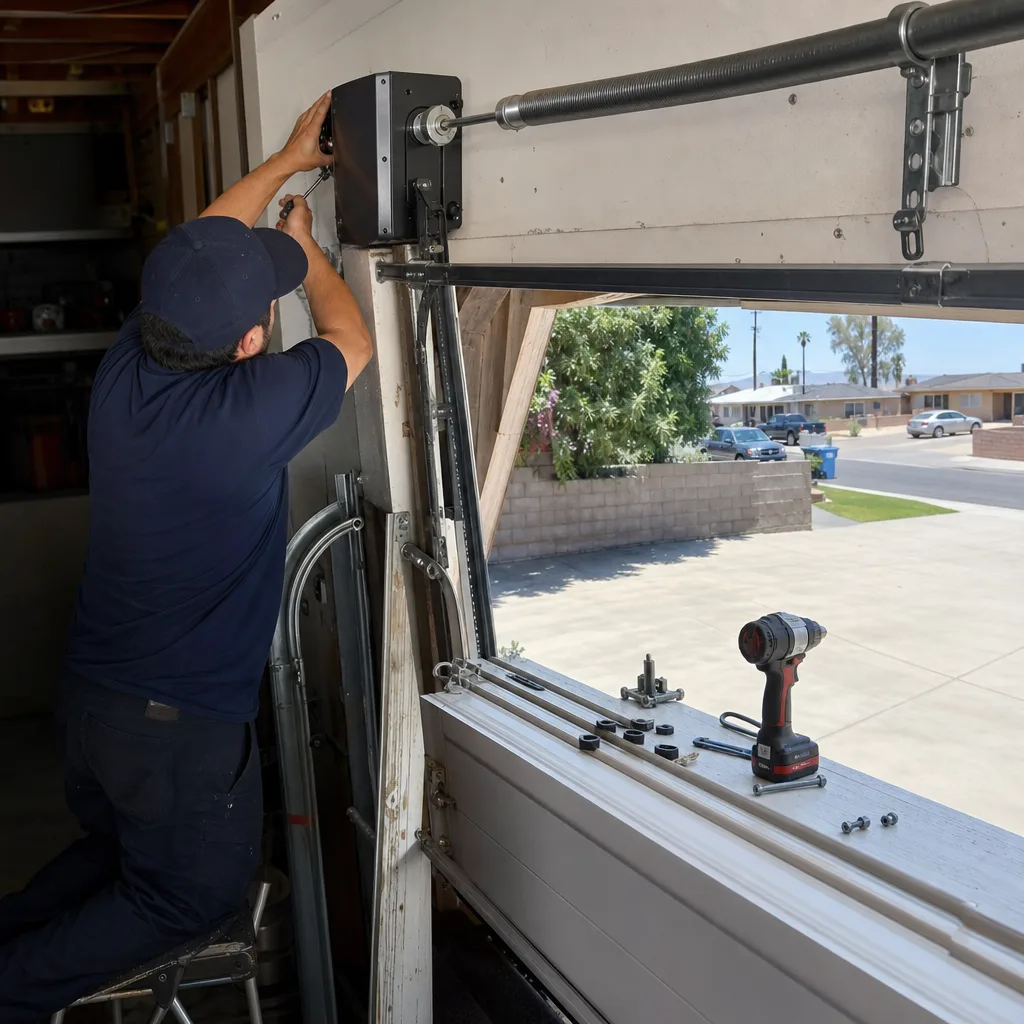
Openers fail differently than doors, and the warning signs are easier to miss because they’re quieter and less dramatic. The good news is that opener problems are almost always repairable without replacing the entire unit, provided you catch them before the damage cascades. Here’s what to watch for in Ontario’s climate, where heat and humidity both take a toll on opener components.
The opener runs but the door doesn’t move. The motor hums, the chain or belt doesn’t turn, and the door stays put. The most common cause is a stripped drive gear inside the motor housing, usually on chain-drive openers from Chamberlain, LiftMaster, or Craftsman. The plastic gear is designed to be sacrificial: it fails so the motor doesn’t. Replacement runs $150 to $250 in Ontario, and it’s a straightforward repair for a technician with the right gear on board.
The opener reverses after touching the floor. This is normally a limit switch adjustment, not a mechanical failure. The limit switch is a small internal component that tells the opener where “closed” is. When it drifts or gets bumped, the opener thinks the floor is six inches higher than it actually is. The fix is a ten-minute adjustment, and a service call for this runs $75 to $100. But skip it too long and the opener will slam the door into the ground, which is hard on the panels, the hinges, and the bottom seal.
The remote only works from ten feet away. This is usually interference or a weak remote battery, but in some Ontario neighborhoods with overhead power lines or dense RF noise from nearby industrial equipment in the area near Ontario International Airport, the problem can be the opener’s receiver antenna. Repositioning the antenna wire, which hangs from the back of the motor unit, often resolves the issue. If it doesn’t, the receiver board may need replacement, which runs $100 to $180.
The opener is louder than it used to be. A well-maintained belt-drive opener from Raynor or Amarr runs at a conversational volume. A chain-drive unit is louder by design. But if your opener has gotten louder over time, the cause is usually a loose chain or a worn sprocket. Tightening the chain is a minor service item. A worn sprocket means the chain is slipping, and the fix is a new drive assembly. Left alone, a slipping chain will chew through the sprocket teeth and fail catastrophically, usually when the door is halfway up and you’re parked underneath.
If your opener is exhibiting any of these signs and you’re weighing repair against replacement, our Garage Door Opener Repair & Installation in Ontario page breaks down the cost differences and helps you make the call with actual numbers on the table.
Common Mistakes to Avoid
Every one of these mistakes has happened to a homeowner in Ontario. Most of them are avoidable with the right information, and all of them cost more money than the mistake they were meant to prevent.
- Using the opener with a broken spring. The motor will strip its own drive gear trying to lift a door it was never meant to lift alone. A $300 spring replacement becomes a $500 spring-and-opener repair within thirty seconds of run time.
- Lubricating a grinding roller instead of replacing it. Lubricant can quiet a failing bearing for a few days, but the metal is already worn. The grinding comes back, and by then the roller has scored the track. A scored track can’t be repaired, only replaced.
- Ignoring a door that sags on one side. Asymmetric cable tension doesn’t self-correct. The uneven load wears the rollers, cables, and hinges at double speed, and the door will eventually bind or jump the track.
- Attempting to replace a torsion spring yourself. These springs hold hundreds of pounds of torque, and the winding bars can slip. This is the single most dangerous DIY repair in residential home maintenance, and the hospital bill exceeds the professional repair cost every time.
- Waiting for the spring to break before calling. A spring that shows rust pitting or a visible coil gap is a spring that’s already failing. You’re betting on timing, and the bet usually loses at the worst possible moment: on a Sunday night, with your car inside the garage, in a city where evening service calls cost more.
- Assuming the door is fine because it still opens. Every component on a garage door wears incrementally. The fact that the door still moves doesn’t mean the spring isn’t at 30 percent tension or the roller bearings aren’t disintegrating. By the time the door refuses to open, multiple components have already failed.
- Taking the lowest bid without a written scope. A low price with no written scope of work is a negotiation tactic, not an estimate. You can’t hold anyone to a price they never wrote down. Our Servo Garage Doors Ontario home page explains how a written, flat-price scope works and why it’s the only way we operate.
When to Call a Professional
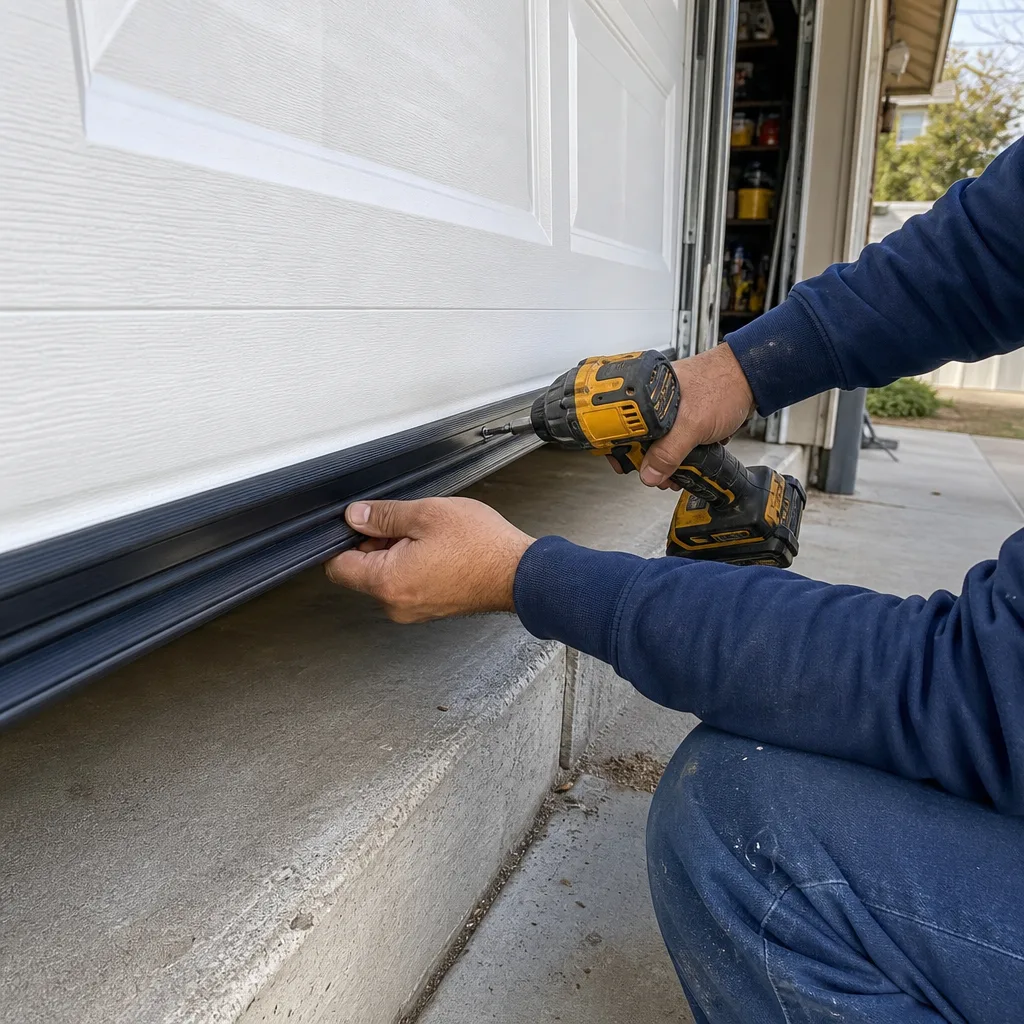
Call a professional when you see a broken spring, a visible gap in the coil, a sagging door, a slack cable, or when you hear a popping sound followed by the door refusing to move. These are not diagnostic puzzles. They are failures that require a trained technician with the right parts on the truck, and they should not wait. In Ontario, a spring replacement can usually be completed the same day when the technician arrives prepared, and that preparation depends on you describing the symptoms accurately over the phone.
Servo Garage Doors Ontario offers free estimates in Ontario, with a flat, written price and written scope delivered before any work starts, on every job, no exceptions. Call (951) 470-2012 and a real person answers, day or night. We’ll send a background-checked, uniformed technician who shows up with the documentation system that tells you exactly what was found, what it costs, and what you’ll see when we leave. The Garage Door Installation in Ontario guide explains how we handle replacements when a repair isn’t the right call.
Frequently Asked Questions
A torsion spring replacement in Ontario typically costs $180 to $340 installed, depending on the spring’s wire diameter, length, and cycle rating. This includes the spring, labor, and a balance check on the door. At Servo Garage Doors Ontario, that price is quoted before any work begins, in writing, with the scope spelled out line by line. Call (951) 470-2012 for an exact price on your specific door and spring configuration.
In most cases, yes. We carry common torsion springs, cables, rollers, and opener parts for all eight major brands we service, including LiftMaster, Chamberlain, Genie, Clopay, Amarr, Wayne Dalton, Craftsman, and Raynor. The key is accurate diagnosis before dispatch, which is why we ask detailed questions about what you’re seeing and hearing when you call. Call (951) 470-2012 and we’ll confirm same-day availability.
No. The price you agree to before work starts is the price you pay. Clause 1 of The Haven Standard requires a flat, written price and written scope delivered before any work begins, and that’s how Servo Garage Doors Ontario operates on every job. If the technician finds an additional issue during the repair, they’ll show you photographic evidence and provide a separate written price for the additional work before doing it. Nobody is obligated to pay for anything they didn’t approve in writing first.
Most common parts are on the truck when the technician arrives: springs in standard sizes, cables, rollers, hinges, bottom seals, photo eye sensors, limit switches, and opener drive gears. Ontario service calls for common repairs are completed in one visit more than 90 percent of the time at Servo. The exception is non-standard components, like a custom-sized door from a manufacturer we don’t stock in the truck. In that case, you get a written price and a specific return date before the technician leaves.
We service all eight major garage door brands: LiftMaster, Chamberlain, Genie, Clopay, Amarr, Wayne Dalton, Craftsman, and Raynor. That covers the vast majority of residential garage doors in Ontario, including older Wayne Dalton doors with TorqueMaster springs and newer Amarr and Clopay steel-panel doors. If you’re not sure what brand you have, the photo you see when we diagnose the issue will usually include the manufacturer’s label.
Once a year is the right interval for most Ontario homes, especially those with heavy usage or exposure to the temperature swings we get between summer and winter. An annual service visit includes a spring tension check, roller and hinge inspection, track alignment, lubrication, and a photo-eye test. At Servo, every annual service visit closes with a documented photo record, so you can see exactly what was checked and what the technician observed. That record is your evidence of what condition the door was in on that date.
The Bottom Line
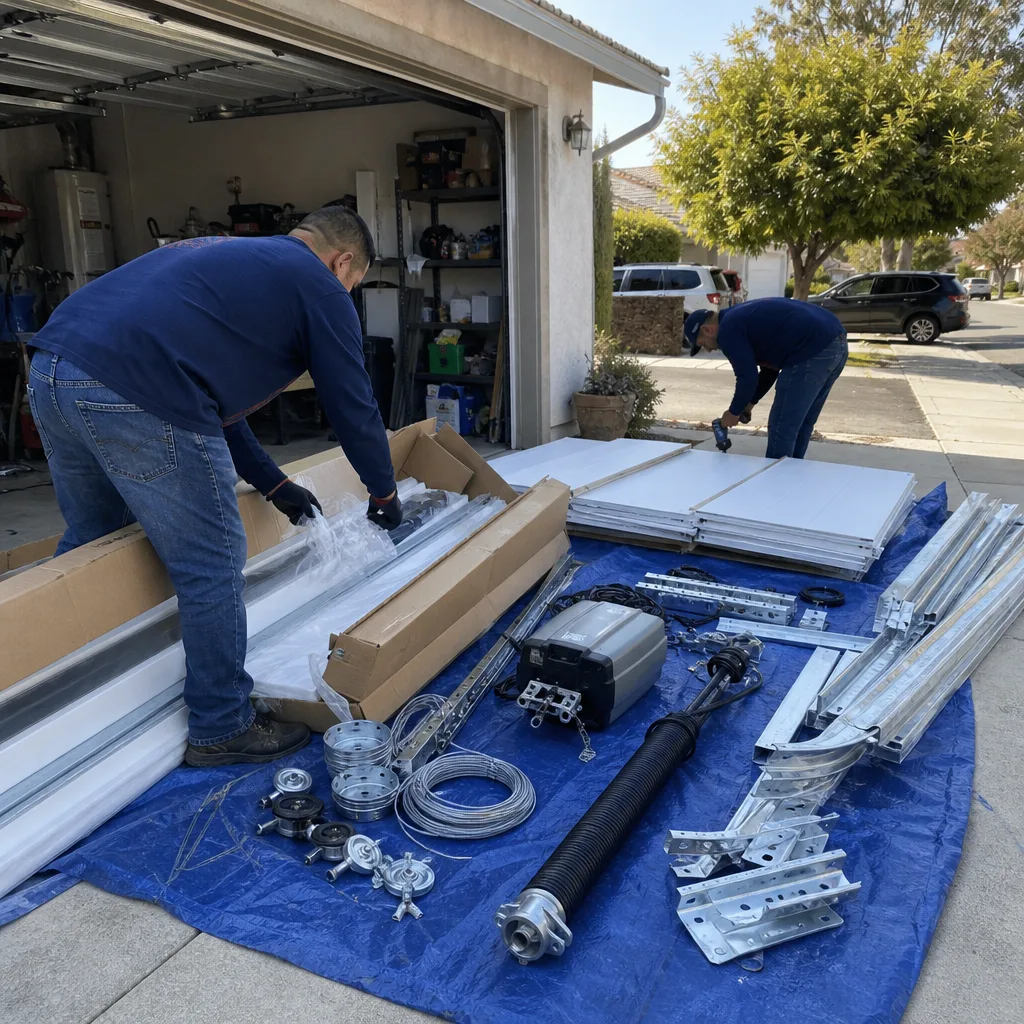
Your garage door tells you when it’s failing. The trick is knowing which component is talking. A slow door is an opener issue. A struggling door is a spring nearing the end. A grinding sound is a roller or a drive gear. A popping sound is a spring already broken. Each one maps to a cost tier, and each one has a right moment to act: immediately, soon, or on your schedule. In Ontario, where heat accelerates spring fatigue and humidity accelerates rust, the visual inspection matters as much as the listening. You now know what to look for and what it means. When something looks or sounds wrong, call (951) 470-2012 for a free estimate and a written price before any work starts. That’s how it should work, every time.
Written by Marcus Deller, Owner at Servo Garage Doors Ontario, serving Ontario since 2015.