
Last updated September 20, 2026
Full 25-point door and opener safety check with every visit - springs, cables, rollers, tracks, and your LiftMaster or Chamberlain opener included
You get a price before we start. It does not change when the truck arrives.
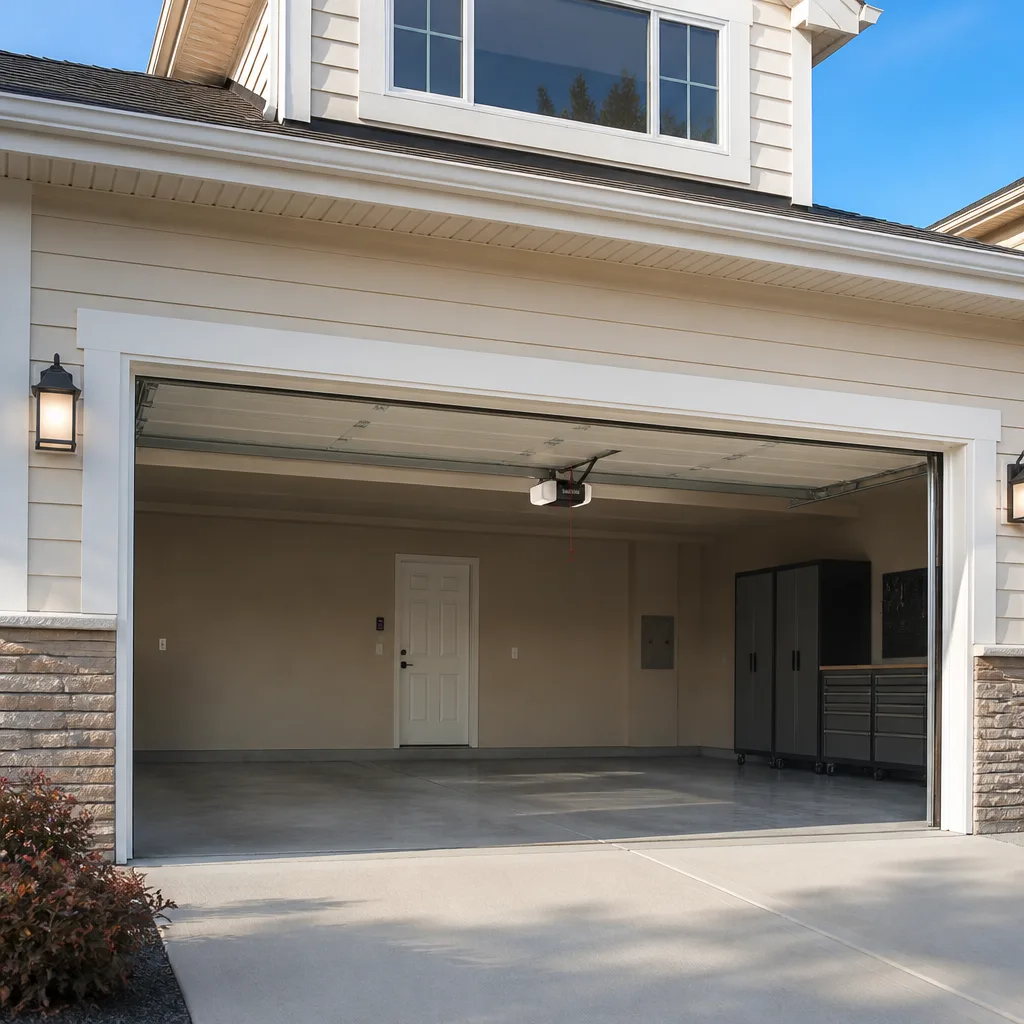
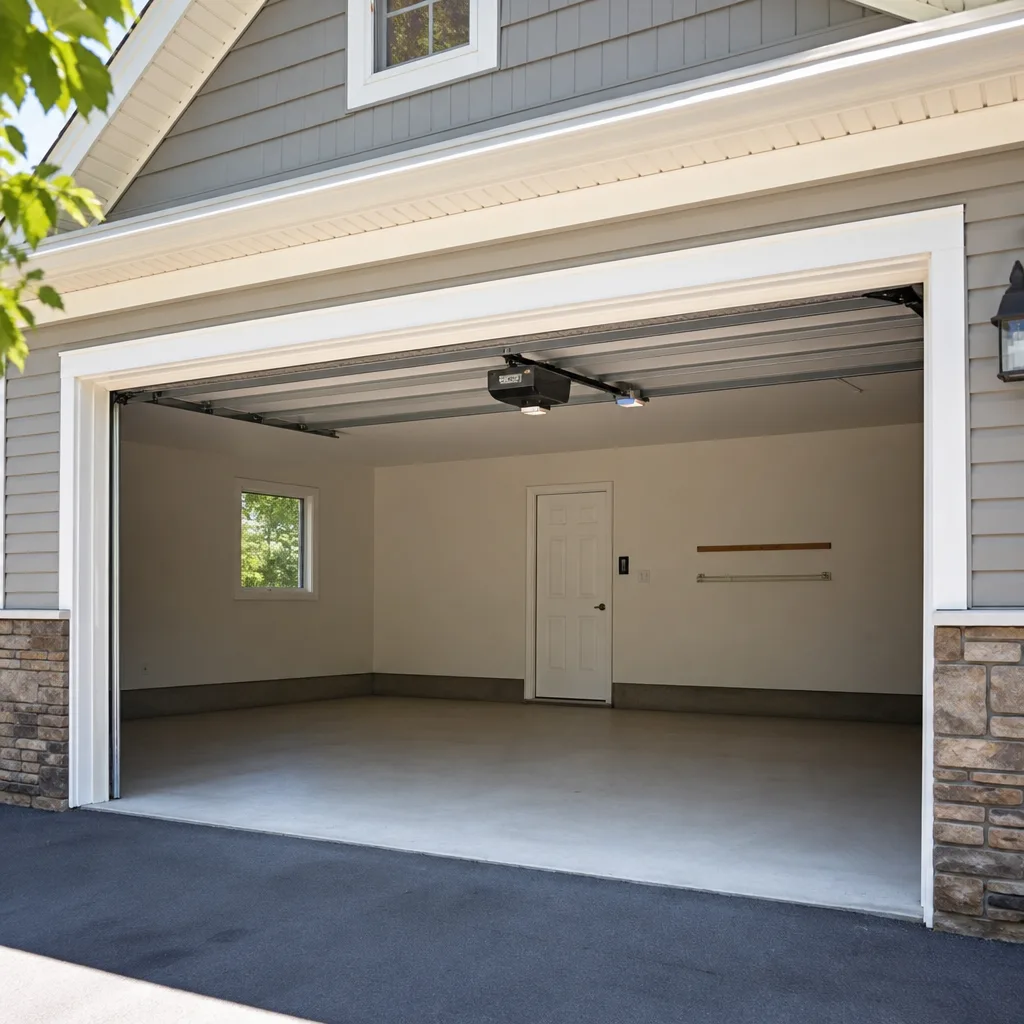
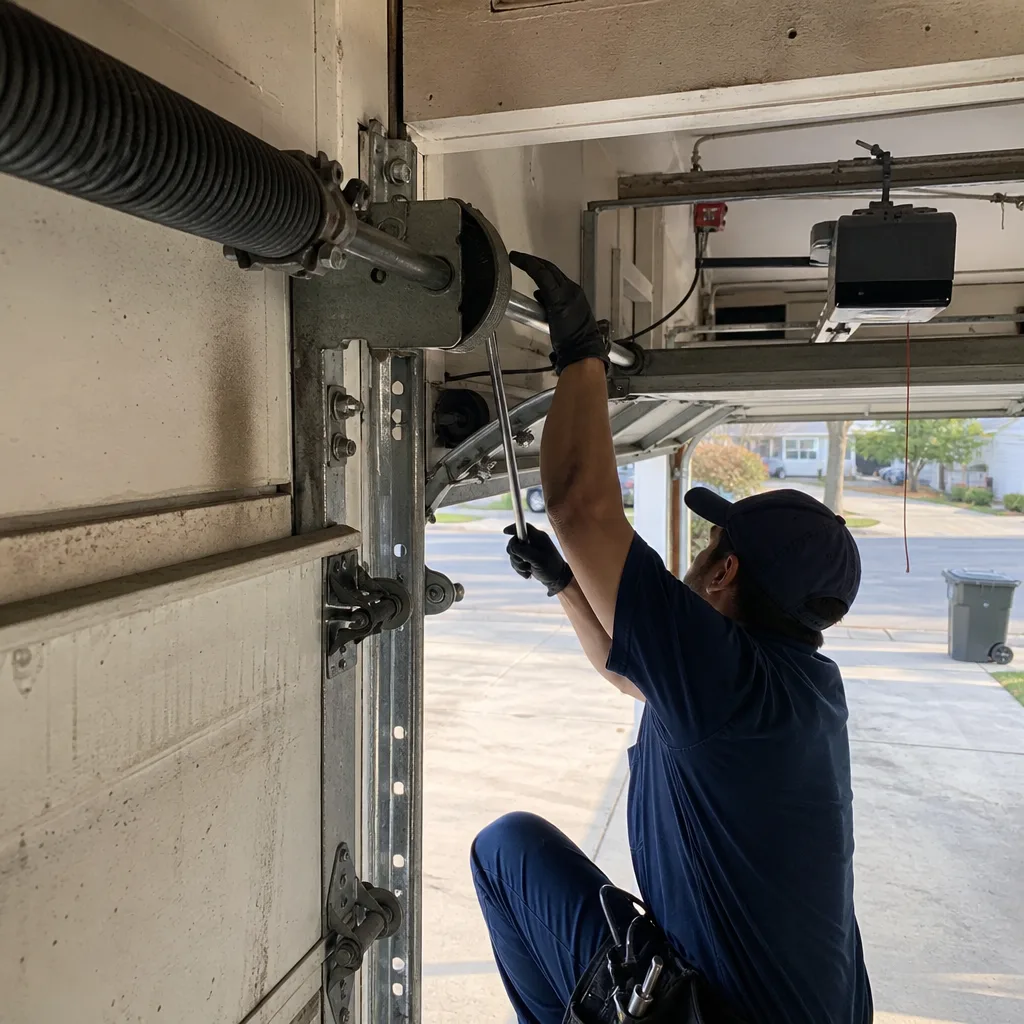 Before
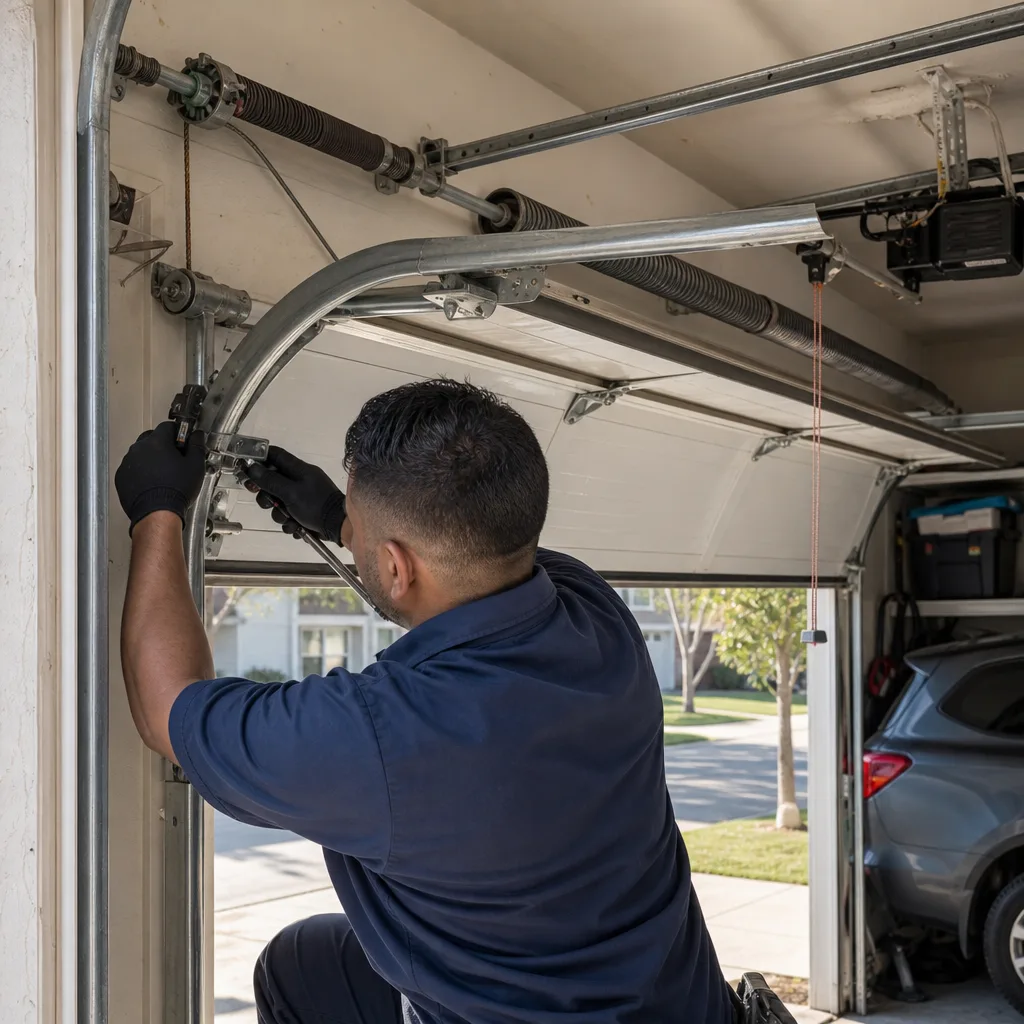 After
After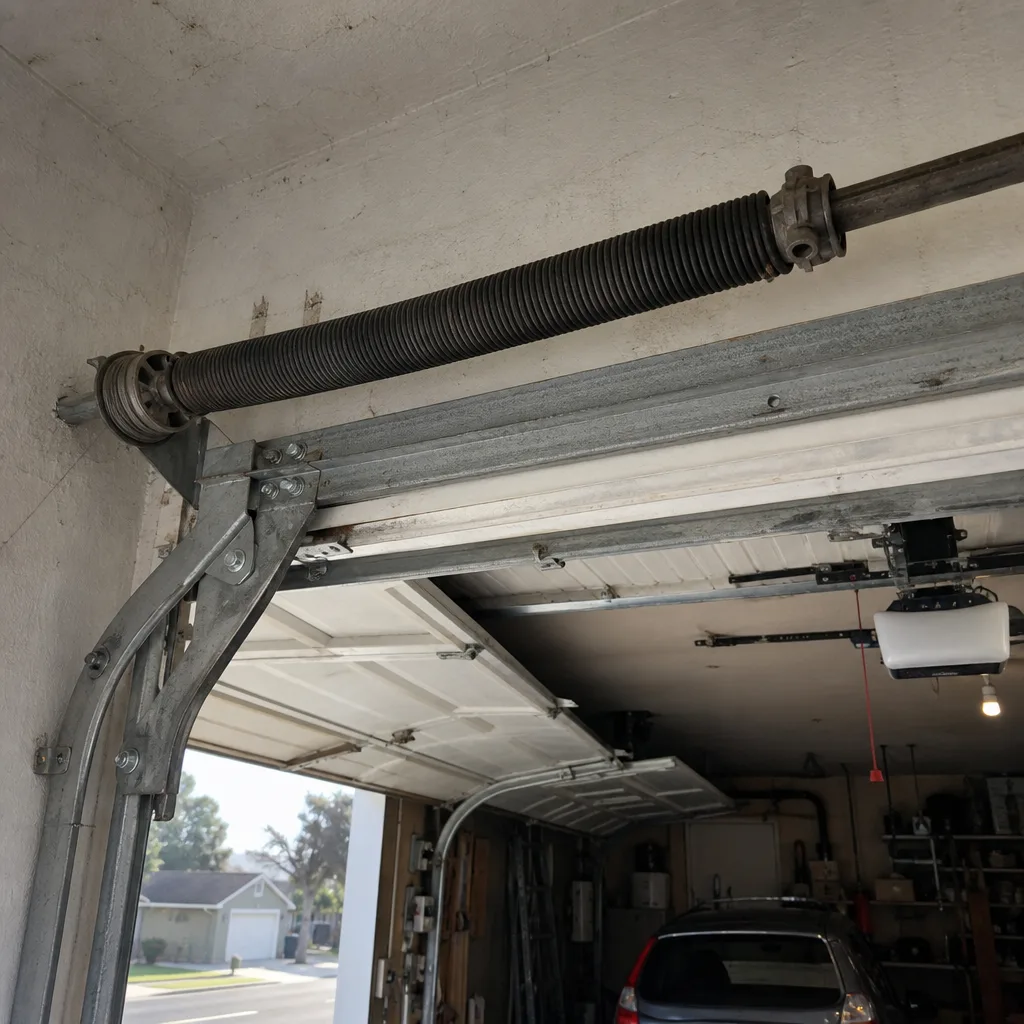 Before
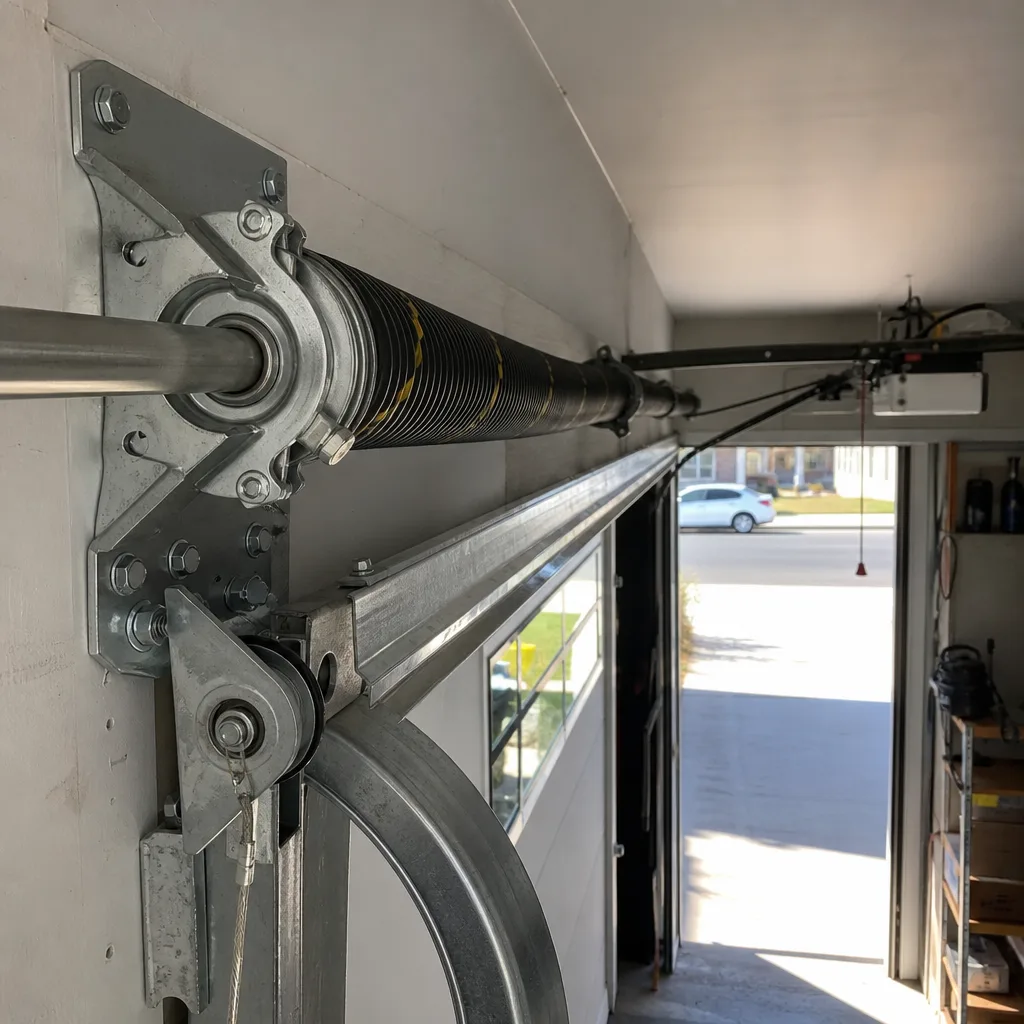 After
After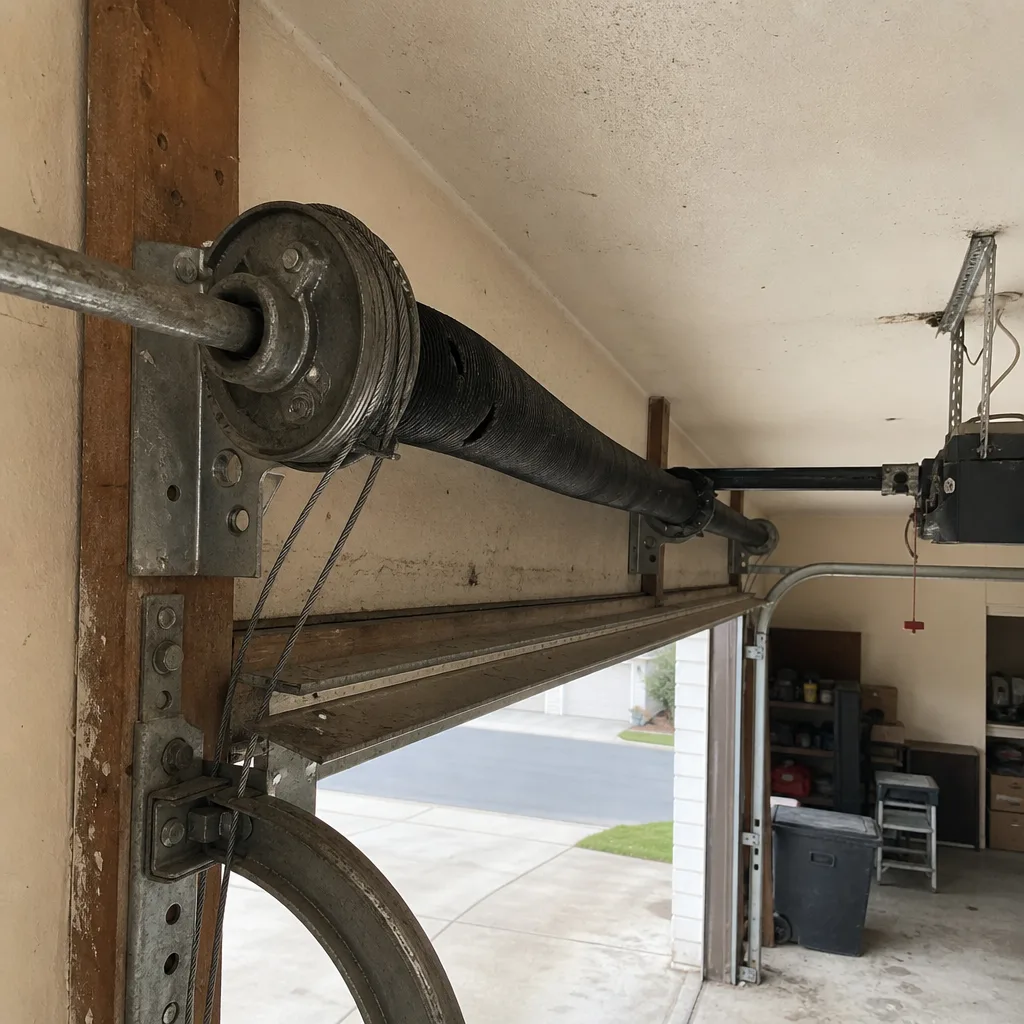 Before
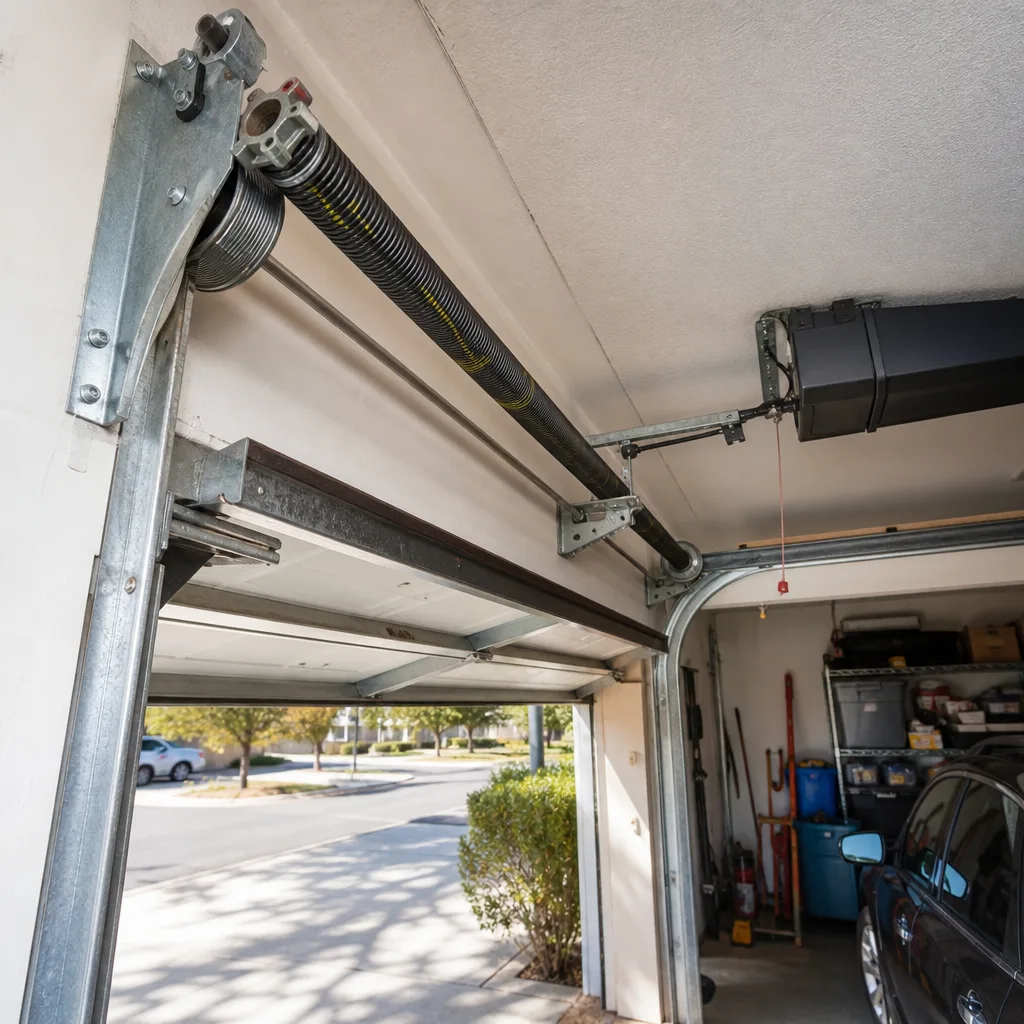 After
AfterSeasonal Garage Door Care for Ontario: Year-Round Homeowner’s Guide
Ontario averages 287 sunny days a year, which sounds like a maintenance advantage until you realize that 287 days of UV exposure degrades bottom seal rubber and photo-eye alignment faster than any frost cycle would. This Complete Guide to Garage Door in Ontario maps maintenance to the four stress cycles that actually exist in this part of the Inland Empire: summer heat expansion, Santa Ana wind season, mild-wet winter, and spring UV reset. Each cycle attacks a different set of components, and once you know which parts fail in which season, the preventive work becomes obvious. We’ll walk through the exact components, the specific failure modes we see most often across Ontario, and the tasks worth doing yourself versus the ones that need a trained technician.
Quick Answer
Seasonal garage door maintenance in Ontario means checking spring tension and track alignment each summer after heat expansion settles, inspecting horizontal track brackets and top-section rollers after Santa Ana wind events, treating bottom seal retainers and steel bottom panels for corrosion during the mild-wet winter months, and replacing UV-damaged bottom seals plus cleaning photo-eyes after spring pollen season. Most homeowners can handle visual inspections and lubrication in under 30 minutes per season; spring adjustments and track work should be left to a licensed professional because the torsion assembly carries enough tension to cause serious injury, as covered in our DIY vs Professional Garage Door: The Ontario Homeowner’s Decision Guide.
Table of Contents
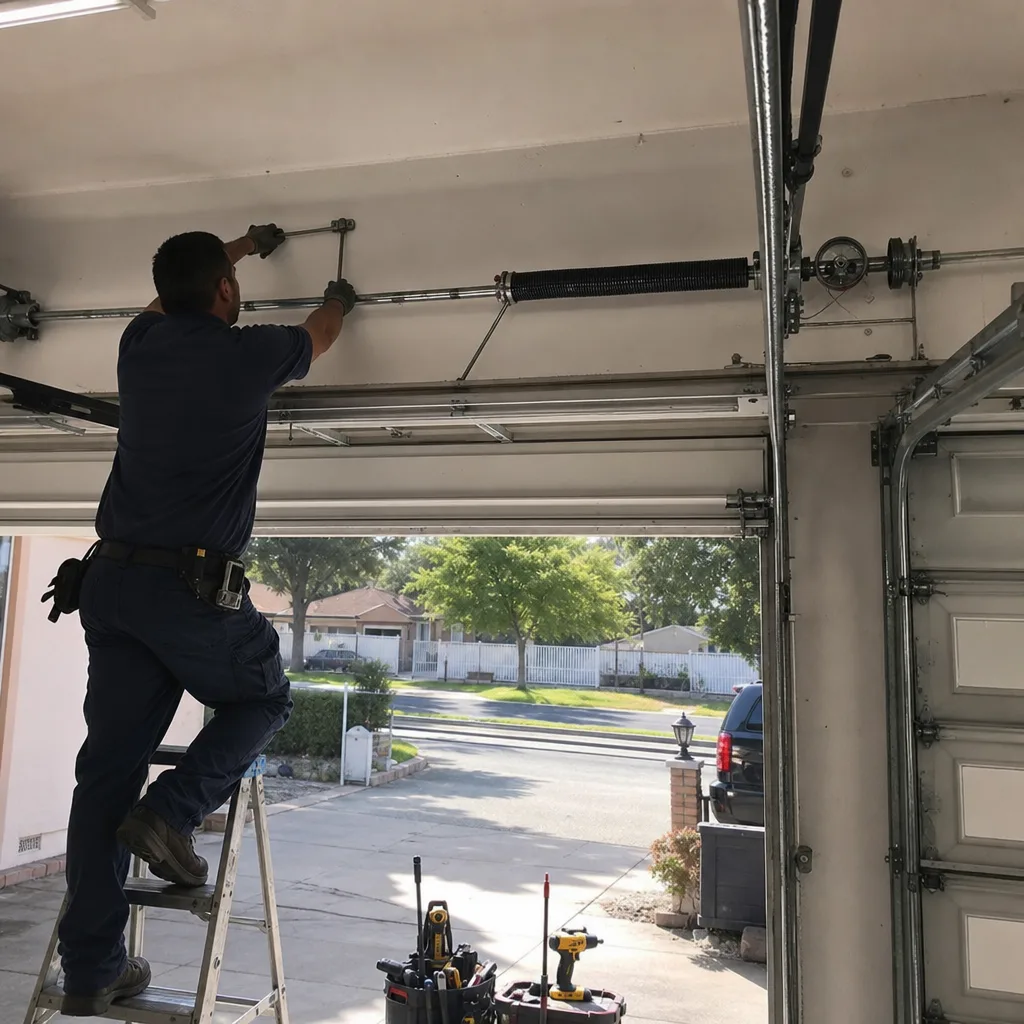
- Understanding Ontario’s Four Garage Door Stress Cycles
- Summer (June-September): Thermal Expansion and Track Gap Tolerance
- Santa Ana Season (October-December): Wind Stress on Brackets and Top Sections
- Winter (January-February): Mild-Wet Corrosion on Seals and Bottom Panels
- Spring (March-May): UV Seal Inspection, Photo-Eye Cleaning, and Spring Cycle Counts
- The Ontario Seasonal Task Calendar
- Common Mistakes to Avoid
- When to Call a Professional
- Frequently Asked Questions
BeforeAfterUnderstanding Ontario’s Four Garage Door Stress Cycles
Ontario doesn’t get the freeze-thaw cycles that wreck garage doors in the Midwest, and it doesn’t get the salt-air corrosion you’d see in coastal Orange County. What Ontario does get is a repeating pattern of high heat, high wind, damp air, and intense UV that stresses components predictably, season after season. If your garage door is original to a home built between 2015 and 2025, and it hasn’t had a tune-up since installation, you’re likely overdue on at least two of the four cycles below.
The key insight is that each season targets different materials. Summer heat expands steel track and softens lubricant. Santa Ana winds push the top section laterally and loosen horizontal track brackets. Winter’s damp mornings settle moisture on unsealed steel and aluminum. Spring’s direct UV and pollen load attack rubber seals, photo-eye lenses, and circuit board connections. A door that works fine in March can bind in August not because something broke suddenly, but because the thermal profile changed and nobody adjusted for it. That’s why we measure, photograph, and document every visit, including the seasonal inspections. The paper trail shows what changed between seasons.
We’ve been servicing doors across Ontario since 2015, and the seasonal patterns hold up neighborhood to neighborhood, from the older homes near Euclid Avenue to the newer developments east of the 15. The specific failure rates shift slightly based on door orientation, sun exposure, and whether the garage is attached or detached. A west-facing door in South Ontario takes measurably more UV damage than a north-facing door in the same zip code. We’ll note those variables where they matter in each section below.
Why the Calendar Month Matters Less Than the Stress Cycle
Most generic maintenance guides tell you to inspect your garage door in October and again in April. That’s fine as a starting point, but Ontario’s weather doesn’t respect calendar boundaries. Santa Ana winds can arrive as early as late September and have pushed 60 mph gusts into mid-December. Summer-grade heat often lingers into October in the Inland Empire. A better approach is to watch the trigger conditions: the first week of sustained daytime highs above 90°F starts the summer cycle, the first National Weather Service wind advisory starts the Santa Ana cycle, and the first damp morning where your car windows fog up starts the winter corrosion cycle.
For more on the broader repair landscape across Ontario’s neighborhoods, see our Garage Door Repair in Ontario page, which covers the range of issues we address on the local door stock we see most often.
Summer (June-September): Thermal Expansion and Track Gap Tolerance
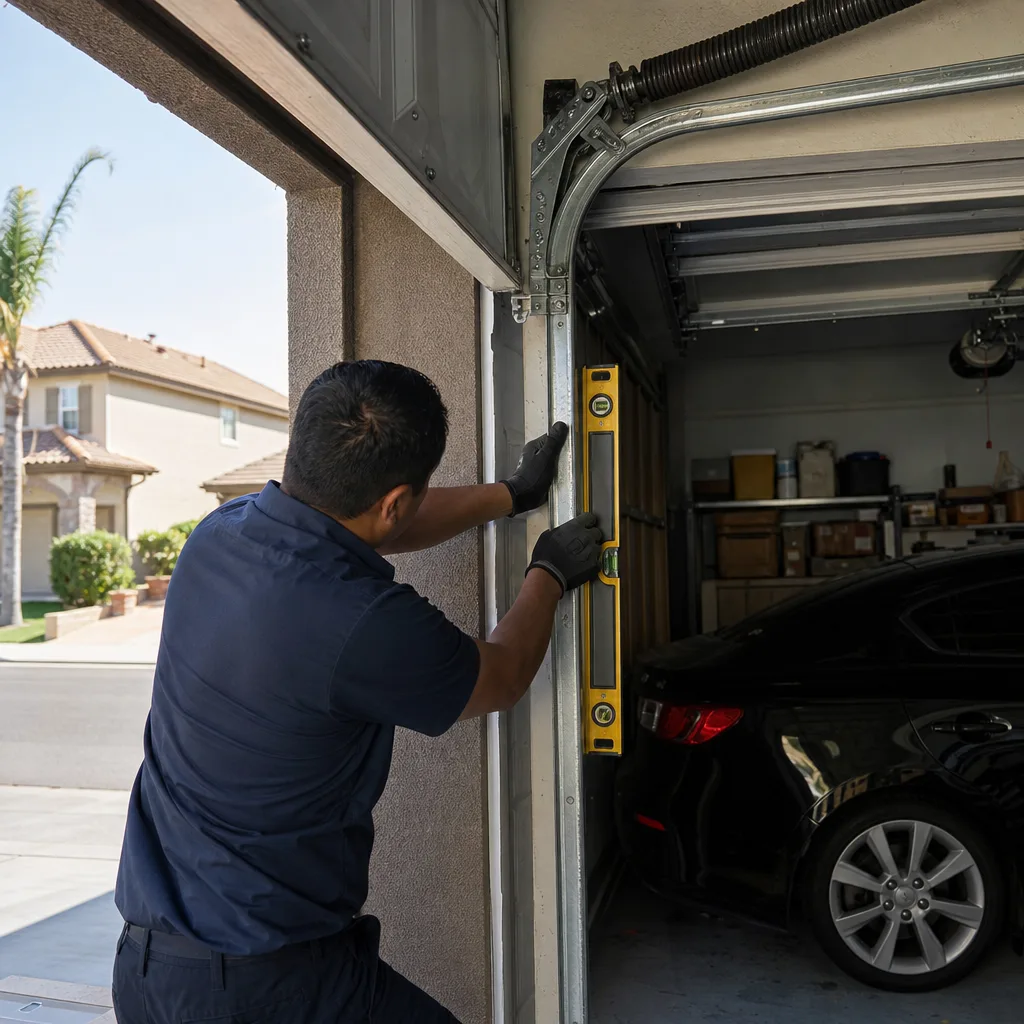
The dominant failure mode in an Ontario summer is not a broken part, it’s a door that was set correctly in January and is now binding because the steel grew. Steel expands approximately 0.0007% of its length for every degree Fahrenheit increase. On a 7-foot vertical track, a 60°F swing from winter to summer translates to roughly 0.25 inches of thermal expansion. That doesn’t sound like much, but the gap tolerance between the roller and track bracket is typically 1/4 to 3/8 inch. You lose most of that clearance before the door starts dragging.
What this looks like in practice: a door that ran smooth and quiet in March starts jerking or hesitating in late July. The homeowner assumes a spring broke. In most cases, the torsion spring is fine. The problem is that the track brackets were torqued in place during cooler weather, and now the expanded steel is pulling the track slightly out of parallel. The fix is a track adjustment, not a spring replacement. We photograph the track gap with a feeler gauge before and after the adjustment, so the customer sees exactly what changed and why.
Summer Component Checklist
- Track gap measurement: Use a feeler gauge or a folded business card to check the gap between the roller housing and the inside edge of the vertical track. If it’s tight on one side and loose on the other, the track has drifted. This is a measurement task, not a visual guess.
- Lubricant viscosity: High heat thins lithium-based garage door grease, which then drips out of the hinge pins and leaves them dry. If you see grease streaks running down the stiles of your door panels by August, it’s time to clean and re-lubricate with a silicone or lithium product made for garage doors, not WD-40.
- Spring tension check: A torsion spring set to proper balance in February may be slightly over-tensioned by August because the expanded door weighs fractionally more and moves fractionally differently. Do not adjust this yourself. An over-tensioned torsion spring stores enough energy to break bone. We set springs to the manufacturer’s inch-pounds-per-turn specification and verify with a balance test after every adjustment.
- Weather strip adhesion: Heat softens the adhesive that holds vinyl trim and weather strip to the door jamb. Check for peeling along the top edge and around the sides, especially on south- and west-facing doors in Ontario where surface temperatures regularly exceed 130°F on the stucco.
- Opener force settings: If the door runs fine manually but struggles with the opener, the opener’s force settings may have been dialed in during cooler weather. A thermal expansion issue can trip the opener’s obstruction sensor and cause mid-travel reverses. Resetting the force limits is a 10-minute job if you have the manual for your LiftMaster or Chamberlain unit.
What We See Most Often in Ontario Summers
In our experience across Ontario, the most common summer call is a door that reverses on the way down. The homeowner thinks it’s a photo-eye problem. About half the time it’s actually the track binding from thermal expansion, and the opener interprets that as an obstruction. The second most common is a broken torsion spring, which is a year-round failure but clusters slightly in late summer because the spring has been working harder against an out-of-spec track. A torsion spring on a standard two-car door cycles about 10,000 times over its rated life. If the track is misaligned, the door fights the spring on every cycle, and the spring fails early.
Interesting data point: we see measurably fewer summer track-binding calls on doors where the track brackets are mounted to the steel studs with proper isolation washers rather than direct lag-bolted into hot stucco. The stucco itself expands at a different rate than the steel track, and direct mounting transfers that differential stress. Ontario’s stucco-heavy construction makes this a local factor worth knowing about, especially on homes built before 2010.
If you want a deeper look at how track alignment fits into overall door performance, start with our guide on Servo Garage Doors Ontario home services and the specifics of what a full door inspection covers.
Santa Ana Season (October-December): Wind Stress on Brackets and Top Sections
Santa Ana winds are Ontario’s version of a structural stress test, and most garage doors fail that test not at the base or the springs, but at the horizontal track brackets and the top section where the door attaches to the opener. Sustained 40 to 60 mph gusts hitting a 16-foot wide, 7-foot tall door generate lateral force that no residential door is truly engineered to ignore. The door doesn’t blow in; it flexes.
The two components to inspect after any significant wind event are the horizontal track brackets and the top section strut. The brackets are the L-shaped or U-shaped fixtures that mount the horizontal track to the ceiling. Wind-driven vibration loosens the lag bolts or pulls the brackets slightly out of square. Once one bracket shifts, the door drags on one side every time it opens or closes, which accelerates roller wear and puts uneven load on the torsion spring. The top section strut is the metal reinforcement bar running horizontally across the inside of the top panel. On doors without a strut, high wind can bow the top panel enough to crack the paint line or pop a hinge roller out of its track.
Post-Wind Inspection Steps
- Check the horizontal track brackets first. Look for daylight between the bracket and the ceiling drywall where the lag bolt passes through. If you can slide a business card between the bracket and the ceiling, the bolt has loosened. This is the single highest-yield post-wind check in Ontario.
- Look for drywall dust on the floor under the horizontal track. A loosening bracket produces fine white dust as it vibrates. If you see it, don’t just tighten the bracket, check whether the track is still level front-to-back with a bubble level before you retorque anything.
- Test the top section for wind bowing. Open the door halfway and sight along the top edge from one end. A wind-bowed top section shows a visible gap between the top edge and the door frame on one side. This is also the time to check the top roller brackets for any sign that a roller has partially jumped the track.
- Run the door through two full open-close cycles and listen. A door that made no noise in September and now squeals or thumps after a wind event has almost certainly got a bracket issue driving misalignment. Sound changes precede visible damage by weeks.
- Inspect the opener rail attachment at the top of the door. The trolley connecting the opener rail to the door sees the full force of wind gusts. Check that the straight arm and curved arm are not bent and the clevis pins are still fully seated. A bent opener arm is a wind-damage indicator we see more often in Ontario than in coastal communities, because the gusts here hit harder against doors with less marine-layer damping.
Why the Top Section Matters More Than You Think
The top section is not a cosmetic panel. It’s the structural member that transfers all the opener’s force into the rest of the door. When wind bows the top section repeatedly, the panel fatigues along the stile seams and eventually cracks. A cracked top section on a Clopay, Amarr, or Wayne Dalton door is a replace-the-section repair, not a patch job. It’s also the component most likely to fail after multiple wind seasons rather than a single event. We’ve replaced top sections on Ontario doors that survived ten Santa Ana seasons before the cumulative fatigue showed up. The documented photo record we provide after every visit catches the early signs before the failure becomes expensive.
For homeowners dealing with doors that have already suffered wind damage, explore our Garage Door Installation in Ontario page for what’s involved in replacing a section versus a full door, including written scoping and flat pricing on what we recommend and why.
Winter (January-February): Mild-Wet Corrosion on Seals and Bottom Panels
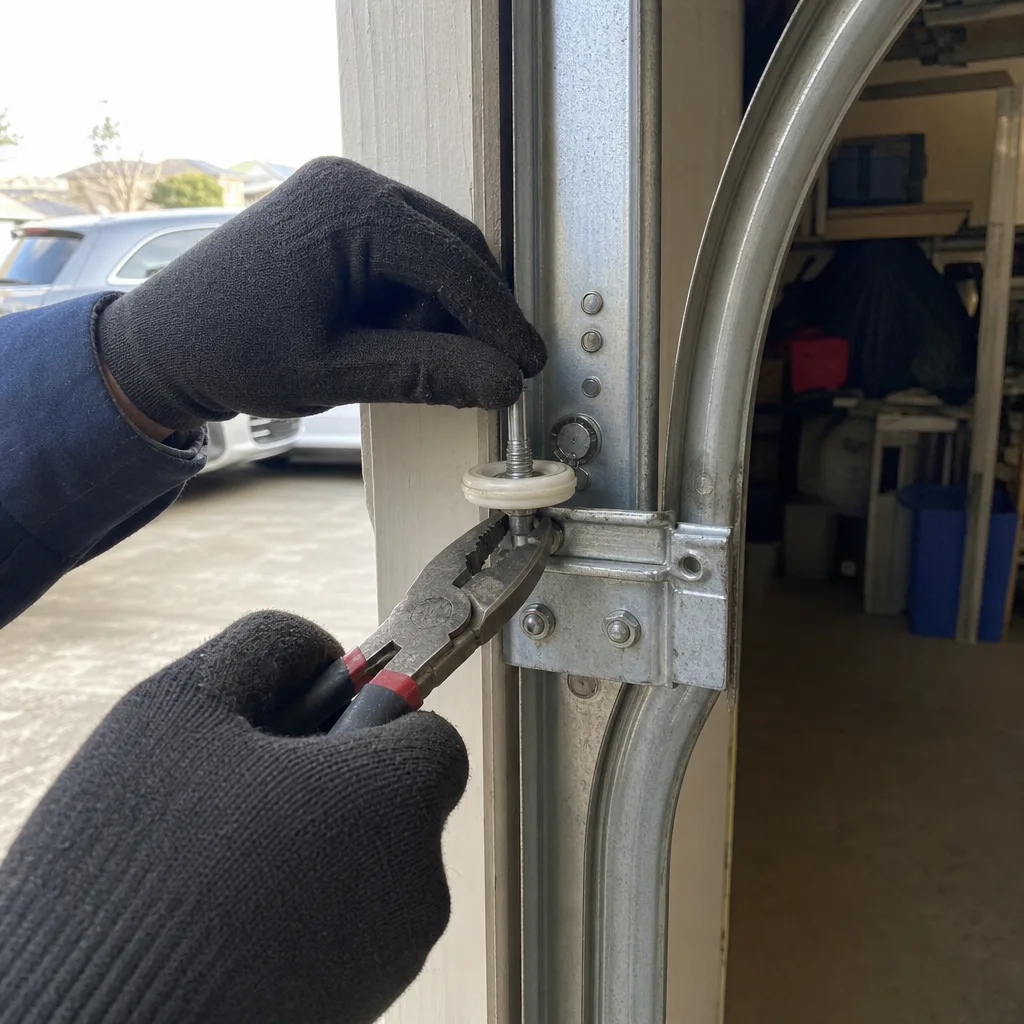
Ontario’s winter isn’t harsh by national standards, but it has a specific weakness: repeated damp mornings without enough rain to wash things clean. Marine-layer moisture settles onto exposed steel and aluminum overnight, and the daytime temperatures rise enough to promote corrosion without drying the air fully. The result is a slow, steady oxidation cycle that attacks the bottom seal retainer, the unpainted steel on the bottom panel, and any bare hardware that has lost its zinc coating.
The bottom seal retainer is the aluminum or galvanized steel channel that holds the rubber bottom seal against the concrete. In Ontario’s mild-wet winters, this retainer accumulates moisture between itself and the bottom panel, and if the panel’s factory paint has chipped or worn at the edge, rust starts there and travels upward under the paint. By the time you see rust streaks on the outside of the bottom panel, the retainer screws have likely corroded to the point where they’ll snap off during removal. A $30 seal replacement becomes a $400 bottom panel repair because the retainer wasn’t checked in January.
Winter Corrosion Checklist
- Inspect the bottom seal retainer screws. On most Ontario doors, the retainer runs the full width of the bottom section and mounts with self-tapping screws through the bottom lip. If you see any rust-colored streaks running down from the screw heads, or if the seal looks puckered and uneven, the retainer is corroding from the inside. This is a visual inspection you can do in two minutes with a flashlight.
- Check the seal compression against the concrete floor. A healthy bottom seal compresses evenly and shows a full contact line. If the seal has hardened from UV exposure or has a gap in the middle where the slab has settled, cold air and automotive exhaust creep in. Ontario’s winter may not freeze your pipes, but a leaking bottom seal will make an attached garage noticeably colder and push your gas bill up.
- Look for galvanic corrosion at steel-to-aluminum junctions. Anywhere a steel screw passes through an aluminum bracket, the two metals react in the presence of moisture and create a white, chalky corrosion. You’ll see this on hinges, on the bottom corner brackets, and on the strut mounting points. The fix is dielectric washers or replacement hardware, not paint.
- Dry the door after heavy morning dew. This sounds fussy, but here’s the Ontario-specific reasoning: uninsulated single-layer steel doors, which are common on older Ontario homes, cool overnight to the dew point faster than insulated doors. The condensation forms on the inside face of the bottom panel and collects in the retainer channel. Wiping the interior panel edge dry during damp winter weeks adds years to the bottom section.
Ontario-Specific Corrosion Factors
Ontario sits in a semi-arid climate, but the winter months between January and February produce exactly the kind of damp-microclimate pattern that confuses homeowners. They see a dry, sunny day and assume no moisture-related maintenance applies. What they’re not factoring in is the nighttime condensation cycle. The average winter low in Ontario hovers in the mid-40s, which is warm enough that cold metal surfaces don’t freeze, but cold enough that those same surfaces fall below the dew point on clear nights. The result is a film of water that evaporates by mid-morning and leaves mineral residue behind. Over a season, that residue concentrates at the bottom panel seam and works its way under the paint edge. The door never looks wet long enough for anyone to notice, but the corrosion is happening regardless.
If you’re seeing rust on your bottom panel or a bottom seal that’s no longer sealing, explore our Garage Door Opener Repair & Installation in Ontario page to understand how a door that doesn’t close fully impacts opener wear, energy loss, and security.
Spring (March-May): UV Seal Inspection, Photo-Eye Cleaning, and Spring Cycle Counts
Spring in Ontario is when the sun comes back with intent, and the component that takes the most visible damage is the rubber bottom seal. UV radiation breaks down the polymer chains in EPDM and TPE rubber, which are the materials used in most residential bottom seals. After three to five years of Ontario sun exposure, a bottom seal that started out flexible and black becomes gray, stiff, and cracked. Once it hardens, it no longer compresses against the slab, and the door loses its perimeter seal. The fix is a $60 to $90 seal replacement, and it’s one of the cheapest preventive maintenance items on the entire door system.
Spring is also the season for photo-eye cleaning, and the specific trigger in Ontario is pollen. The oak, sycamore, and ornamental trees that line the streets in neighborhoods from Central Ontario north to the 210 corridor dump pollen throughout April and May. That pollen settles on the photo-eye lenses, diffuses the infrared beam, and causes the door to refuse to close even when the path is clear. The typical homeowner response is to assume the photo-eyes are broken and call for service. The actual fix takes two minutes with a clean microfiber cloth.
Spring Maintenance Protocol
- Inspect the bottom seal for UV degradation. Run your thumb along the seal and check for flexibility. A healthy seal flexes under light pressure; a UV-damaged seal feels like hard, cracked plastic and may even chip. Look for the classic gray patina, visible cracks along the sealing edge, and any spots where the seal has pulled away from the retainer.
- Clean both photo-eye lenses and check alignment. Use a dry microfiber cloth, not glass cleaner, which can leave residue that diffuses the beam. After cleaning, check that both small LED indicators stay lit when the door is open. A flickering or dark LED on either side means misalignment or a corroded wire, not dirt.
- Count the spring cycles. Every torsion spring has a rated cycle life, typically 10,000 for a standard spring, 20,000 for an extended-life spring. Count your daily open-close cycles and do the math. A spring installed in 2015 on a door operated four times a day has accumulated roughly 15,000 cycles by 2025. If your spring is approaching its rated cycle life, plan a replacement before the spring breaks at an inconvenient time, not after. A broken torsion spring is a measured, quoted repair when done proactively; as an emergency, it is the same repair but with a locked door and a car trapped inside.
- Check all hinge bolts and roller brackets for spring-moisture pitting. After January and February’s damp cycle, any hardware that got wet and didn’t dry has a head start on rust. Spring is the corrective window before summer heat bakes the rust and makes hardware removal harder.
- Test the auto-reverse safety function. Place a 2×4 flat on the floor under the door and close it. The door should reverse within two seconds of contacting the wood. This is a federal safety requirement under UL 325, and it’s a test every Ontario homeowner should run at least twice a year. If the door does not reverse, stop using it and call for service, because a door that won’t auto-reverse is dangerous to pets, kids, and anyone loading the car.
Spring Cycle Counts on Ontario Doors
Here’s a detail most maintenance guides skip: Ontario’s garage door usage patterns differ measurably from coastal communities because of driveway geometry and commute schedules. A two-car household in Ontario with both cars garaged and both drivers working typical Inland Empire work hours cycles that door six to eight times per day, not the four times the national average assumes. The reason matters: a spring rated for 10,000 cycles lasts just over four years at Ontario usage rates, not seven years at the national average rate. When we do the cycle-count math with Ontario customers, the typical reaction is surprise that a spring that didn’t seem old is already due.
We take the count seriously because we quote it seriously. The written scope we provide before any spring replacement includes the spring’s rated cycle life, the measured wire diameter, the installation date if we installed it, and the photograph of the failed component if we’re replacing a broken one. That’s Clause 4 of The Haven Standard in practice, and it traces back to the founding rule we started with in 2015: you see the failed part before anyone quotes a replacement.
The Ontario Seasonal Task Calendar
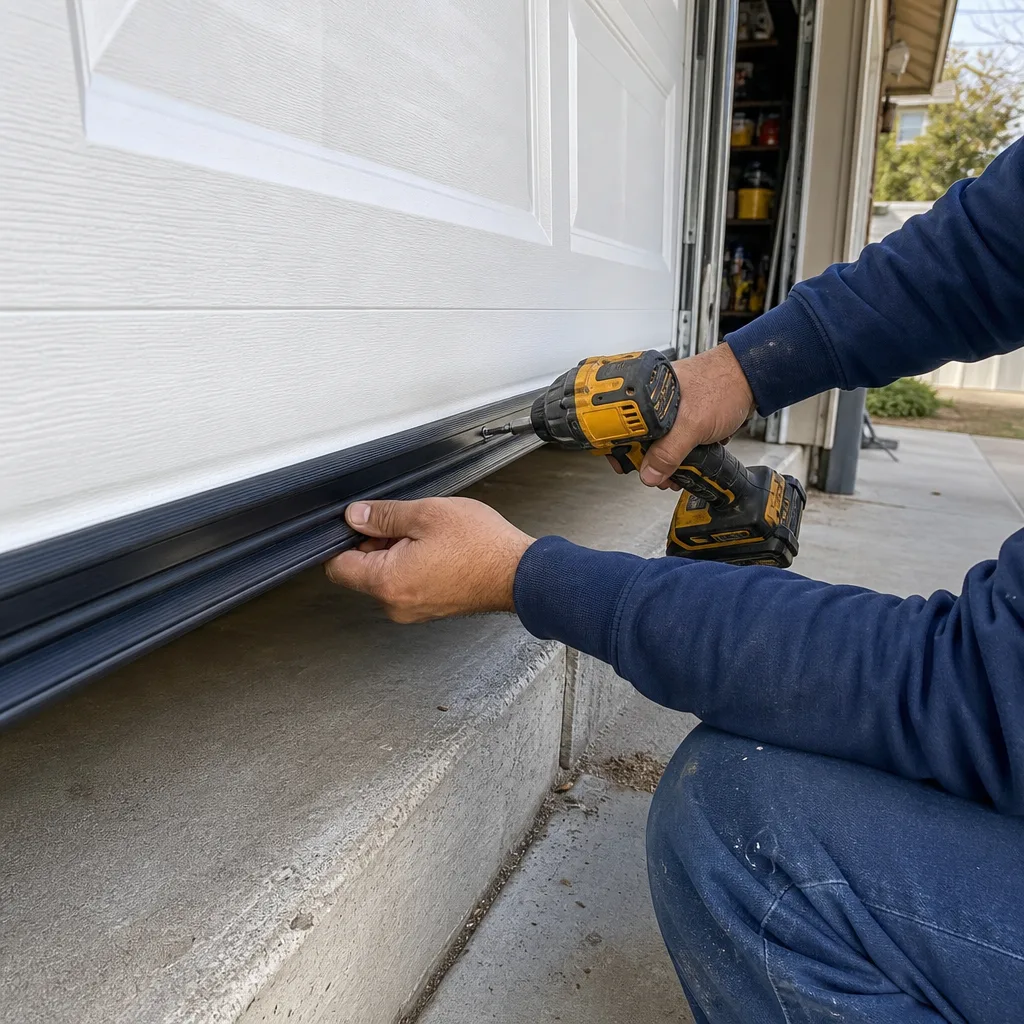
This is the one-page reference that maps specific components to each Ontario stress cycle, and you can find more guides & resources on our blog. Print it, tape it inside the garage door track cover, and work through it when the trigger condition arrives.
Summer Trigger: First week of sustained 90°F+ daytime highs
- Torsion spring: Check balance by disconnecting the opener and lifting manually. If the door doesn’t stay at the halfway point on its own, the spring tension has shifted. Do not adjust it yourself. Call a licensed technician.
- Vertical track gap: Use a feeler gauge to confirm 1/4 to 3/8 inch clearance between the roller housing and track edge on both sides. A binding track is the root cause of most summer opener-reversal calls in Ontario.
- Hinge pin lubrication: Clean off heat-thinned grease and re-lubricate with a lithium or silicone product meant for garage door use. If you see grease streaks down the panel stiles, the previous lubricant has failed.
- Opener force limits: If the door reverses mid-travel with no visible obstruction, the force settings may be too tight for the expanded track. Check your owner’s manual for the correct force-adjustment procedure.
Santa Ana Trigger: First NWS wind advisory of the season
- Horizontal track brackets: Check for drywall dust on the floor, test for bolt looseness with a business-card gap test, and verify the track is level front-to-back.
- Top section strut: Sight along the top edge of the door from each end to check for wind bowing. A visible side gap indicates cumulative wind fatigue.
- Opener arm clevis pins: Confirm the pins are fully seated and the arm is not bent. A bent arm transfers misaligned force into the top section on every cycle.
- Roller brackets on the top section: Check for partial track jumps and loose rollers after any series of wind gusts above 50 mph.
Winter Trigger: First damp morning with windshield condensation
- Bottom seal retainer screws: Look for rust streaks or white galvanic corrosion at every screw head. Replacement at the first sign of corrosion is a cheap repair; waiting means snapped screws and a bottom panel repair.
- Seal compression contact line: With the door closed, look along the bottom edge from the inside. A continuous contact line means the seal is doing its job. Gaps at the corners mean slab settling or seal hardening.
- Steel-to-aluminum junction points: Check hinges, corner brackets, and strut mounts for white corrosion powder. This is galvanic corrosion, and it needs dielectric washers or replacement hardware, not paint.
- Interior condensation on the bottom panel: If you see condensation beading on the inside face of an uninsulated steel door, dry it off. Weekly attention during damp February mornings adds years to the panel life in Ontario’s condensation-prone microclimate.
Spring Trigger: First week of sustained pollen visible on parked cars
- Bottom seal UV check: Confirm the rubber is still flexible. A stiff, gray, cracked seal is done and needs replacement. This is a $60 to $90 repair on most Ontario homes.
- Photo-eye lens cleaning: Clean both lenses with a dry microfiber cloth and confirm both indicator LEDs stay solid when the door is open. Pollen-diffused beams are a top cause of false obstruction sensing in Ontario every April.
- Annual spring cycle count: Do the math on your daily open-close frequency and compare against the spring’s rated cycle life. Ontario’s heavy daily usage means most springs reach end-of-life at four to five years, not seven.
- Auto-reverse safety test: Use the 2×4 test described above. If the door doesn’t reverse, stop using it and call for service immediately.
Common Mistakes to Avoid
- Using WD-40 on the torsion spring or rollers. WD-40 is a solvent, not a lubricant. It displaces moisture temporarily and then dries out the surface, leaving metal-on-metal contact worse than before. In Ontario’s dry heat, that’s a quick path to roller chatter and hinge wear. Use a silicone or lithium product formulated for garage doors.
- Adjusting spring tension on your own. Torsion springs carry enough stored energy to fracture bone or cause fatal injury if the winding bar slips. We say this because we’ve seen the aftermath. If the door doesn’t stay balanced when manually operated, call a licensed technician and have the adjustment done with a torque wrench and the manufacturer’s specification in hand.
- Ignoring a door that reverses on the way down. Many Ontario homeowners assume a reversing door is a minor sensor issue and keep using the opener. A door that reverses because of track binding is putting uneven load on the torsion spring, shortening the spring’s life and risking a sudden failure at the worst possible time.
- Replacing only the bottom seal without checking the retainer. Pushing a new rubber seal into a corroded retainer may work for a season, but the underlying corrosion continues. The next seal replacement becomes a bottom-panel repair because the retainer screws snap off during removal.
- Skipping the auto-reverse test because the door “feels fine.” The auto-reverse function is a mandated safety system that exists because garage doors have killed people. A door that doesn’t reverse on a 2×4 at the floor level is not safe, full stop, and no amount of smooth operation changes that.
- Waiting for the spring to break before counting cycles. Torsion springs have a rated cycle life. Running one past that life is gambling, and the stakes include a door that suddenly comes down hard enough to damage the door or injure someone. Ontario’s high daily cycle counts mean the gamble tends to fail sooner than expected.
- Tightening horizontal track brackets after a wind event without checking alignment. Re-torquing a bracket into a misaligned position locks in the misalignment. The correct sequence is level the track, then retorque, then test the full cycle. Doing it in the wrong order turns a wind-related adjustment into a permanent track problem.
When to Call a Professional
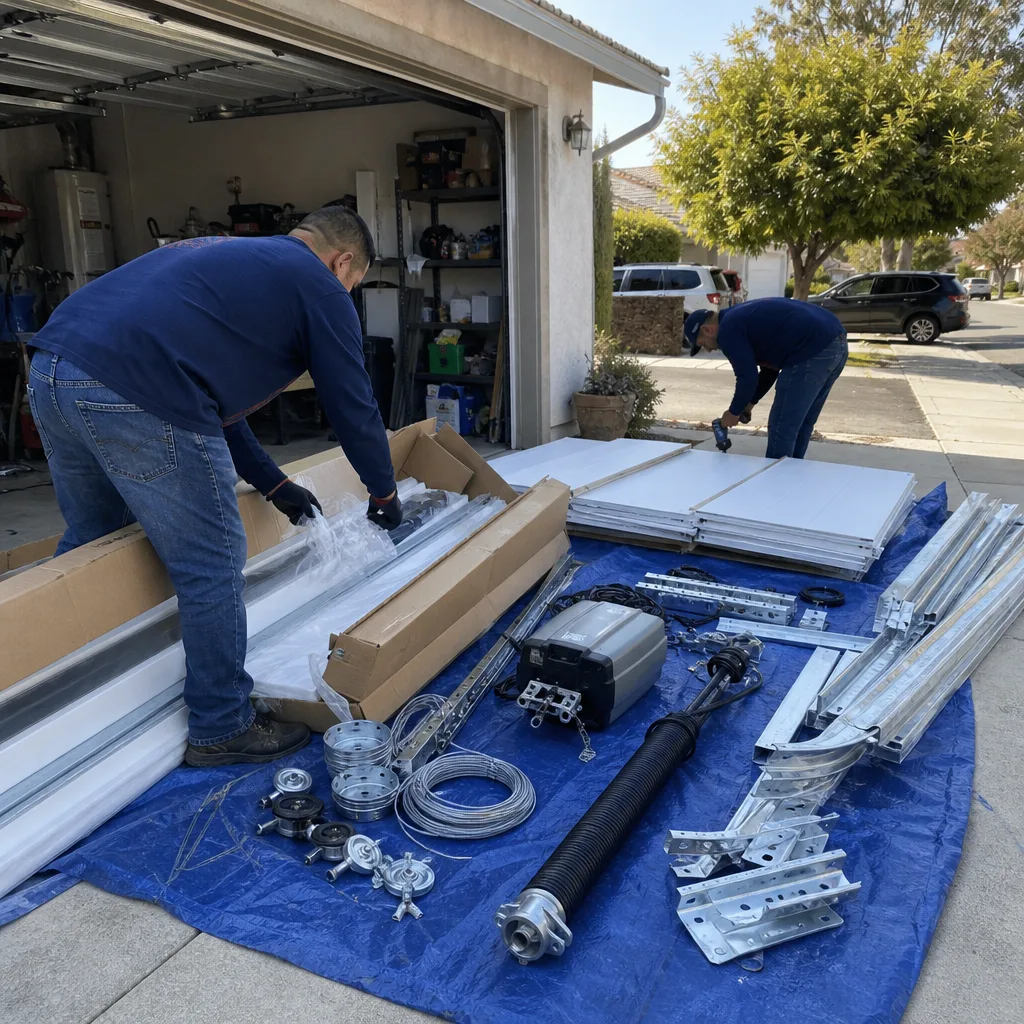
Anything involving the torsion spring, the track alignment, or the opener logic board is a professional job, not because we want the work, but because the failure modes are measured in bone fractures and crushed fingers. If your door won’t stay balanced when manually operated, if you hear cable slippage or see a frayed cable, if the door is binding in the track and the gap-check shows less than 1/4 inch of clearance, or if the auto-reverse test fails, stop using the door and make the call. Servo Garage Doors Ontario offers free estimates in Ontario, and every visit includes a documented photo record of what we found and what we did. The price is flat, written, and agreed before any work starts. Call (951) 470-2012 to schedule an inspection or ask for a second opinion on any written estimate from another company.
Frequently Asked Questions
A standard seasonal tune-up in Ontario runs between $89 and $149, depending on whether it covers just the door or includes the opener’s force and limit settings; see our Garage Door Cost Breakdown: The Ontario Homeowner’s Reference for 2026 for full pricing context. That’s a set of specific checks and adjustments: track gap measurement, hinge and roller lubrication, spring balance verification, bottom seal inspection, photo-eye cleaning, and an auto-reverse test. We quote that as a flat, written price before any work starts, per Clause 1 of The Haven Standard. Call (951) 470-2012 for an exact quote, and mention which season’s checklist you want us to work through.
In Ontario, the most common cause of a reverse-on-descent in summer is thermal expansion reducing the track gap tolerance enough that the opener’s obstruction sensor interprets the bind as an object in the path. The fix is a track adjustment, not a force-setting increase, and it takes a technician about 30 minutes to measure, adjust, and verify. Before you call, check that the photo-eyes are clean and the lenses aren’t diffusing the beam from pollen or dust.
In Ontario’s climate, a rubber bottom seal typically lasts three to five years before UV degradation hardens it and compromises the seal. If your seal feels stiff and shows a gray patina or visible cracks, it’s done. If you wait until it pulls away from the retainer completely, you’re likely looking at retainer corrosion as well, which turns a $60-$90 seal replacement into a $300-$400 retainer and bottom panel repair.
Yes. We run service calls across Ontario every day, and emergency calls are answered by a live person 24/7, including holidays. Within a normal service window, we’ll tell you exactly when the technician will arrive and send an on-the-way text when the truck leaves. For post-Santa Ana wind inspections or a door that won’t close properly mid-summer, same-day service is the norm. Call (951) 470-2012 and you’ll speak to a person, not a recording.
Yes, and in fact the math favors it. A door from 2015 or earlier is running on components that have passed their original service window. The torsion spring is at or beyond its rated cycle life for Ontario’s heavy daily usage, the rollers have measurable play, and the bottom seal has been through multiple UV seasons. Seasonal inspections on an older door catch the failures before they become emergencies. The $89-$149 inspection will likely find one or two specific things worth addressing, and you’ll get a flat, written quote to make the decision with real numbers.
We service all eight major garage door brands, including LiftMaster, Chamberlain, Genie, Clopay, Amarr, Wayne Dalton, Craftsman, and Raynor. Most parts are stocked on the truck, and any part that needs to be ordered is photographed and quoted before work proceeds. The written scope you receive covers the exact components we’ll replace, the quoted price, and the warranty, all documented, per The Haven Standard.
The Bottom Line
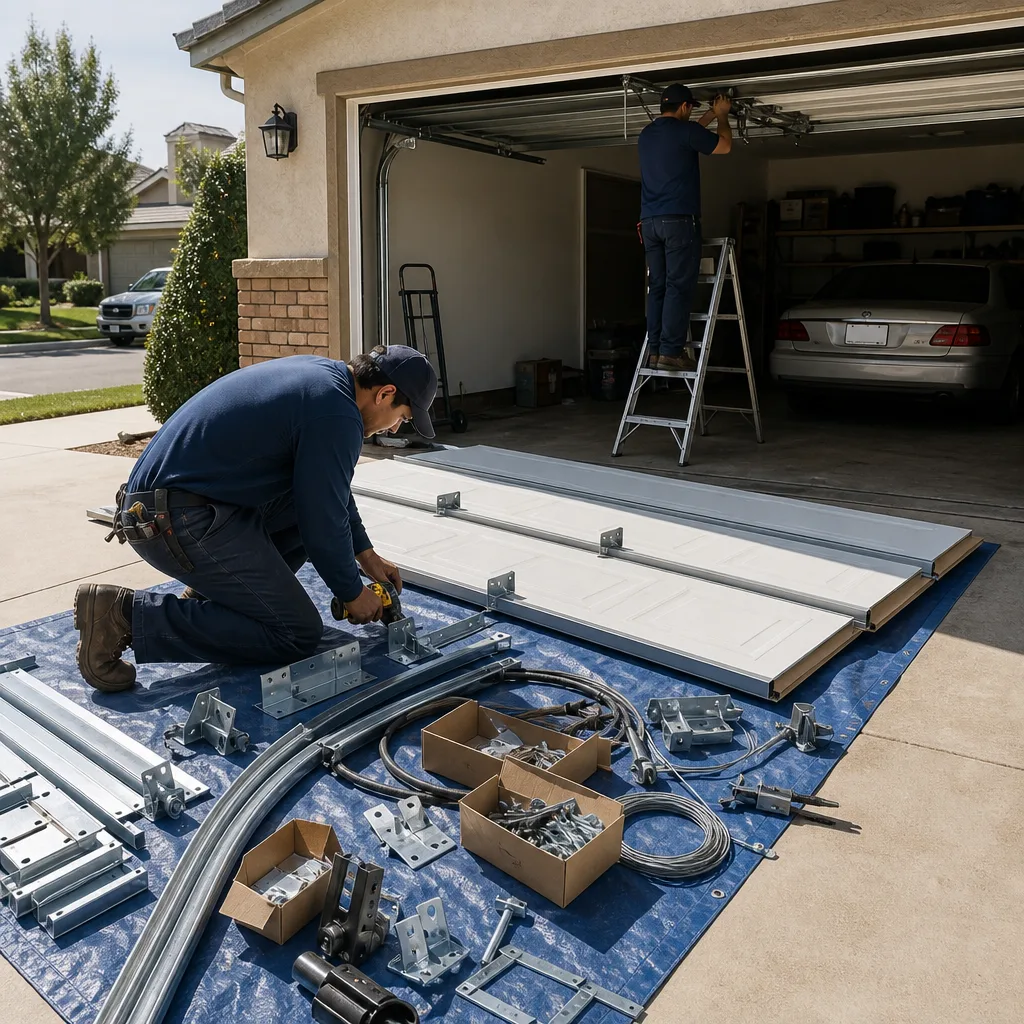
Ontario’s garage doors aren’t fighting frost and snow; they’re fighting heat expansion, Santa Ana wind fatigue, damp-morning corrosion, and relentless UV. Each stress cycle targets different components: summer attacks track tolerance, Santa Ana season attacks brackets and top sections, winter attacks seal retainers and bottom panels, spring attacks seals and photo-eyes. The preventive work that matters is specific, measurable, and cheap compared to the repairs it prevents. Work through the seasonal calendar, keep a record of what you found, and call for a professional when the problem involves spring tension, track alignment, or anything you wouldn’t feel comfortable showing a neighbor with your name on it.
Written by Marcus Deller, Owner at Servo Garage Doors Ontario, serving Ontario since 2015.