
Last updated September 20, 2026
Full 25-point door and opener safety check with every visit - springs, cables, rollers, tracks, and your LiftMaster or Chamberlain opener included
You get a price before we start. It does not change when the truck arrives.
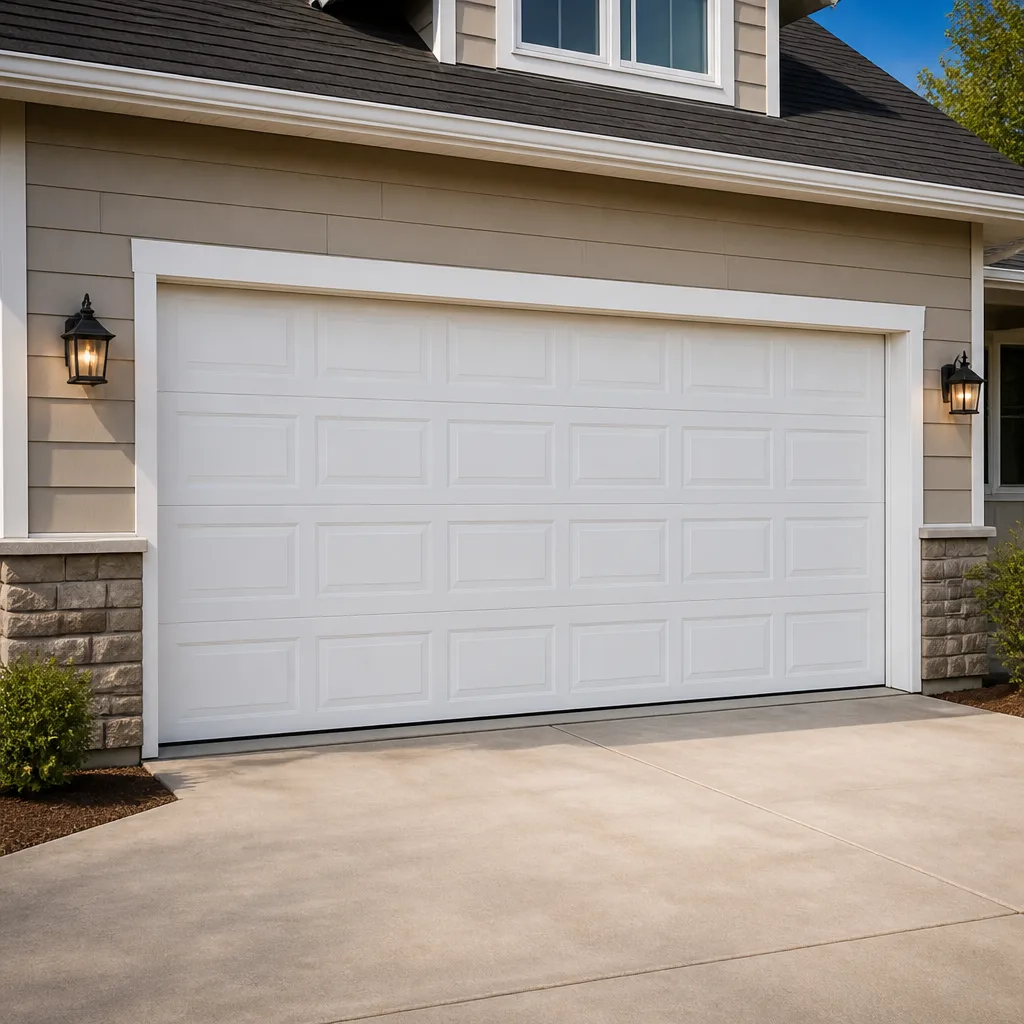
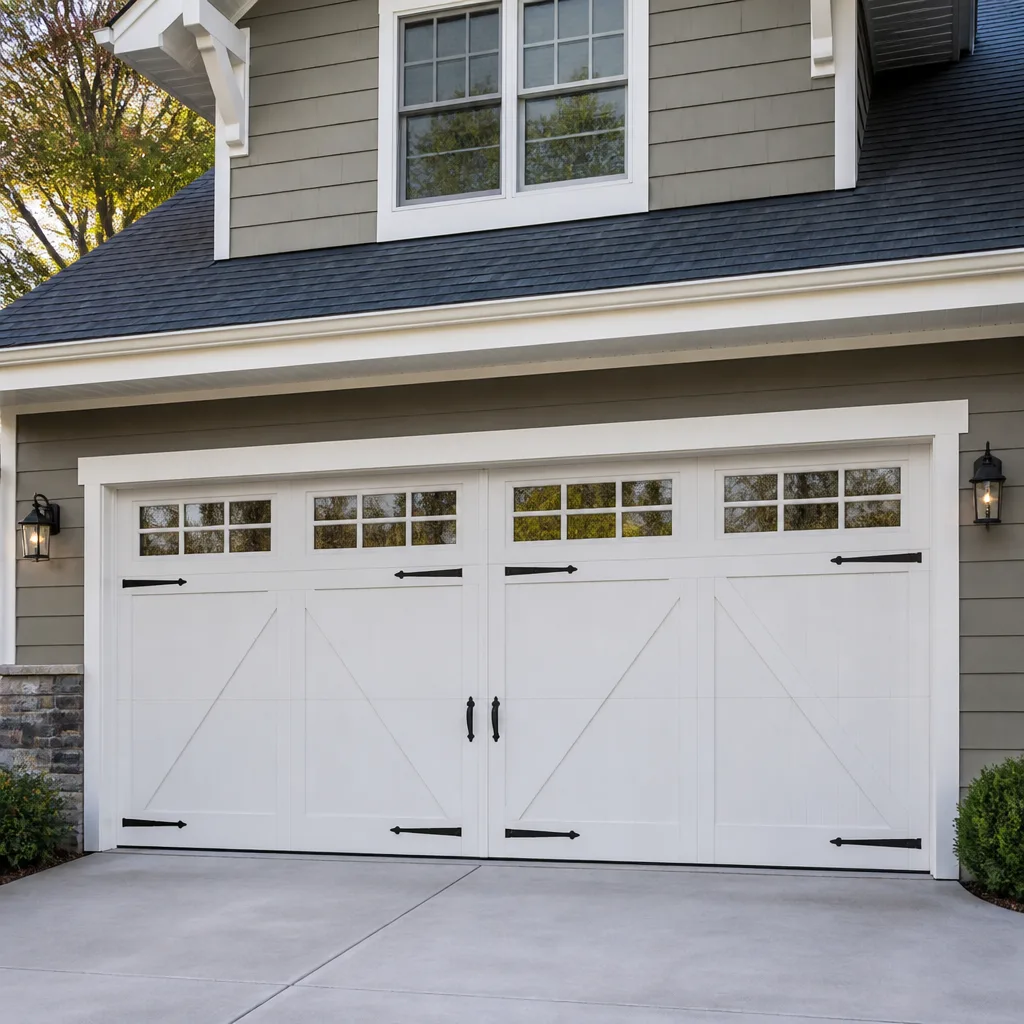
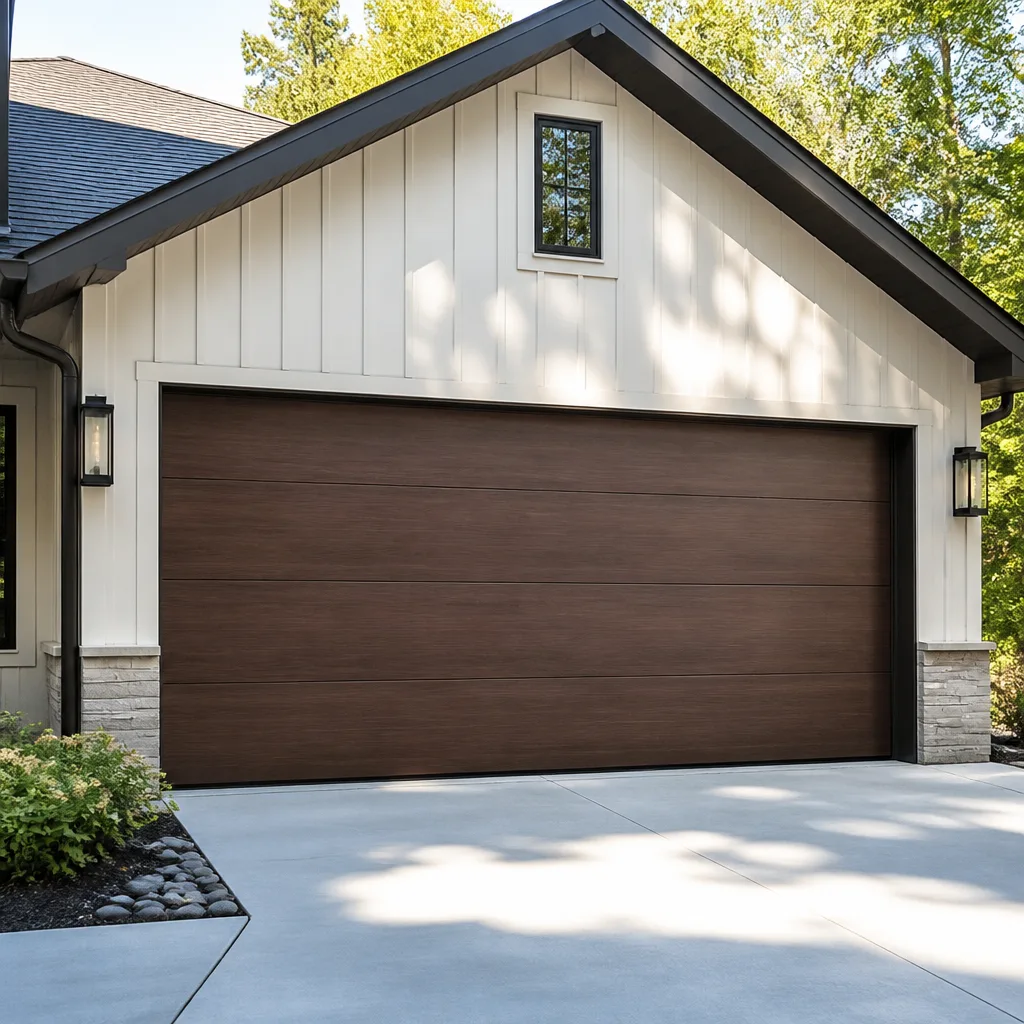
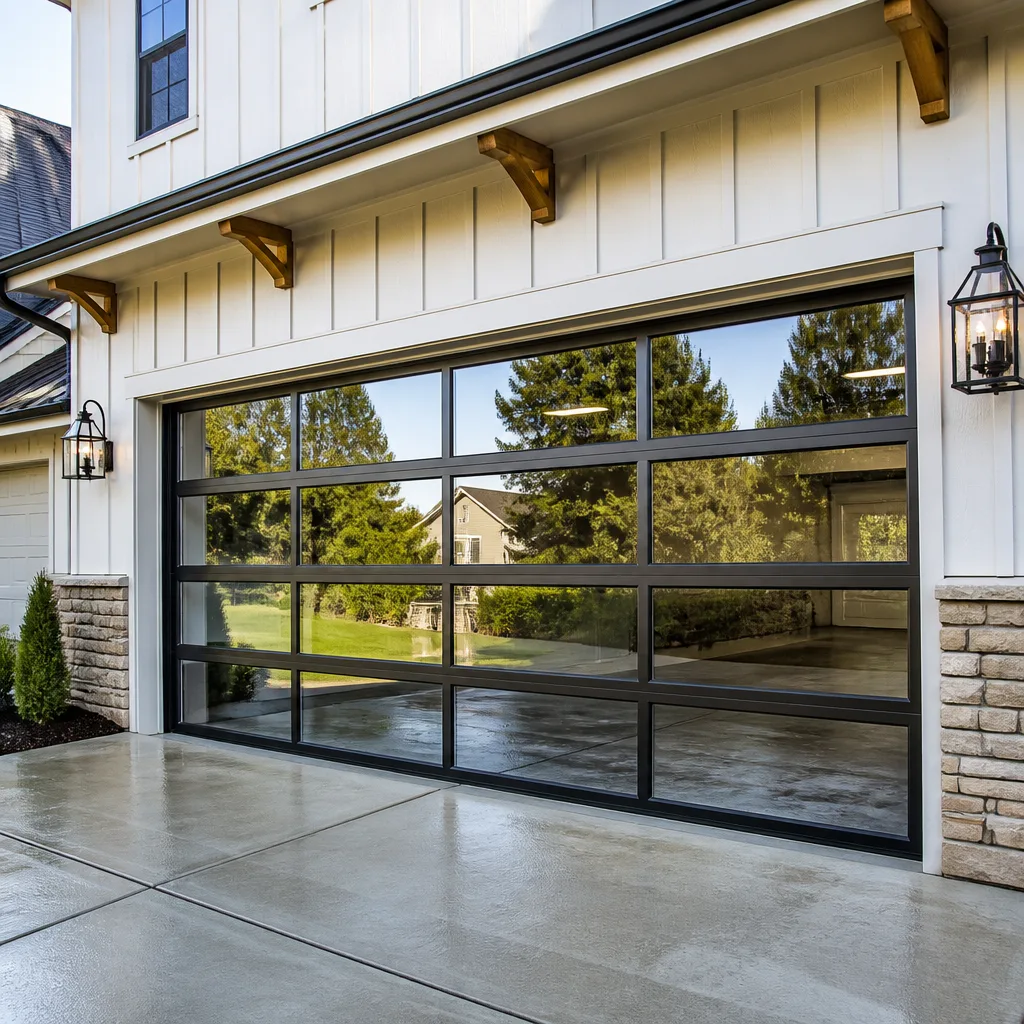
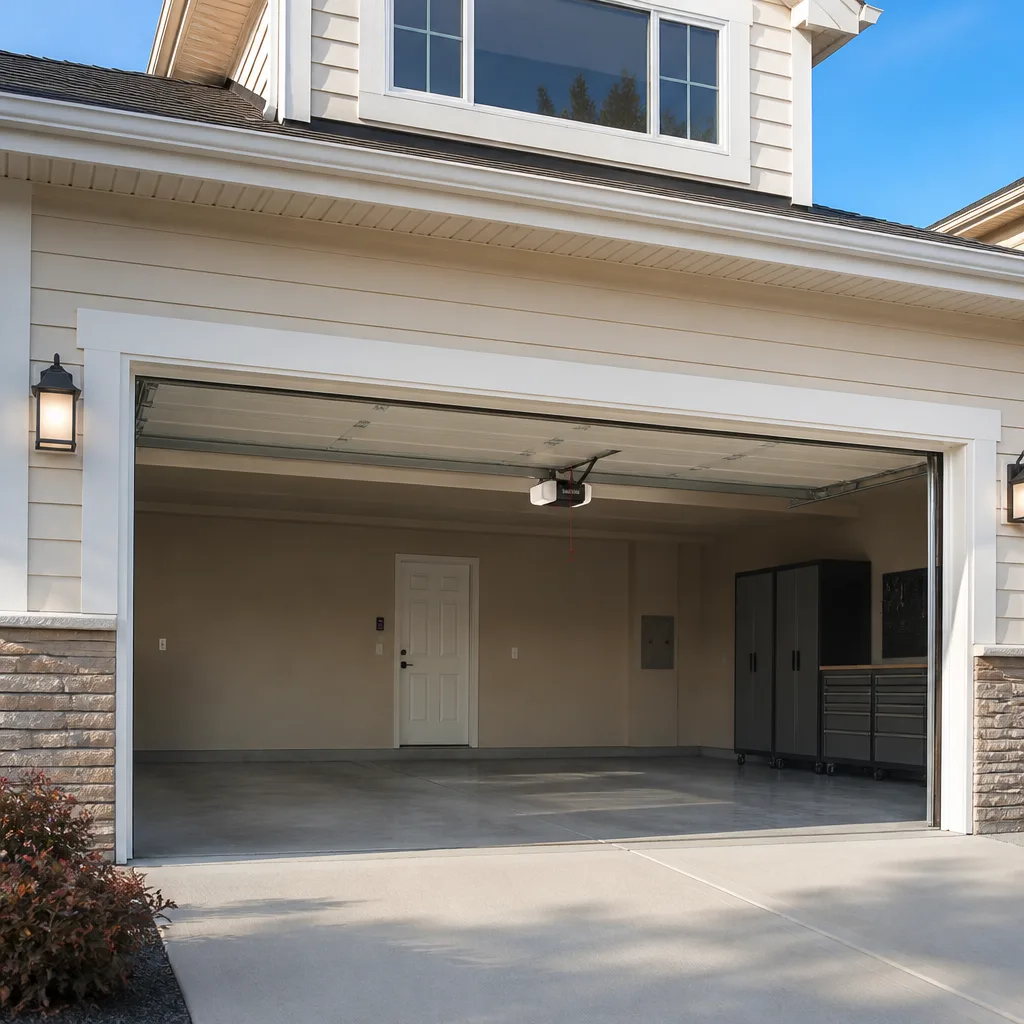
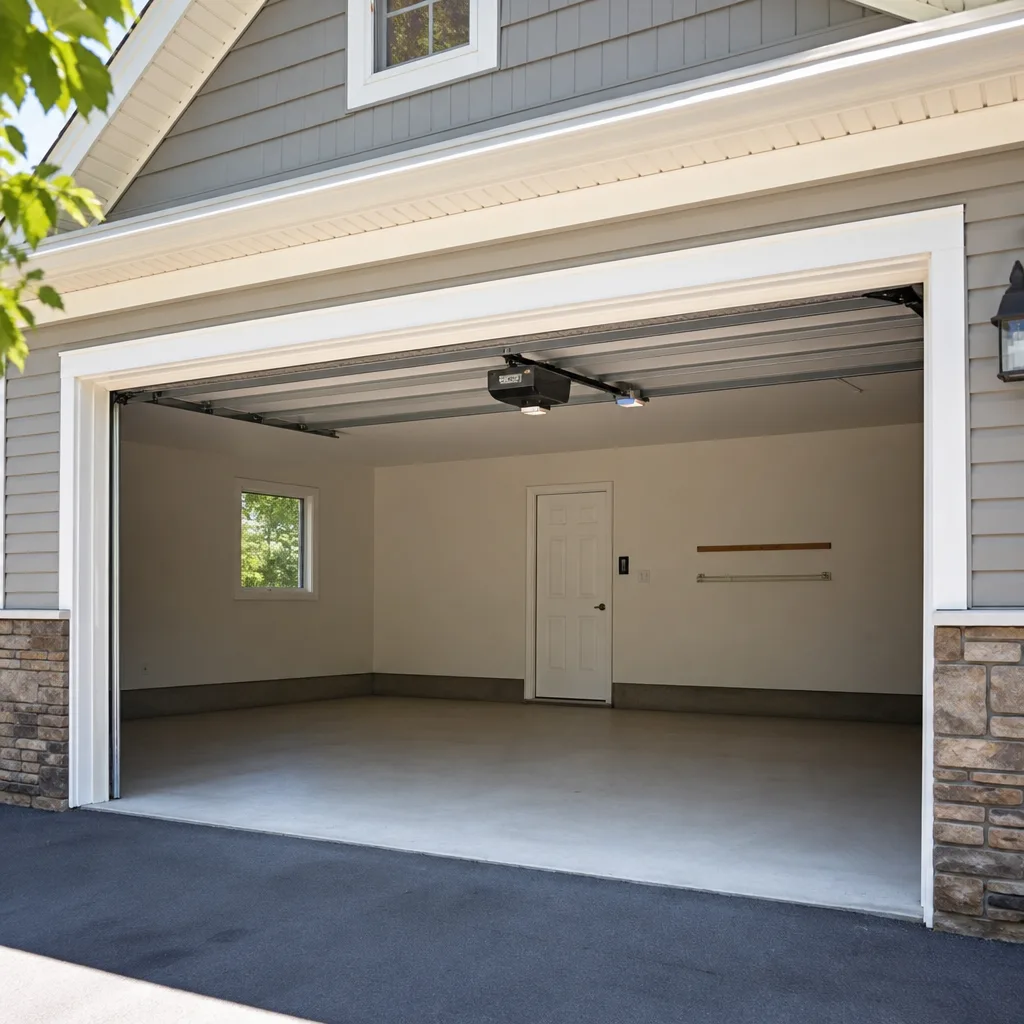
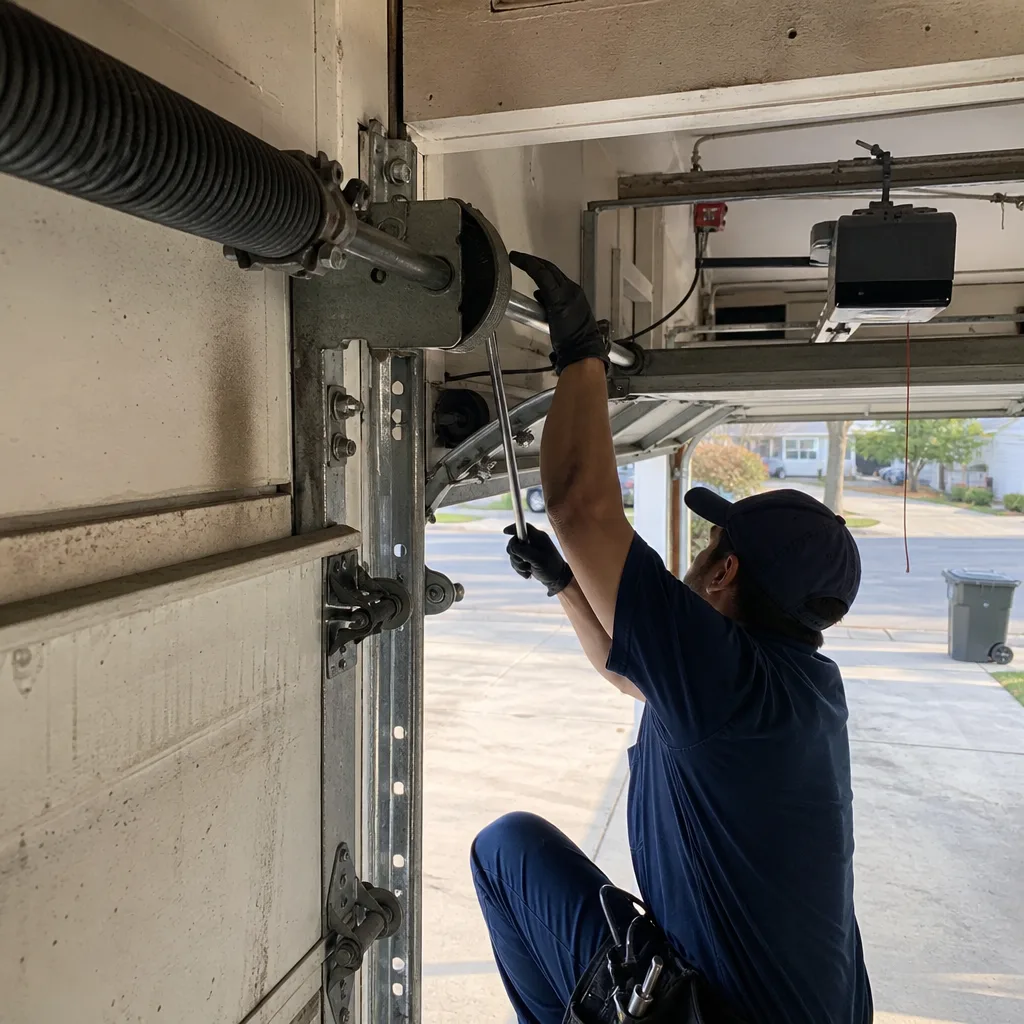 Before
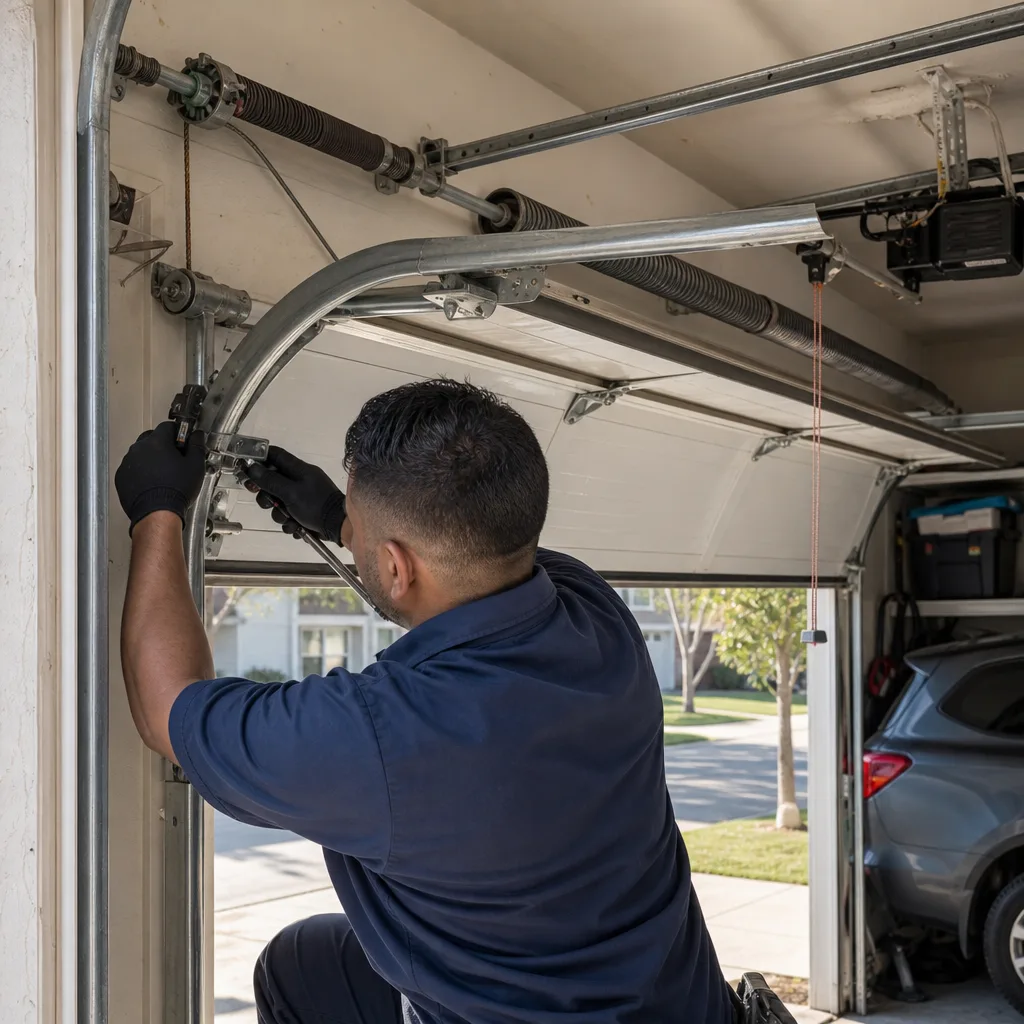 After
After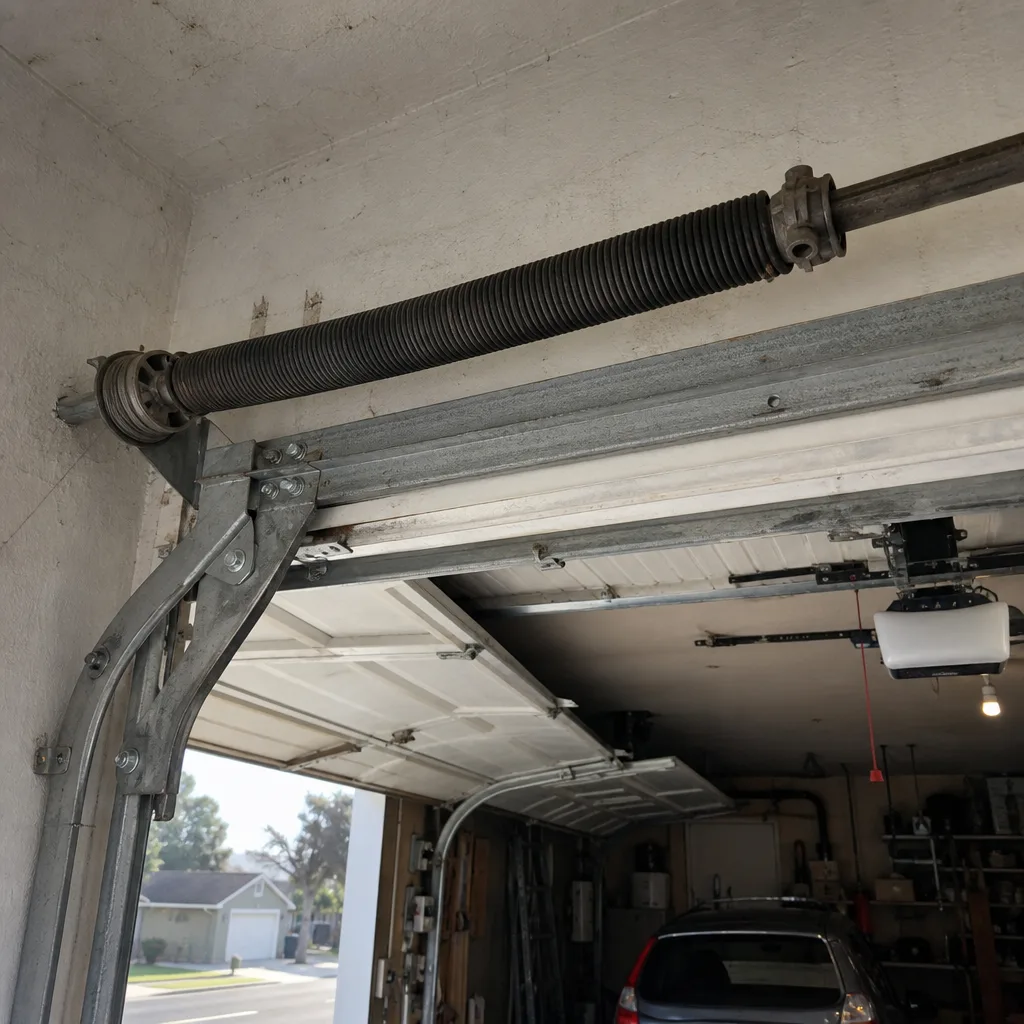 Before
 After
After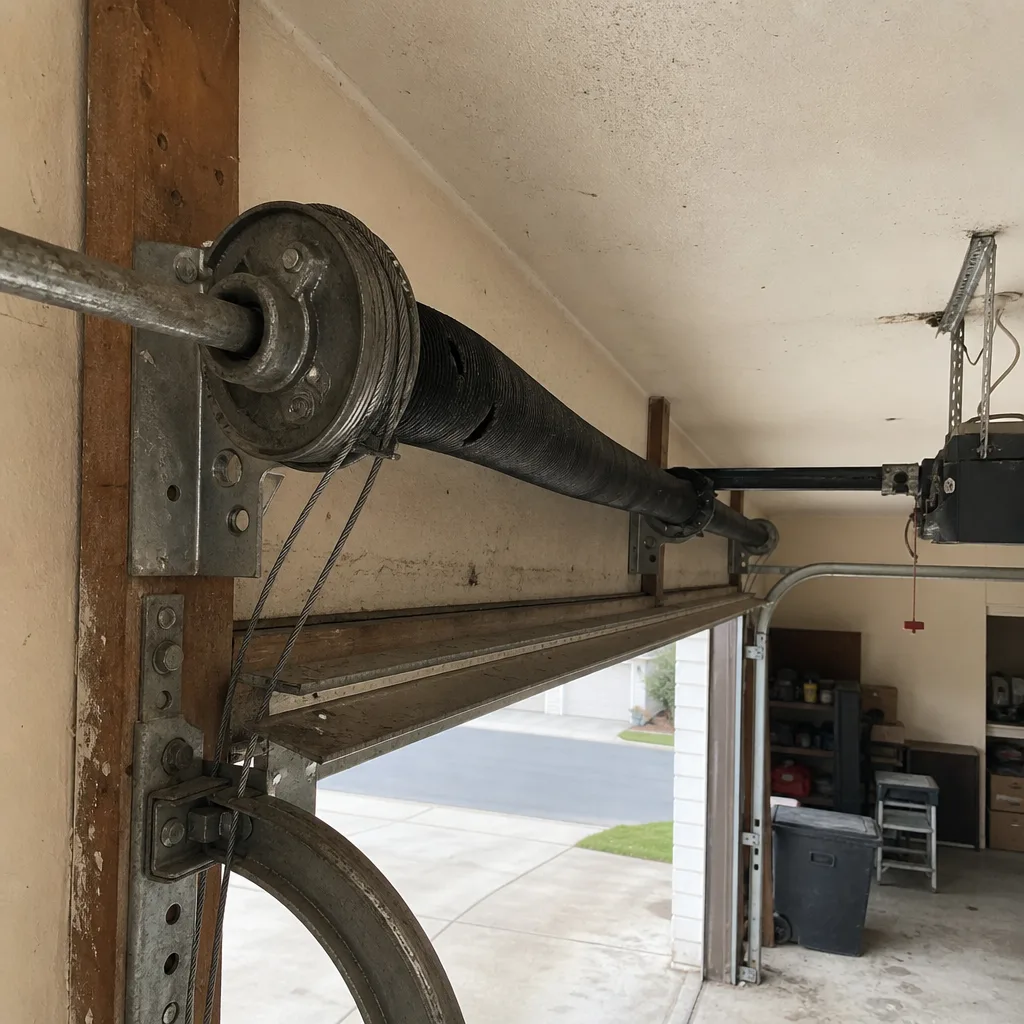 Before
 After
AfterGarage Door Repair Maintenance Checklist for Ontario Homeowners
White lithium grease and WD-40 are not interchangeable on a garage door. One is a lubricant. The other is a solvent. And using the wrong one on nylon rollers is the single most common self-inflicted repair call we take in Ontario-one that often could have been avoided with our Garage Door Repair services. The homeowner meant well, grabbed the nearest can on the garage shelf, and three months later the rollers are howling because the spray washed out what little factory grease existed and left the nylon bearing surface dry against the steel stem. This guide names the exact products, the exact parts, the exact intervals, and the exact symptoms that tell you an interval was too long. If you’ve already read the generic advice elsewhere, this is the version written for people who want specifics.
Quick Answer
A complete garage door maintenance checklist for Ontario homeowners includes six tasks performed twice a year: tightening hardware, testing the auto-reverse force calibration with a 2×4, lubricating springs and hinges with a lithium-based grease, cleaning and aligning the photoelectric sensors, inspecting cable integrity and drum winding, and checking bottom seal compression against the threshold. In Ontario’s summer heat and fall Santa Ana winds, we add a seventh local task: rechecking hardware tension on the track brackets and hinge bolts after seasonal temperature swings. Most of this takes under an hour and costs under $30 in materials. The expensive problems are the ones this checklist prevents.
Table of Contents
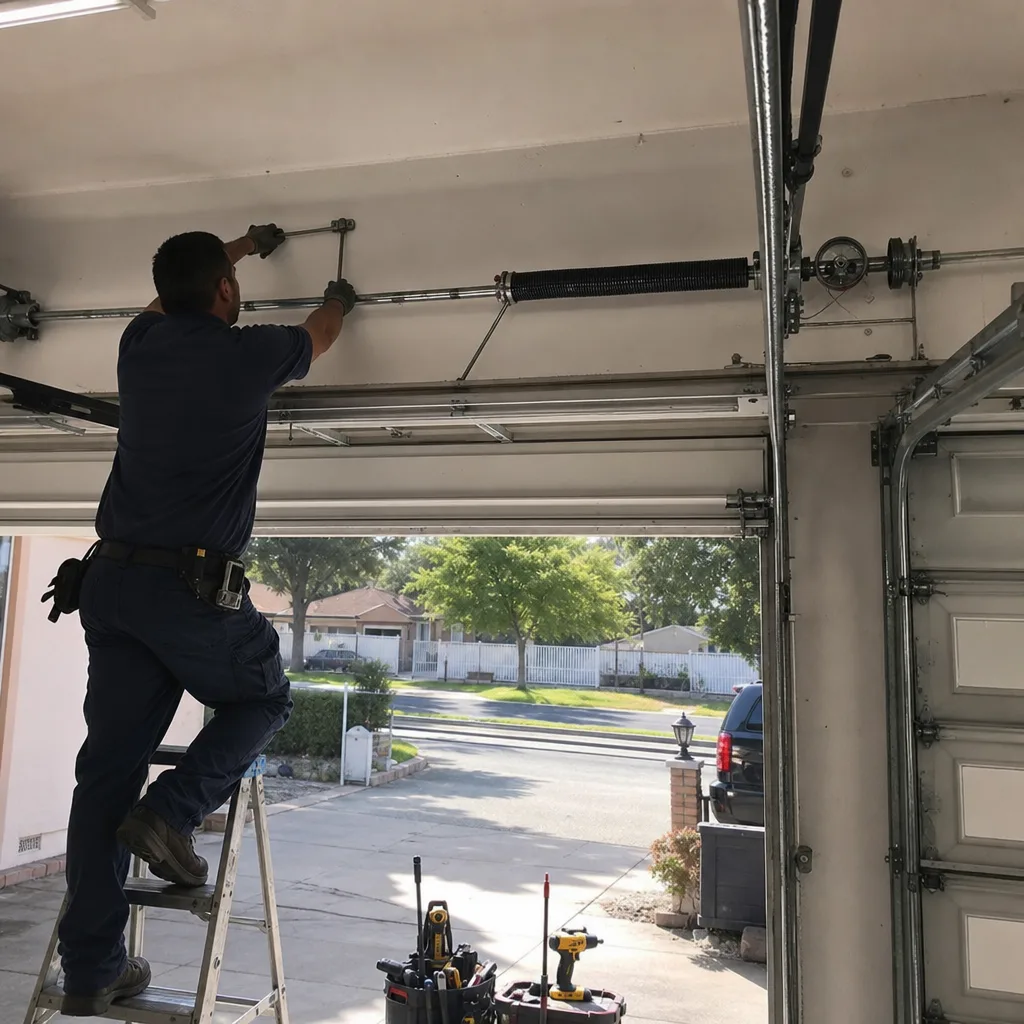
- Lubrication by Component: What to Use on Springs, Hinges, Rollers, and Tracks
- How to Test Auto-Reverse Force Calibration: The 2×4 Method and the Federal Safety Threshold
- Ontario Seasonal Triggers: When Summer Heat and Santa Ana Winds Demand a Hardware Re-Check
- The Five-Point Visual Inspection That Catches 80% of Failures Early
- Which Maintenance Tasks Void Manufacturer Warranties and How to Document What You Did
- Tools and Materials: The Complete Ontario Garage Shelf List
- Monthly vs. Seasonal Tasks: A Simple Calendar
BeforeAfterLubrication by Component: What to Use on Springs, Hinges, Rollers, and Tracks
Garage door lubrication is not one job. It is four specific jobs, and the product that works for one component will actively damage another. Ontario’s dry, dusty summers mean lubrication mistakes show up faster here than in coastal climates, because grit binds to the wrong product and turns it into grinding paste.
Torsion springs: lithium-based white grease only
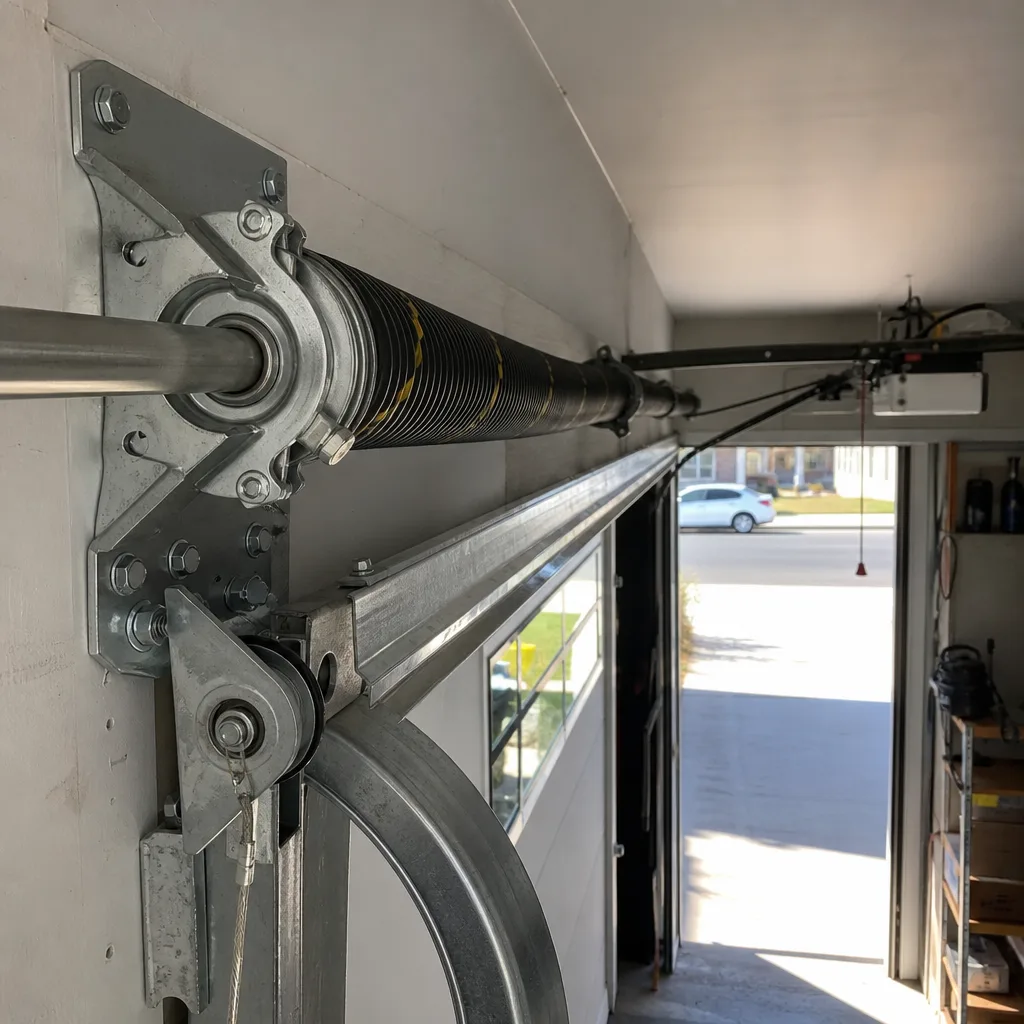
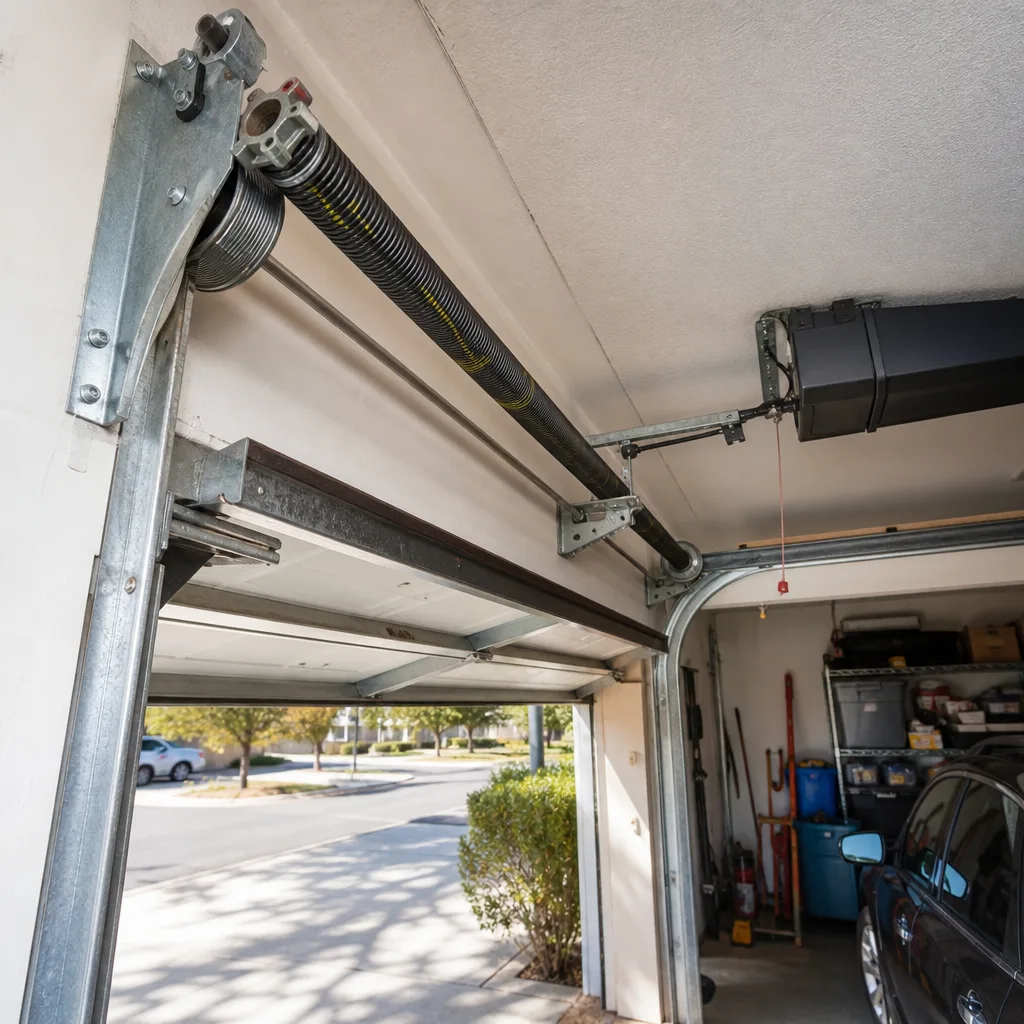
The torsion springs, mounted on the steel shaft above the closed door, move constantly under several hundred pounds of loaded tension. They need a grease that clings to the coil surface and resists being flung off as the spring winds and unwinds. White lithium grease is the standard. Spray it along the top of both spring coils in a continuous bead, then run the door through one full open-close cycle to work it between the coils.
Do not use WD-40 on torsion springs. WD-40 is a water-displacing solvent, which is what the “WD” stands for. It will clean the spring surface and leave it essentially dry, which increases coil-on-coil friction and accelerates metal fatigue. In Ontario’s inland summer heat, a dry spring runs hotter still, and heat is the enemy of spring temper.
Hinges: white lithium or a dedicated garage door spray
Each hinge on a sectional door has a pivot pin where the two halves meet. That pin is the contact point. A short burst of white lithium grease at each pivot, seven hinges on a standard 7-foot door and eight on an 8-foot door, is sufficient. If you prefer a dedicated garage door lubricant, Blaster Garage Door Lube and 3-IN-ONE Garage Door Lubricant both work well and are readily stocked at home centers in Ontario.
Rollers: steel gets grease; nylon gets nothing
The third component is where Ontario homeowners most often go wrong. Steel rollers have a steel wheel turning on a steel stem, and that metal-on-metal contact can be greased lightly, once per year, with white lithium. Nylon rollers are different. The wheel is nylon, and the bearing inside is either sealed or rated to run dry. Putting grease or WD-40 on a nylon roller washes out the internal bearing lubricant and attracts dust that abrades the wheel surface. If your door has nylon rollers, do not lubricate them at all. The symptom of already-damaged nylon rollers is a rhythmic squeak that speeds up and slows down with the door’s travel, not a constant slide sound-details you’ll also find in our Garage Door Warning Signs: A Ontario Homeowner’s Reference Guide.
Tracks: leave them alone
This is the paragraph most maintenance guides get wrong. The vertical and horizontal tracks that guide the roller wheels do not need lubrication, and lubricating them is counterproductive. The rollers are designed to roll inside the track, not slide. Grease on the track simply accumulates dirt and creates drag. If the door binds in the track, the problem is alignment or a worn roller, not a lack of grease. Clean the tracks with a dry rag, and if you see caked material built up, a degreaser like Simple Green on a rag wiped dry is enough.
How to Test Auto-Reverse Force Calibration: The 2×4 Method and the Federal Safety Threshold
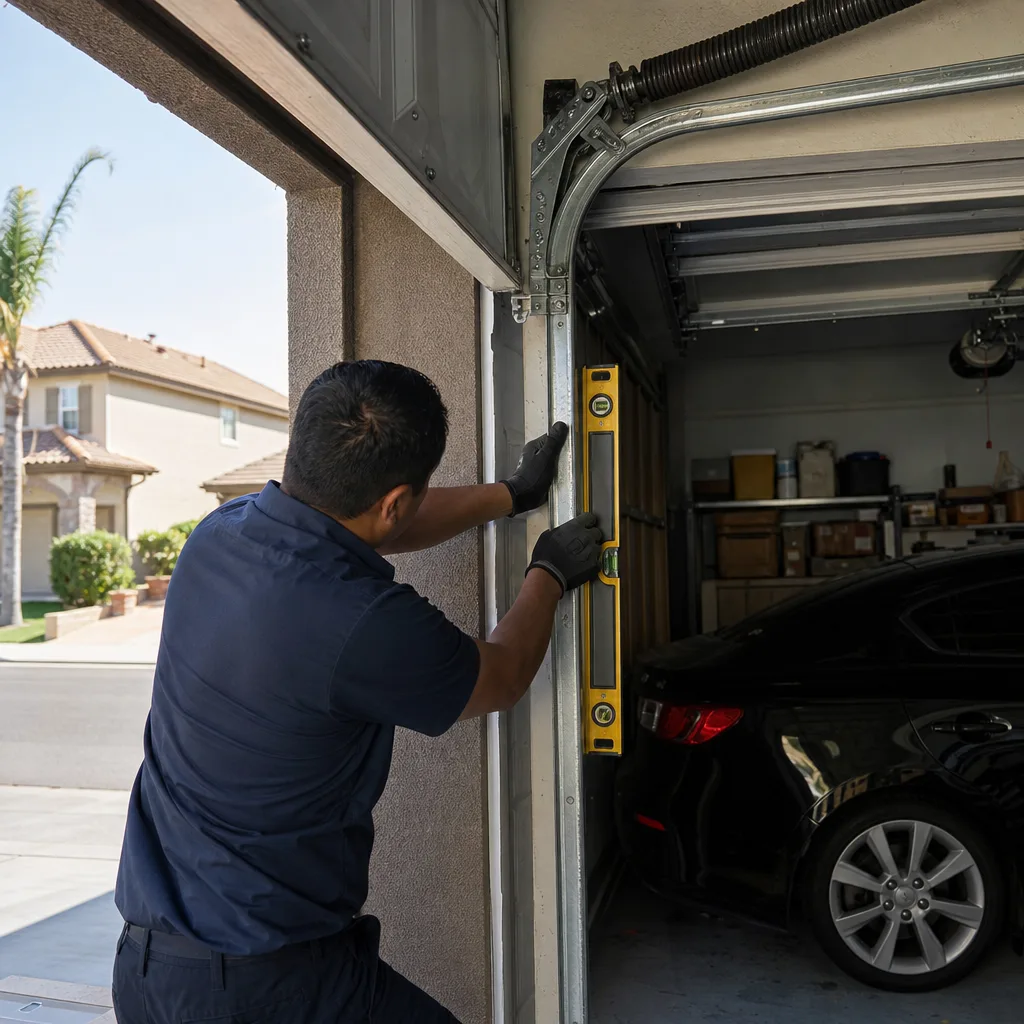
Every automatic garage door opener manufactured for sale in the United States since January 1, 1993, includes two reversal systems: an optical sensor system that detects objects in the door path, and a force-sensing system that reverses the door if it meets resistance while closing. The force system is the one that prevents a door from closing on a child, a pet, or a bicycle. It must be tested. Most Ontario homeowners never test it once after installation, and a door that fails this test is a serious injury risk.
The federal safety threshold, specified in UL 325, is this: when the door meets resistance on the way down, it must reverse within two seconds of contact. The standard field test uses a 2×4 laid flat on the garage floor directly beneath the door path.
- Open the door completely using the opener.
- Lay a 2×4 flat on the floor, centered under the door opening, where the middle of the door will contact it.
- Close the door using the wall button, not the remote, so you can observe from the side.
- Watch the leading edge of the door. The moment it touches the 2×4, it should stop and reverse within two seconds.
- If the door does not reverse, or if it reverses only after crushing down hard on the wood, the force setting is too high and the door is unsafe.
- If the door stops without reversing, the force setting is too sensitive and the door will fight itself on windy days or when the weatherstripping drags.
On LiftMaster and Chamberlain openers, the force adjustment dials or buttons are on the side or rear of the motor head. On Genie units, they are often behind the light lens cover or accessed through the wall console. On older units, the dials are marked open and close force. The correct setting for the close force is the lowest one that reliably closes the door on a calm day without reversing. Any higher than that, and you are storing up force that will be applied to whatever is under that door when something goes wrong.
This test takes five minutes and requires nothing but a scrap 2×4. We recommend running it twice a year for every Ontario homeowner, and after any professional adjustment to springs, cables, or travel limits. A door that has just had springs replaced may behave differently than it did the week before, and the reversal calibration needs to be re-verified.
Ontario Seasonal Triggers: When Summer Heat and Santa Ana Winds Demand a Hardware Re-Check
The national maintenance guides are written for a generic climate. Ontario has a specific climate: inland, semi-arid, summer highs that routinely pass 100 degrees, and fall Santa Ana wind events that push dry air through the passes and drop humidity into the single digits for days at a time. Those conditions create two maintenance triggers that a Phoenix homeowner or a Chicago homeowner would not recognize.
Bottom seal compression after summer heat
The bottom seal, the rubber or vinyl extrusion that runs along the underside of the door panel, is the door’s defense against dust, water, rodents, and heat loss. In Ontario’s summer, the concrete threshold absorbs heat all day and radiates it all night, which means the seal lives in continuous contact with a surface that can exceed 140 degrees. Rubber compounds exposed to that cycle for months will start to take a set. The seal may look intact from the inside, but if you run a finger along its underside after an Ontario summer, you may feel flat spots, cracks, or a permanent bow along its length.
When the seal loses compression, it loses the job. Air gaps open between the seal and the slab. Mice follow those gaps. So do dust and the fine particulate that Santa Ana winds carry. The check is simple: close the door at night, drop a flashlight inside the garage pointing at the threshold, and look from outside. Any light visible beneath the door means the seal has failed in that spot. In Ontario, this check matters most in September, after the peak heat, and again in late November before the cold season begins.
Hardware tension after Santa Ana wind cycles
The second local trigger is less obvious. The horizontal track sections that carry the door back into the garage are bolted to angle iron brackets, which are lagged into the ceiling joists. The vertical tracks are lagged into the jambs. Those lag screws and the nuts on the track bolts do not move on a calm day. But Ontario sits in a wind corridor where the fall and early winter months deliver repeated dry wind events that flex the door panel slightly against the track when the door is closed and the wind hits it broadside. That repeated micro-movement works hardware loose over time.
At the start of November in Ontario, we recommend a hardware tension check: a socket and ratchet, not an impact gun, on every nut and lag screw you can see. If a bolt turns with less than firm resistance, snug it down. If lag screws turn freely without resistance, the hole has wallowed and the fix is a larger lag screw or a repaired anchor point. Do not oil a loose lag screw and drive it back in. The oil will decompose the wood around the threads and make the problem worse in six months.
The Five-Point Visual Inspection That Catches 80% of Failures Early
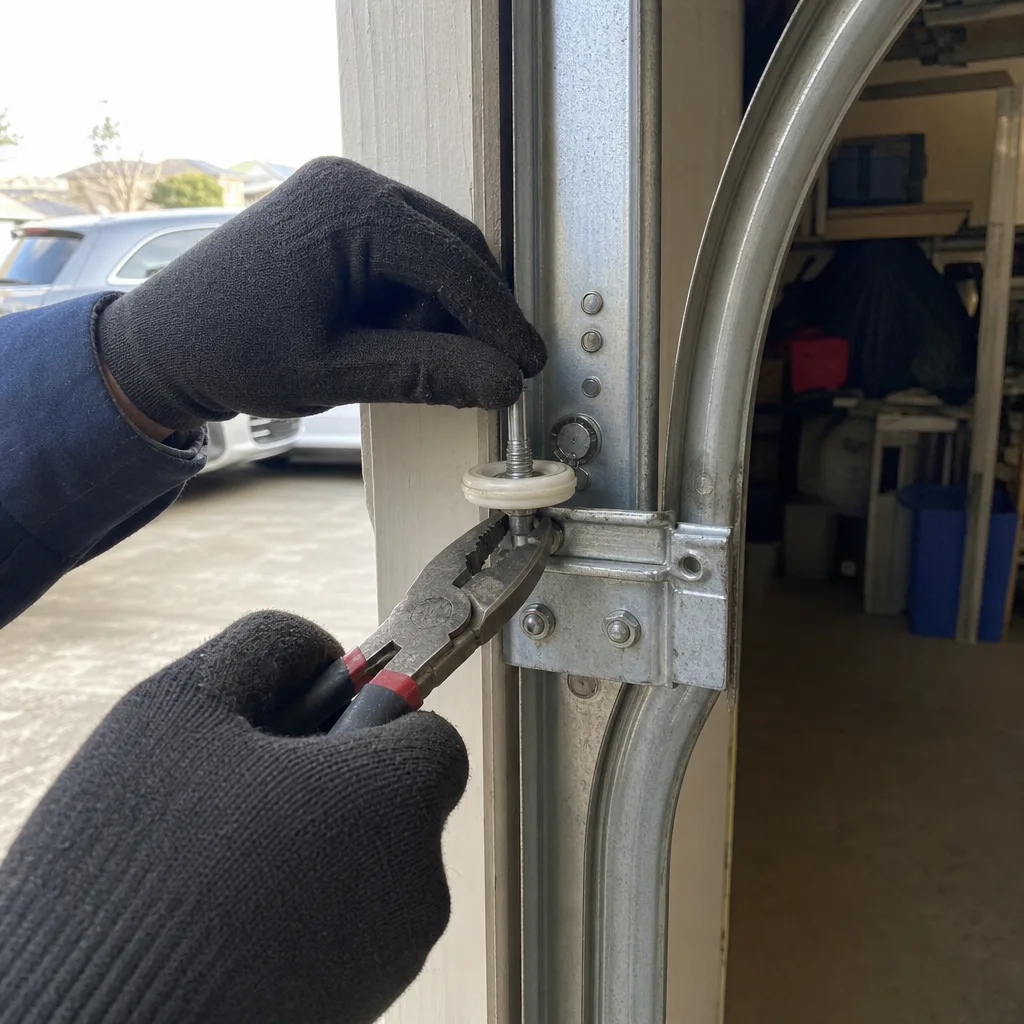
The following five-point sequence is the one we run before anything else on a service call in Ontario. It is ordered from most likely to fail to least likely, and each point takes under a minute. Run it twice a year, and you’ll see the failure coming before it becomes an emergency at 6:30 on a Monday morning.
- Cables and cable drums. Stand inside the garage with the door open and look at the cables that run from the bottom brackets, up the sides, and into the cable drums at each end of the torsion shaft. Look for fraying, rust, or kinks along the cable length, and verify that the cable is winding evenly onto the drum, with no gaps or overlaps. A cable that is beginning to separate by even one strand is a replacement item now, not later, because cables under full spring tension do not fail slowly when they fail. We also check that both cables are carrying an equal share of the load; a door that is balanced correctly will have near-identical cable tension on both sides.
- Springs and spring pads. Look at the torsion springs on the shaft. Look for rust, for a gap in the coil where it should be continuous, and for the set screws on the spring cones to be tight. A spring that has rust pitting is a spring that will fail, and when a torsion spring breaks in the up position on a two-spring door, one side of the door suddenly carries all the weight, which is what bends panels and pulls hinges out of stiles. For extension springs, which run along the horizontal tracks on older doors, look at the safety cables that should run through the spring centers. If there is no safety cable through an extension spring, that spring is an injury waiting to happen.
- Rollers and hinges. Run the door to the halfway point, on the opener, and stop it there. From the inside, look at each of the eight stations where a hinge connects a panel to the next. Look at the roller stems and wheels. A roller wheel with visible flat spots or wobble is failing. A hinge bolt that is backing out or a hinge leaf that is torn from the stile is a repair item. Hinges fail by degrees, not all at once, and the halfway point is where their wear is easiest to see because every panel is under tension.
- Bottom seal and threshold. With the door closed, get down at floor level with a flashlight. Look at the seal against the slab. This is the check described in the seasonal section above, and it is worth running every time you’re down there anyway: any daylight, any crack in the rubber, any section where the seal looks compressed flat rather than rounded. Also check that the slab itself has not shifted or spalled at the point of seal contact. A poured slab that has settled a quarter inch will defeat a perfectly good seal.
- Sensor alignment and wiring. Look at the two photoelectric sensors mounted about six inches off the floor on each side of the opening. Check that the lenses are clean and not sun-bleached, and that the small indicator lights on each sensor are both illuminating and steady, which indicates the two units can see each other. Check the wire staples along the track; a staple that has been driven too tight through the insulation is a phantom intermittent fault that will stop the door halfway through closing on random days. The wiring should have slack at every mounting point.
This whole sequence takes twelve to fifteen minutes once you know what you’re looking at. When we arrive at a Ontario home for a maintenance call, this is the order we work in, and the photo record the customer receives shows each of these five points before and after we address it.
Which Maintenance Tasks Void Manufacturer Warranties and How to Document What You Did
The manufacturers will not say this plainly, but their warranty exclusions are written to catch out the well-meaning homeowner. Here is what the fine print on a Clopay or Amarr residential door warranty, and the opener warranty on a LiftMaster or Genie unit, actually means when it is applied to maintenance.
What voids a door or opener warranty
Using the wrong lubricant on the wrong component does not quietly void a warranty all by itself, but it gives the manufacturer a documented cause if the part later fails. Sealed nylon roller bearings, for example, are warrantied to fail from manufacturing defect, not from solvent ingress. If you have sprayed a petroleum solvent on a nylon roller and it fails, the manufacturer will call the failure contamination, and contamination is excluded. On openers, the most common exclusion is force settings. A force setting left deliberately high, because the homeowner or an uncertified installer wanted the door to power through a binding condition, moves the failure from the gear to the door, and the manufacturer’s view is simple: the force dial was set to exceed factory spec, so the spec was exceeded. Anything pushed beyond factory spec is outside the warranty.
Adjusting or replacing the torsion springs yourself is the other category that manufacturers and every local building inspector will flag. The springs are under load at all times. A wound torsion spring carries enough stored energy to break a wrist or a jaw if a winding bar slips. The door manufacturer’s warranty typically states that spring replacement must be performed by a trained professional using correct winding bars; if a spring is replaced improperly and then causes a panel failure, the panel claim is dead. We carry state-licensed technicians for exactly this reason, and no customer should ever try to wind or unwind a torsion spring by hand. That is not a recommendation we negotiate on.
How to document maintenance so a claim survives
If you do the six-point checklist in this guide yourself, take ninety seconds and document it. A small spiral notebook left on the garage shelf is enough, and it should record: the date, the outside temperature, what was lubed or tightened, any products used by brand and name, and any symptom observed. Photograph anything that looks wrong. The photo timestamp and the notebook entry together are what a warranty claim reviewer will accept as a maintenance record, and the absence of any record is the easiest reason for a claim to be denied. The documentation habit is also the entire premise of the system we use: photograph what was found, write down what was done, and hand the customer the paper.
Tools and Materials: The Complete Ontario Garage Shelf List
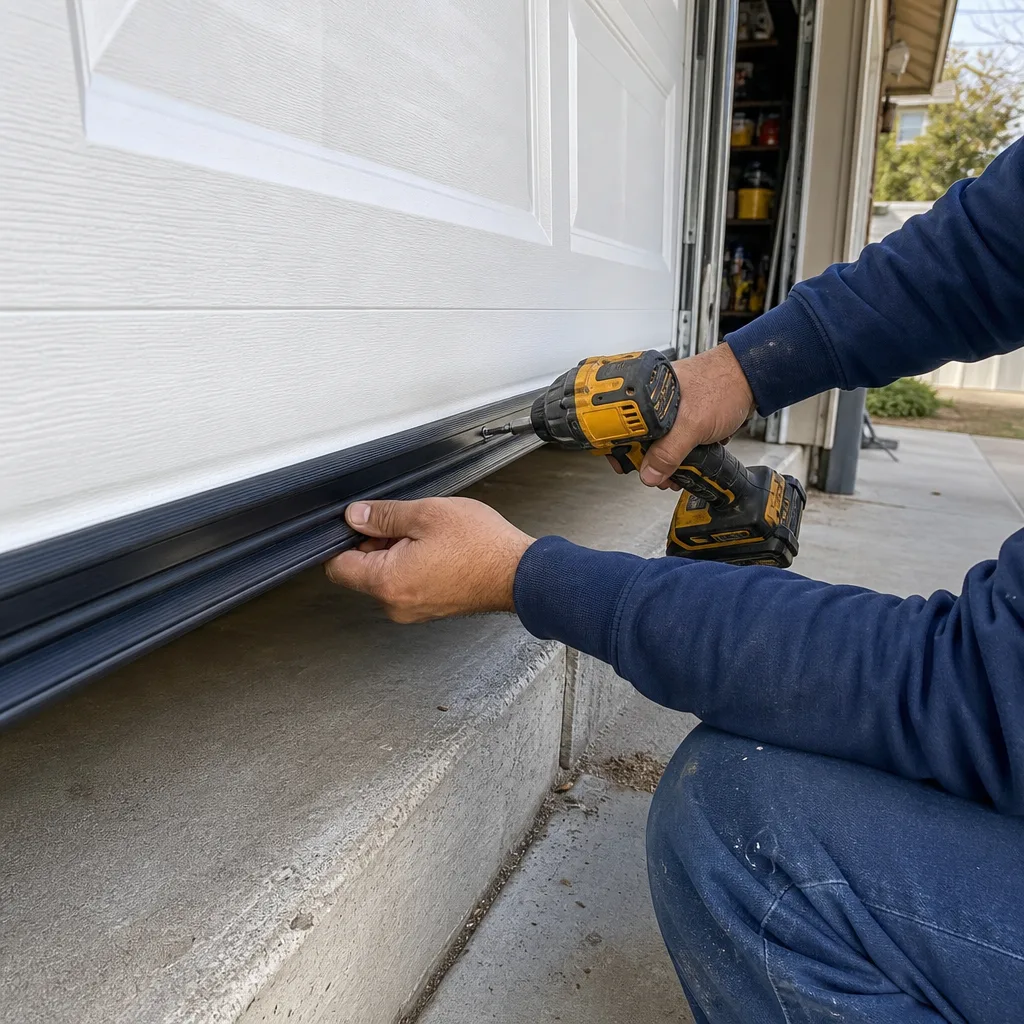
You do not need a mechanic’s chest to maintain a garage door. You need correct products, not many products, and you need them on hand before the day you actually plan to use them.
Products by name
- White lithium grease. One can lasts four doors for over a year. This is the workhorse for torsion springs and steel-roller stems. We recommend the WD-40 Specialist White Lithium Grease or the Lucas Oil White Lithium Grease, both common at any hardware store in Ontario.
- Dedicated garage door spray lubricant. Not necessary if you have the lithium, but useful for hinge pivots where a thinner product penetrates better. Blaster Garage Door Lube is an acceptable alternative.
- Dry Teflon or silicone spray. This is for the only legitimate track application: the one-inch strip of the inside radius on each side, which the roller bodies do not touch but the hinge plates can contact during travel. A short burst of dry Teflon on the inside radius, wiped immediately, is the only sanctioned track application. Silicone works too. What does not work is motor oil, WD-40, and axle grease.
- Simple Green or similar degreaser. For cleaning track surfaces and hinge plates before lubrication.
- Dry rags. Cotton, not microfiber, because microfiber leaves fibers that gum up the grease.
Hardware to keep on hand
- A small assortment of 7/16-inch and 1/2-inch nuts, bolts, and washers matching what is already on the door.
- Two spare hinge assemblies of the same stamp pattern as the existing hinges, typically a Number 1 and a Number 3 hinge for a 7-foot door.
- A 2×4 offcut for reversal testing.
- A torpedo level and a socket set in 3/8-inch drive, shallow sockets, not deep, with a ratchet and an extension.
None of this is exotic. The entire list is under thirty dollars at any hardware store on Holt Boulevard, and it will keep a standard Ontario garage door in honest condition for years.
Monthly vs. Seasonal Tasks: A Simple Calendar
Most of the tasks in this guide are semi-annual. A few are monthly and take under a minute. Here is the Ontario-specific schedule that works with the local climate, not against it:
Monthly
- Open and close the door once manually using the emergency release cord, and listen for any new sound or pitch change.
- Visually check that both sensor indicator lights are steady.
- Look at the bottom seal from inside with the door closed and a flashlight on the floor.
Six-month intervals: March and October
March is the post-rain, pre-heat checkpoint for Ontario. October is the post-heat, pre-Santa-Ana checkpoint. Both are equally critical in this climate:
- Run the complete five-point visual inspection in order.
- Lubricate springs, hinge pivots, and steel roller stems. Not the nylon rollers, not the tracks.
- Run the 2×4 auto-reverse test.
- Snug every accessible bolt and lag screw with a hand tool.
- Replace the bottom seal if any daylight passes beneath it in the flashlight test.
Annual: replacement items
Once a year, check and replace as needed: any cable with visible fraying or rust, any roller that shows visible wobble, any hinge that shows cracking at the leaf, and any bottom seal that has taken a permanent set. These are the four items that produce nearly all garage-door emergencies, and all four are visible failures long before they actually fail.
Common Mistakes to Avoid
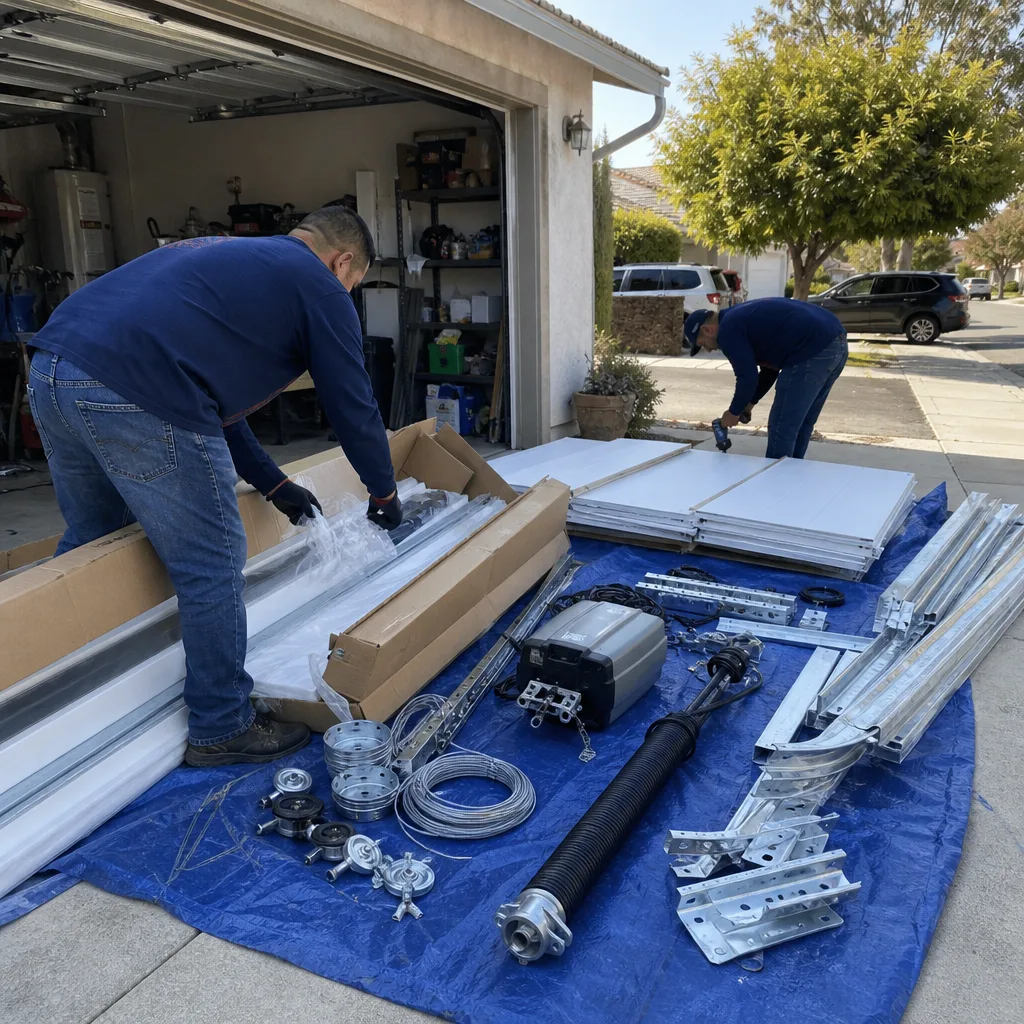
- Spraying WD-40 on torsion springs. WD-40 is a solvent, not a lubricant. It cleans the spring surface and leaves it dry, and dry springs in Ontario’s summer heat fail earlier.
- Lubricating nylon rollers. Nylon rollers are built to run dry. Adding grease or spray to them pulls out the internal bearing lubricant and then traps dirt in the wheel, and the resulting squeal is now the most common self-inflicted repair call in Ontario.
- Greasing the tracks. The roller wheels roll. They do not slide. Track grease just turns into an abrasive paste with Ontario dust, and then you have a drag problem on top of a dirty track.
- Never testing the auto-reverse. A door that has been adjusted for years without a force check can be closing with enough force to injure, and the homeowner will not know until the test with the 2×4 reveals it.
- Checking cables with the door closed. The cables are only under accessible inspection when the door is open. Closed, the cables rest slack and failed cable strands hide against the track.
- Tightening hardware with an impact driver. An impact gun on a lag screw or hinge bolt can strip the hole or snap an already-fatigued bolt. Hand tools only for garage-door hardware, and if a bolt spins freely, repair the anchor instead of burying it deeper.
When to Call a Professional
Call a professional the day you see cable fraying, the day you see a spring with a visible gap in the coil, and the day the reversal test fails. Call one if the door has come off the track entirely, because pulling it back on while it is connected to the opener can shear the top panel. Call one if a hinge or bracket has torn from the panel stile, because that is a structural repair, not a bolt snug. And call one before you touch any torsion spring adjustment yourself. No checklist in the world makes winding a high-tension spring a DIY job. Garage Door Repair in Ontario is the page to read next if any of those symptoms appear. Servo Garage Doors Ontario offers free estimates in Ontario, with the written price and scope in your hand before any work starts. Call (951) 470-2012.
Frequently Asked Questions
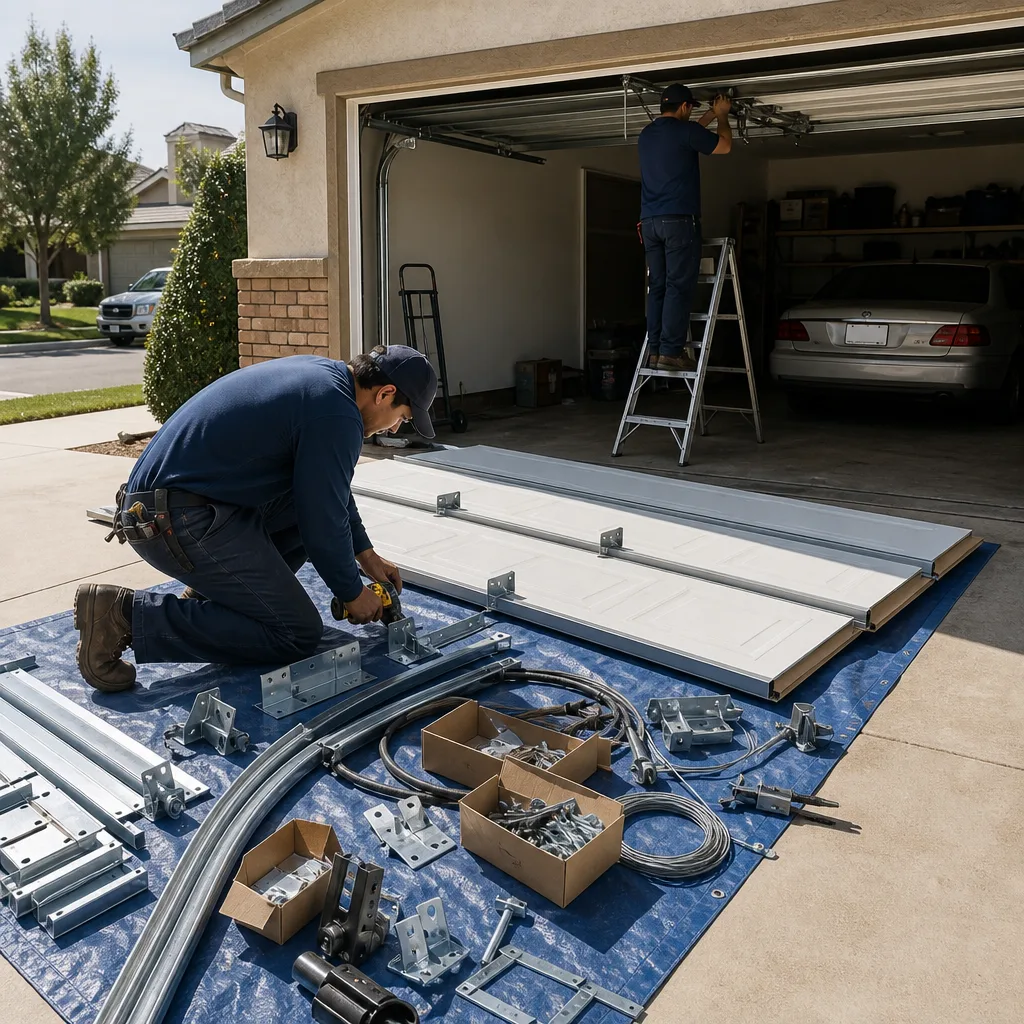
Twice a year is the correct interval in Ontario: March, before the inland heat begins, and October, after the heat has peaked and before Santa Ana wind season. The two semi-annual visits cover the seasonal triggers that actually matter in this climate: bottom seal compression from summer threshold heat, and hardware loosening from repeated dry-wind flex on the door panels. A homeowner who skips the October check will find the problem in December, when the temperature has dropped and the door binds. For homeowners who want a documented professional record, Servo Garage Doors Ontario performs a maintenance visit that includes the five-point inspection and a photo record of findings, with a flat written price before work starts, as outlined in How to Hire a Garage Door Contractor in Ontario: A Step-by-Step Guide.
White lithium grease is the best all-purpose lubricant for the components that actually need lubrication: torsion springs, hinge pivots, and steel roller stems. A dedicated garage-door spray like Blaster Garage Door Lube is an acceptable substitute for hinges and a useful addition for tight pivots. The important distinction is what not to use: WD-40 on springs, and any lubricant at all on nylon rollers or tracks. For Ontario’s dry climate, white lithium’s resistance to dust adhesion gives it an edge over thinner sprays on the springs, which run hottest and work hardest.
Yes, for the visual, lubrication, and hardware-tightening tasks in this guide, and for the reversal test with the 2×4. No, for torsion spring adjustment or replacement, cable replacement while the springs are wound, and any repair where the door is off the track and still attached to the opener. Those are the three tasks where the risk of serious injury or property damage moves beyond the DIY category, and each is explicitly excluded from the reasoning that makes a checklist like this workable. When in doubt, call a licensed professional and watch what they do.
The most common cause is dry spring coils and hinge pivots that have never been lubricated, made worse by Ontario’s summer heat, which expands the metal and tightens the contact surfaces. The second most common cause is nylon rollers that someone sprayed with WD-40 or another solvent, which washed out their internal lubricant and left the bearings running dry. The fix for the first is white lithium applied to the springs and hinge pins. The fix for the second is roller replacement, because once a sealed nylon bearing has been flushed, lubing it again will not restore it.
A professional maintenance visit in Ontario typically falls between $75 and $150 for the inspection, lubrication, tightening, and reversal test, depending on the door’s age and condition. Some companies fold that fee into a repair if the inspection finds work that needs doing; others charge it as a standalone visit. At Servo Garage Doors Ontario, the maintenance call carries a flat written price and written scope before anything begins, and the visit closes with a documented photo record of what was found and what was done. Call (951) 470-2012 for the exact price on your door.
Replace the bottom seal when the flashlight test shows daylight beneath the door, when the seal has visible flat spots or cracks along its underside, or after its third Ontario summer on a west-facing threshold. West-facing doors in Ontario take direct afternoon heat on the slab, and the seal life on those doors runs shorter. Also replace it before the fall wind season if it is borderline, because the Santa Ana dust will find any gap and coat everything in the garage that you keep covered.
The Bottom Line
Most garage door failures are not sudden. They are visible weeks or months before they happen, on a cable or a hinge or a spring that some homeowner would have seen if they had known where to look. This guide names the five spots, the specific products, and the local triggers that make Ontario different from the generic advice. Run the five-point visual every six months, lubricate only the components that ask for it and only with the products that belong there, test the auto-reverse with a 2×4 twice a year, and document what you did. The door that is quietest and best-behaved on this checklist is the door that does not call you at midnight. If any part of the inspection turns up something you do not want to touch, Servo Garage Doors Ontario home and the Garage Door Installation in Ontario and Garage Door Opener Repair & Installation in Ontario pages cover what comes next. For a free estimate from a Ontario garage door company that puts the written price in your hand before work begins, call (951) 470-2012.
Written by Marcus Deller, Owner at Servo Garage Doors Ontario, serving Ontario since 2015.