
Last updated September 20, 2026
Full 25-point door and opener safety check with every visit - springs, cables, rollers, tracks, and your LiftMaster or Chamberlain opener included
You get a price before we start. It does not change when the truck arrives.
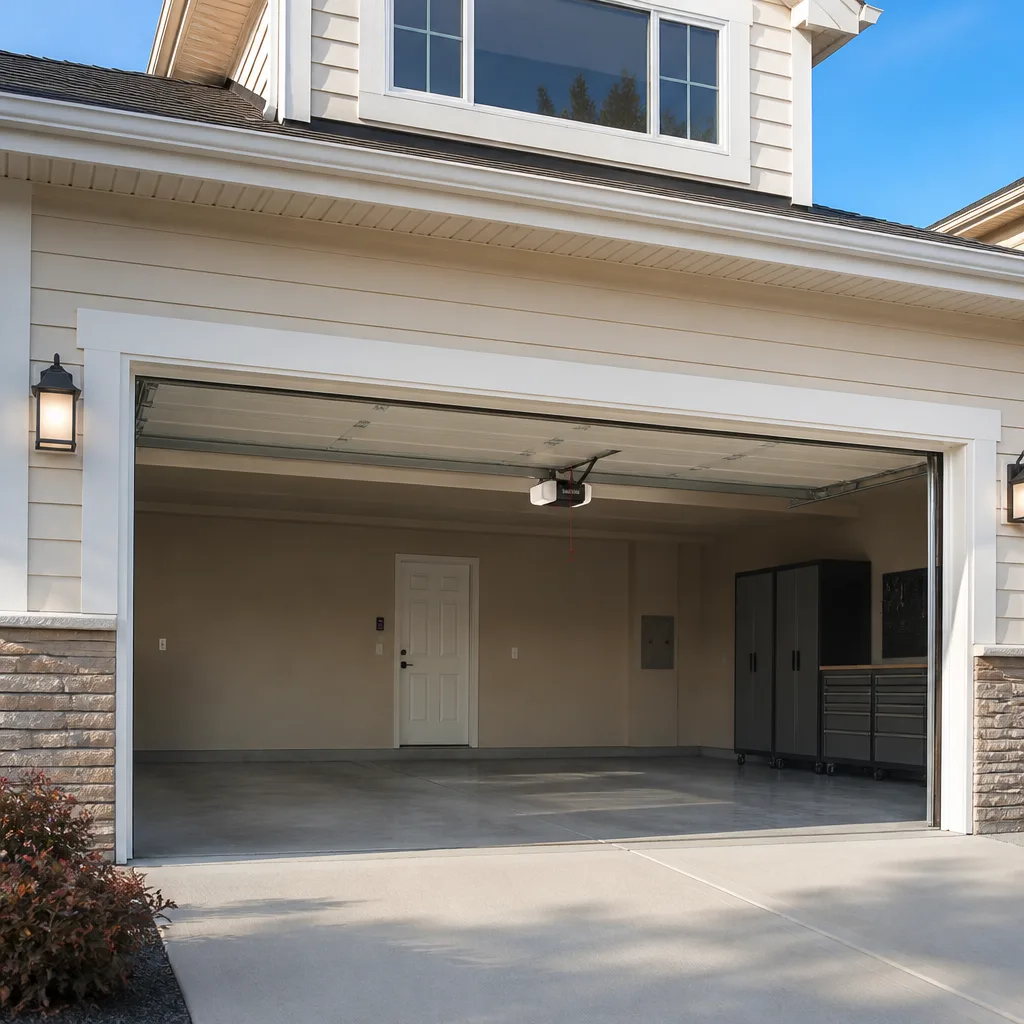
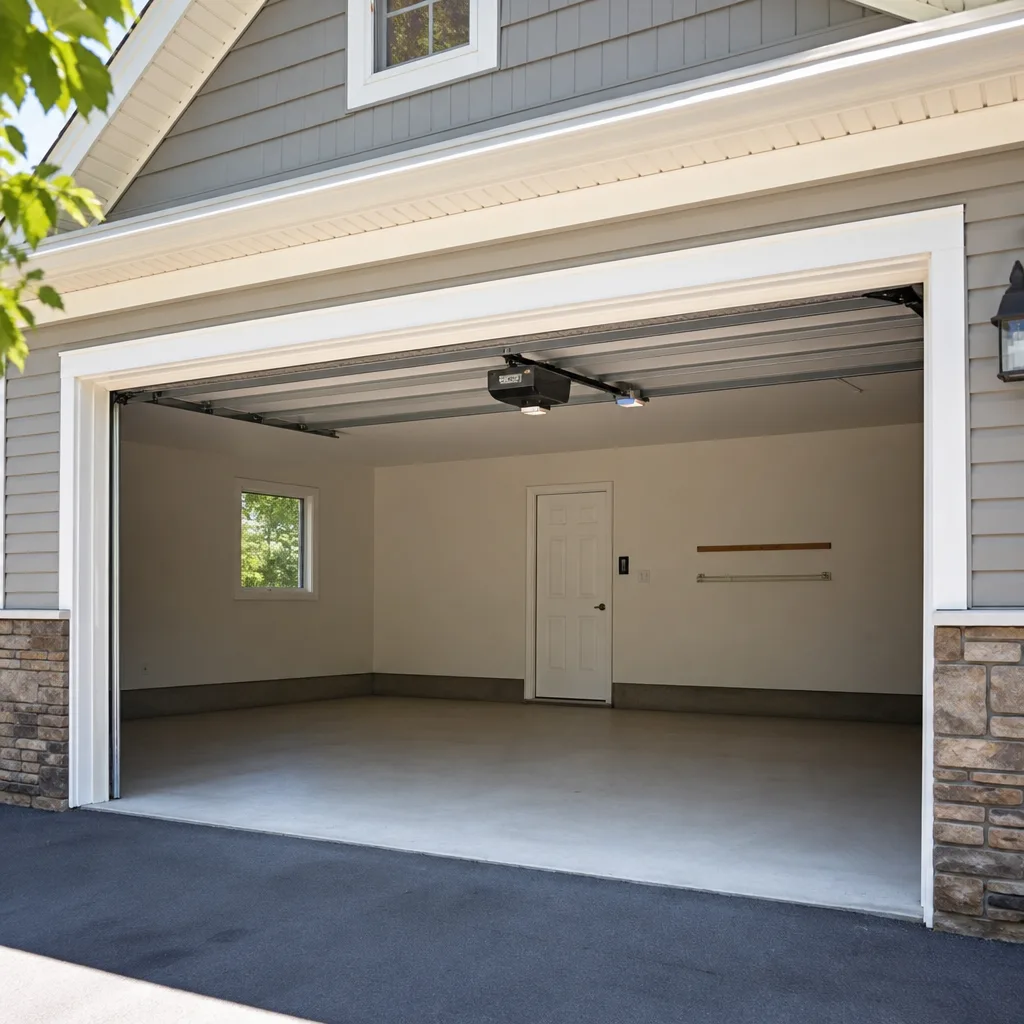
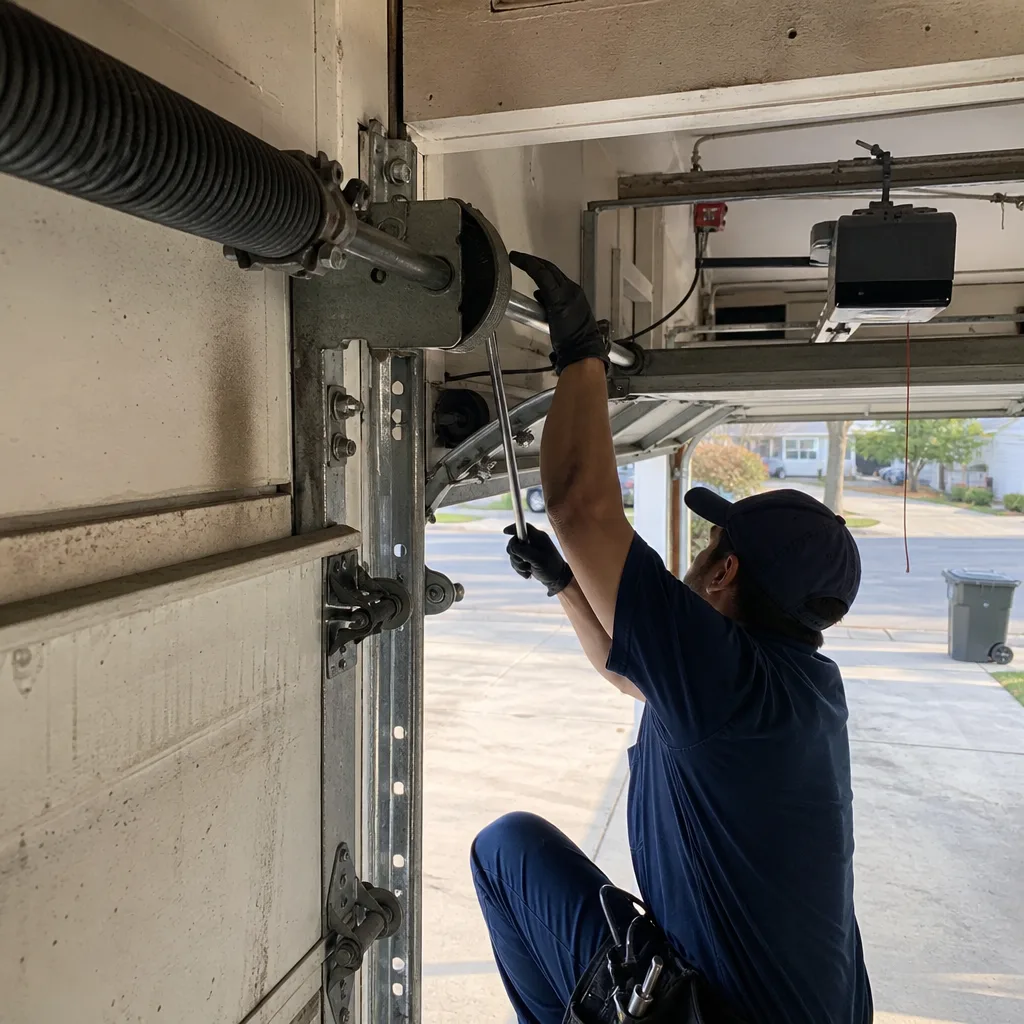 Before
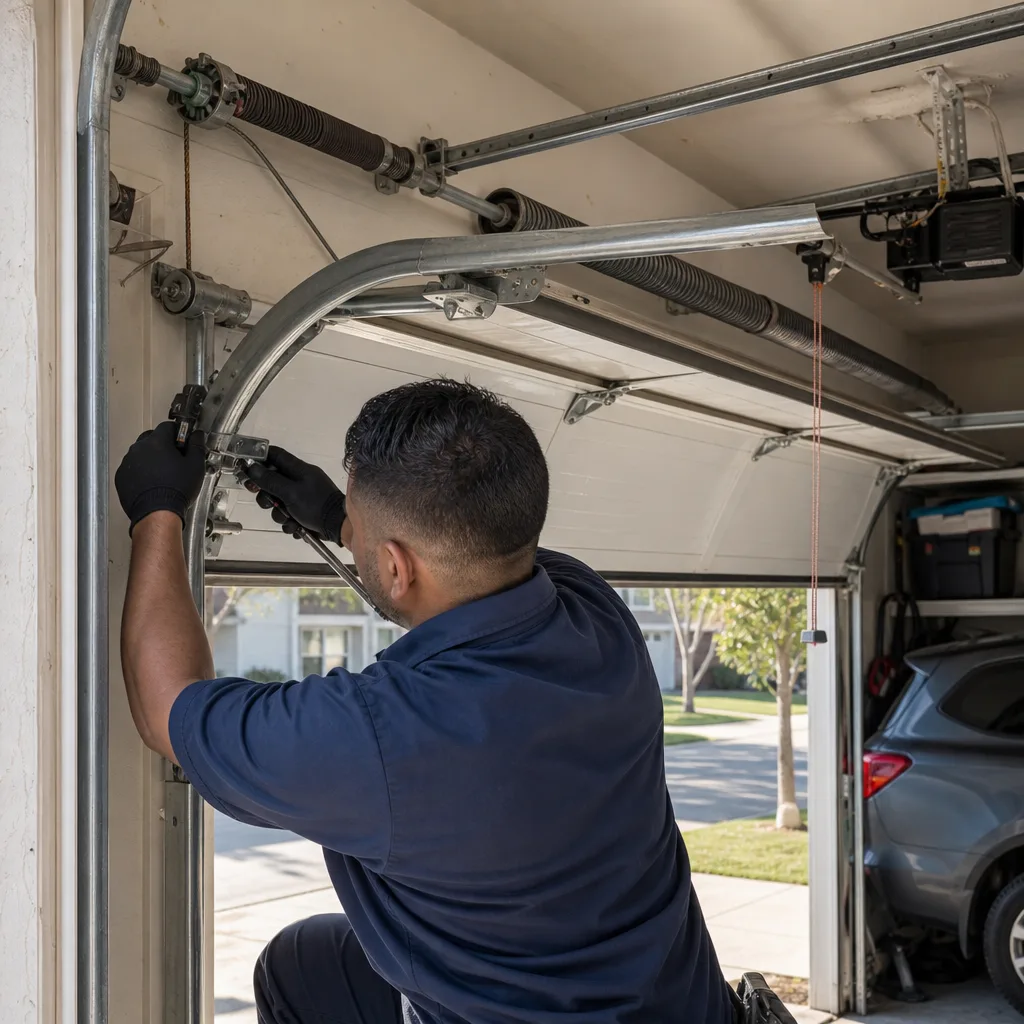 After
After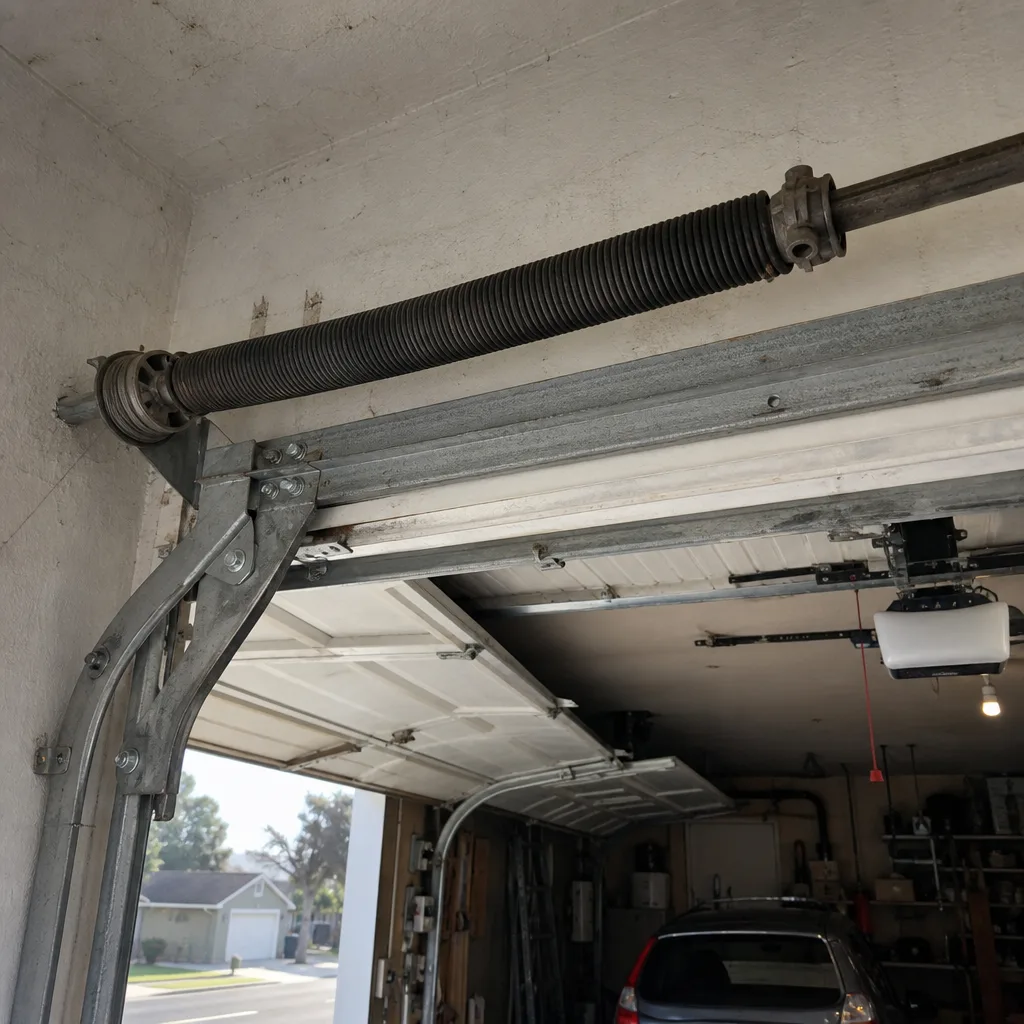 Before
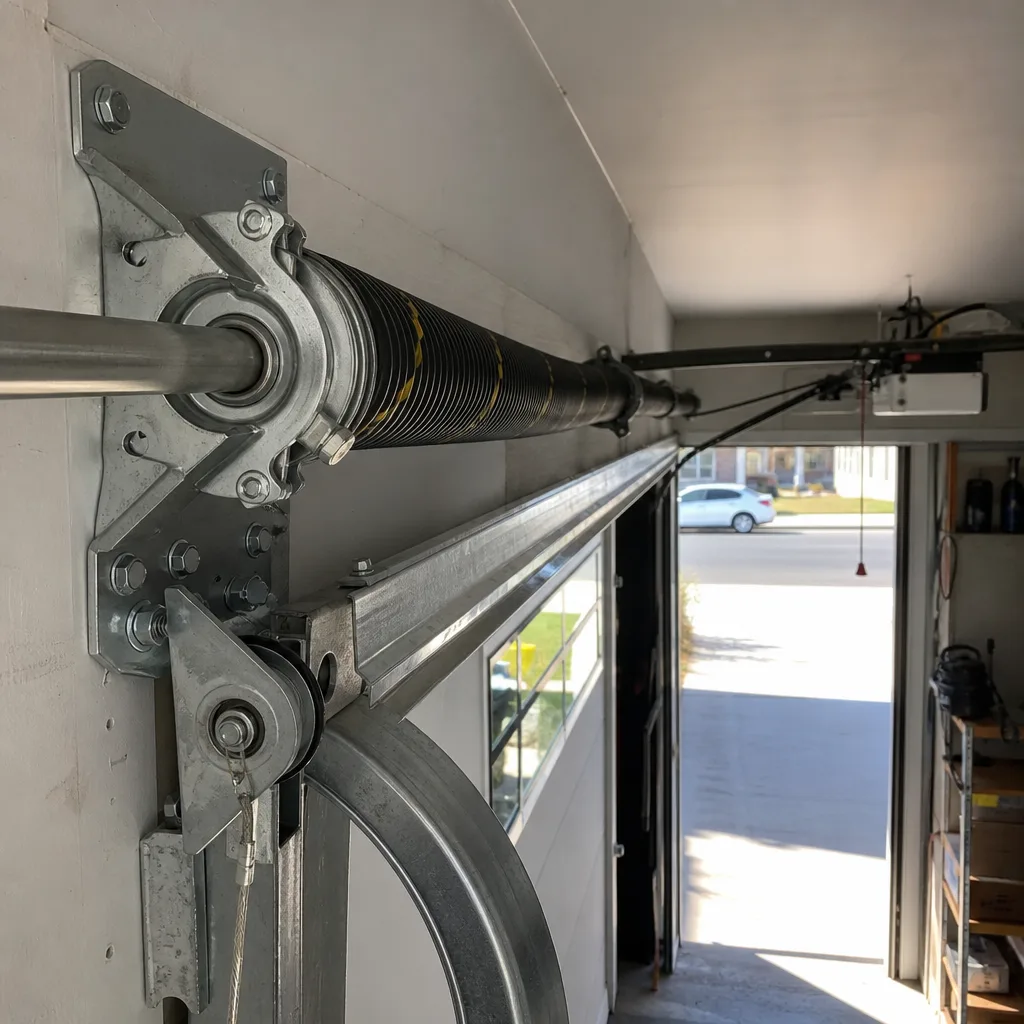 After
After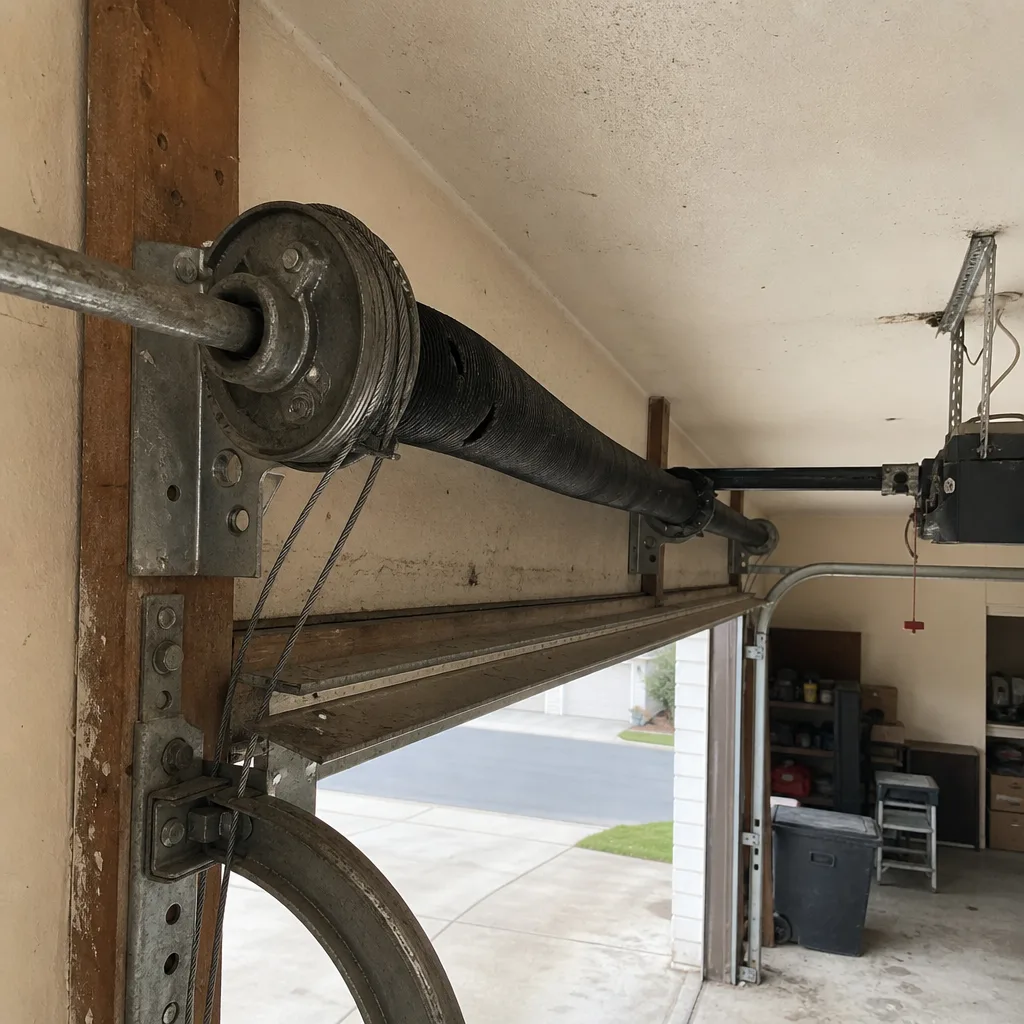 Before
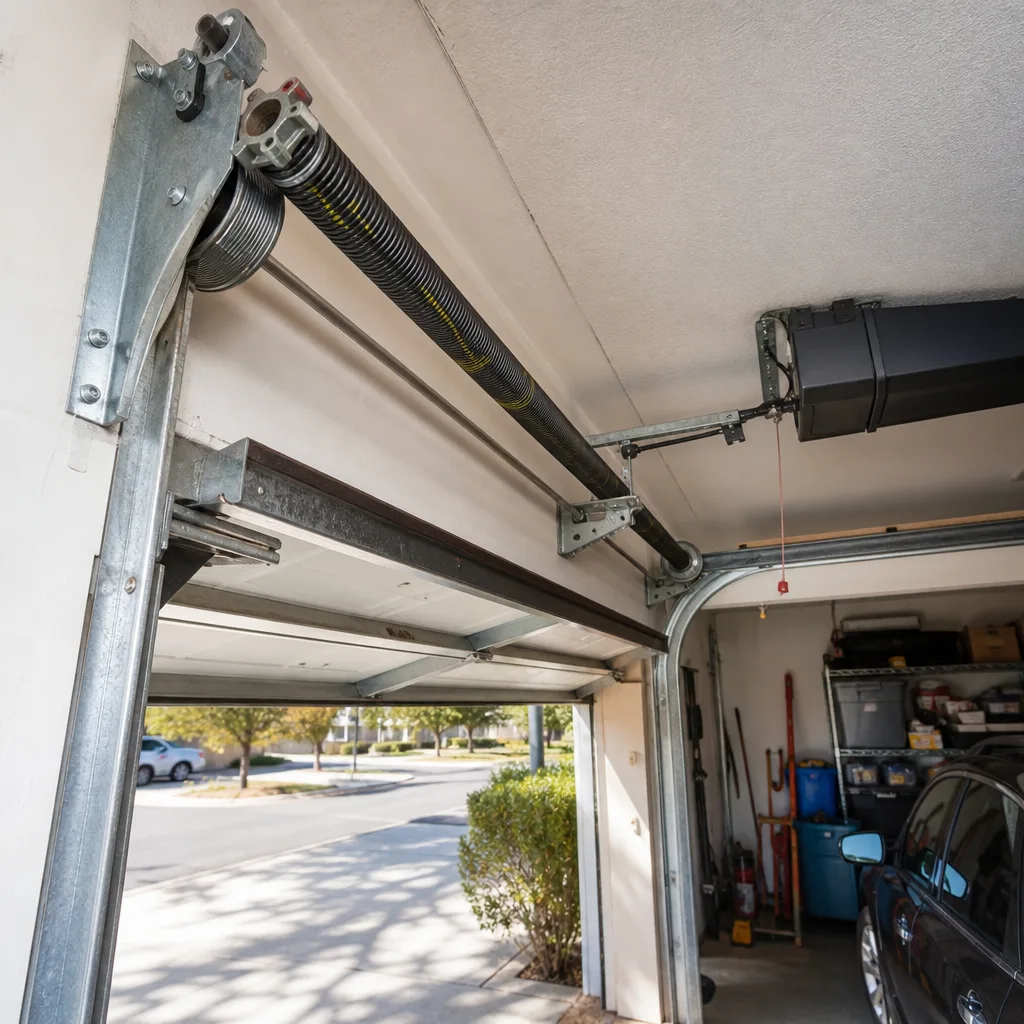 After
AfterThe Complete Guide to Garage Door in Ontario
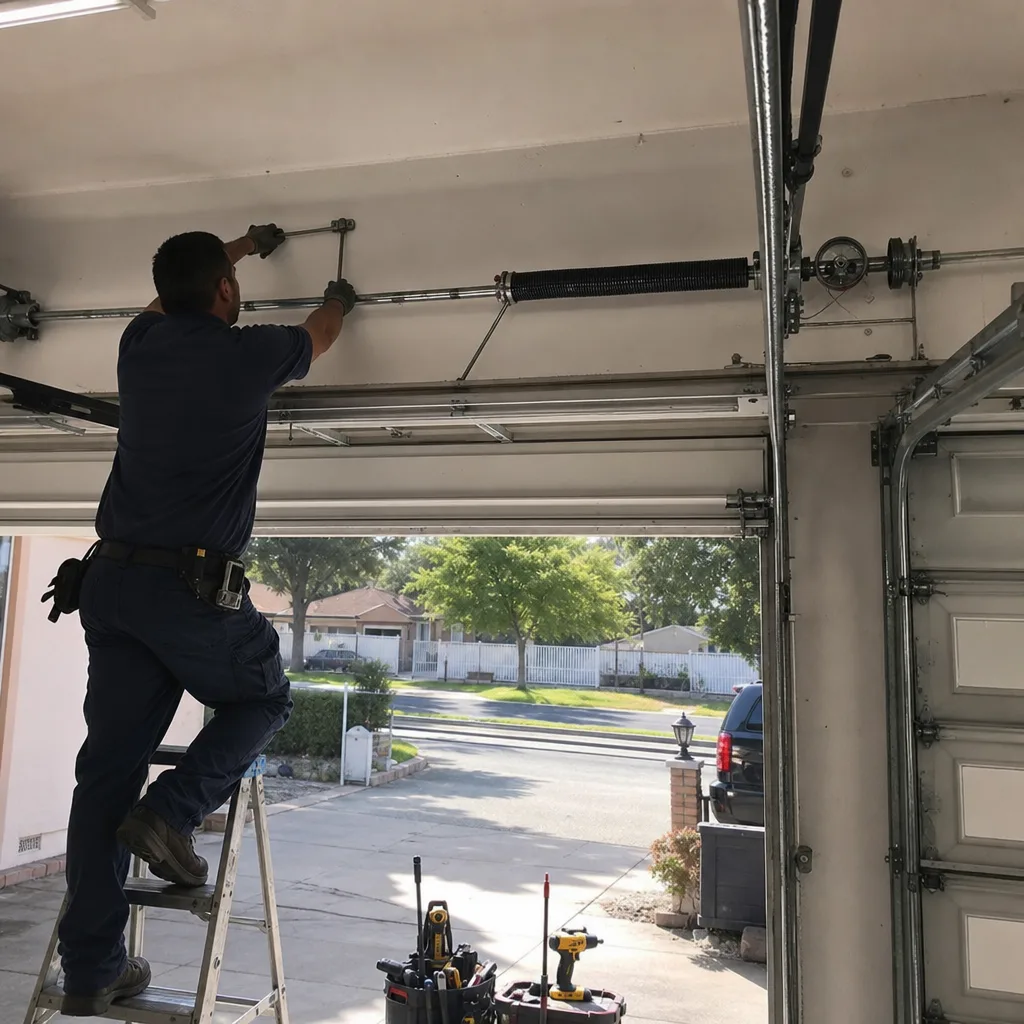
A torsion spring rated for 10,000 cycles will fail years early if it’s expanding and contracting through 50-degree daily temperature swings. That’s not a theoretical concern for Ontario, California homeowners. It’s a documented pattern we’ve tracked across thousands of service calls since 2015. Cold desert nights followed by triple-digit afternoons put stress on every metal component in your garage door system, and most manufacturer installation specs are written for milder climates. This guide maps each system component to the specific Inland Empire condition most likely to degrade it, so you know what to expect from your door before it fails.
Quick Answer
Garage door performance in Ontario, CA is shaped by three factors most guides ignore: daily temperature swings of 40 to 50 degrees, sustained UV exposure on south-facing and west-facing panels, and Santa Ana wind debris that damages weatherstripping and tracks. The result is that springs, rollers, and opener motors in Ontario typically need replacement 15 to 25 percent sooner than national averages. This guide covers cost ranges, component lifespans, material selection for local conditions, and when repairs can wait versus when they cannot. For related reading, see our DIY vs Professional Garage Door: The Ontario Homeowner’s Decision Guide.
Table of Contents
- How Ontario’s Climate Attacks Your Garage Door
- Torsion Springs: Cycle Ratings and What They Mean in the Inland Empire
- Panel Materials: Steel Gauge, Aluminum, and Composite Under Ontario UV Load
- Opener Motors: Horsepower, Torque, and Door Weight in the Real World
- Component-by-Component Lifespan Table for Ontario
- Commercial-Grade vs. Residential Hardware: When the Upgrade Makes Sense
- What Garage Door Work Actually Costs in Ontario
- Common Mistakes to Avoid
- When to Call a Professional
- Frequently Asked Questions
BeforeAfterHow Ontario’s Climate Attacks Your Garage Door
Ontario sits in the western Inland Empire, where summer highs routinely pass 100 degrees and winter nights can drop into the low 40s. That 50-degree swing happens within a single 24-hour period during spring and fall. Metal expands when heated and contracts when cooled. Your torsion spring, your tracks, your cables, and even the fasteners holding your hinges together go through this expansion-contraction cycle roughly 300 days a year.
What does that do in practical terms? The spring’s calibrated tension, set at installation for a specific door weight, drifts as the spring wire stretches and settles. A spring that started with ideal tension delivers slightly more or less lift force as it ages. That imbalance causes the opener to work harder, which shortens the motor’s life. It also causes the door to hang unevenly, which wears rollers and hinges at different rates. This is one of the most common failure progressions we see in Ontario homes.
Two other local factors matter. First, sustained UV exposure. Ontario’s average UV index runs high from April through October. South-facing doors, common on homes in the Cimmaron and Ranch at Ontario subdivisions, absorb direct sunlight for six to eight hours daily. That accelerates paint fade, delaminates composite panel edges, and breaks down the polymer compounds in weatherstripping. Second, Santa Ana wind events push fine dust and grit into tracks, roller bearings, and opener rails. Grit acts as an abrasive inside the system, accelerating mechanical wear.
What This Means for Your Door
- Annual track cleaning and roller inspection should be a non-negotiable maintenance item in Ontario, not an afterthought.
- Weatherstripping should be checked twice a year. UV exposure makes it brittle and cracked, which leads to air leaks and dust intrusion.
- A torsion spring that feels “soft” or causes the door to drift when released from the opener is not a minor issue. It is the first sign that the spring is losing tension, and it will get worse.
If you’re researching what to expect from your door over the next several years, start with the Garage Door Repair in Ontario guide, which covers the most common local repair scenarios and their real costs.
Torsion Springs: Cycle Ratings and What They Mean in the Inland Empire
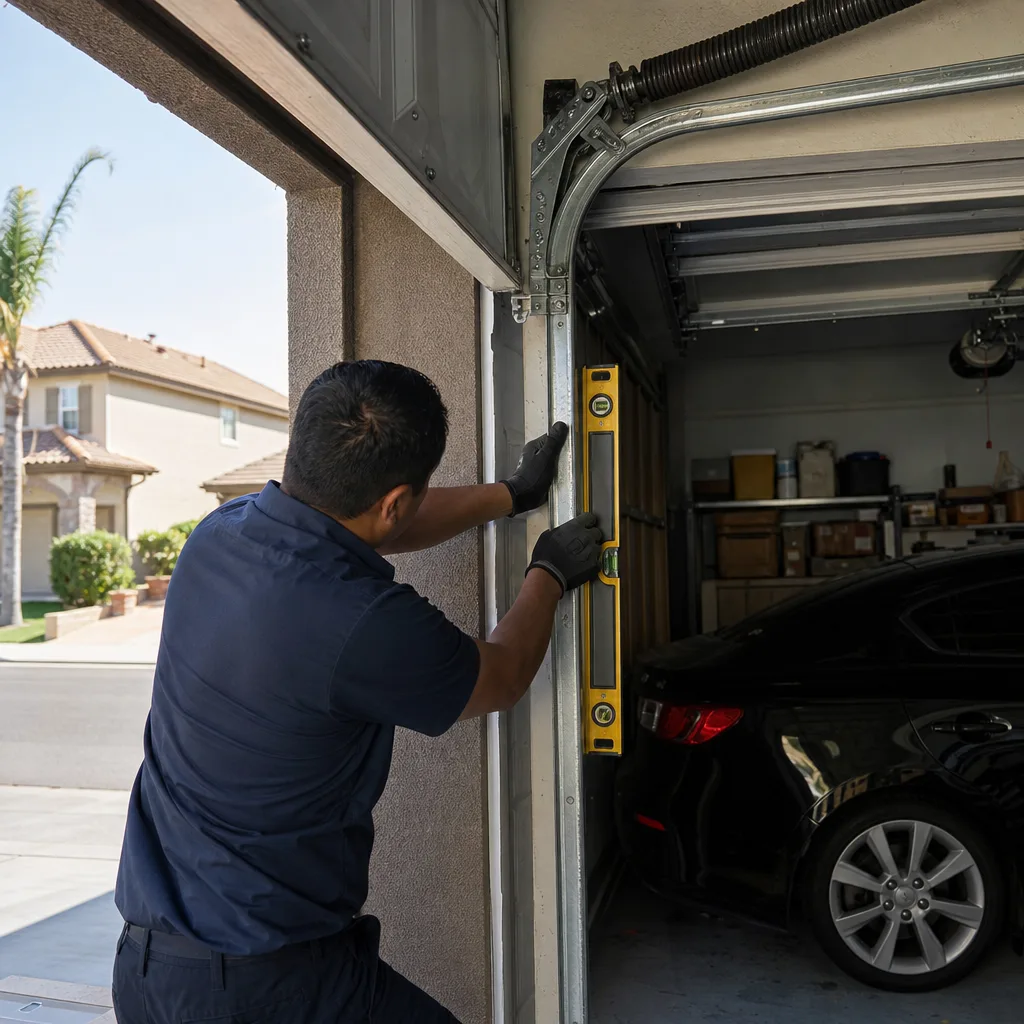
Every torsion spring has a cycle rating. A standard spring rated at 10,000 cycles is expected to last about 10,000 open-and-close operations. For most households that is seven to ten years. But cycle ratings assume a specific set of operating conditions: consistent temperature, clean rails, and a door that remains properly balanced. Ontario’s temperature swings violate the first assumption from day one.
When a spring expands and contracts daily, the wire fatigues at a faster rate than the laboratory cycle test predicts. We routinely see 10,000-cycle springs showing measurable wear at 6,000 to 7,000 cycles in Ontario. The spring still fails at the coil, but it gets there earlier. High-cycle springs rated for 25,000 or 50,000 cycles use a heavier wire gauge and different heat treatment, which gives them more resistance to metal fatigue from thermal cycling. For most Ontario homeowners, a 25,000-cycle spring is the practical sweet spot: it costs more upfront but delivers a meaningfully longer service life in this climate.
Signs Your Spring Is Failing
- The door feels heavy when opened manually. A correctly balanced door should lift with one hand and stay put at the halfway point.
- The door drops faster than normal when closing, or hesitates at certain points in the travel.
- You hear a loud bang from the garage. This is usually a spring breaking, not the door slamming. The two sounds are different.
- The door is visibly uneven, with one side sitting lower than the other when closed.
Torsion springs are under extreme tension. A broken spring can release stored energy with enough force to cause serious injury. Never attempt to adjust, repair, or replace a torsion spring yourself. If you see a visible gap in the spring coil or hear a snap from the garage, the spring has failed and you should call a trained professional. Servo’s technicians photograph the broken component before quoting any replacement, so you see exactly what failed. If you have a Servo Garage Doors Ontario home service need, the photo record is standard on every visit. That practice is not optional at Servo. It is Clause 4 of The Haven Standard, and it exists because you should not be asked to approve a replacement for a part you never saw.
Panel Materials: Steel Gauge, Aluminum, and Composite Under Ontario UV Load
Choosing panel material for a Ontario garage door means balancing heat absorption, UV resistance, and dent tolerance. The three common options perform differently here than they do in coastal or cooler markets.
Steel Panels
Steel remains the most common material for Ontario garage doors, and for good reason. A 24-gauge steel panel holds its shape, resists dents reasonably well, and accepts a wide range of paint finishes. The downside is heat. Dark steel doors in Ontario can reach surface temperatures above 140 degrees on a summer afternoon. That heat transfers into the garage interior, which matters if your garage is attached and you store temperature-sensitive items. A lighter paint color or an insulated steel door makes a measurable difference in interior temperature. In our experience, Ontario homeowners who choose dark, non-insulated steel doors without considering heat load often regret it by the third summer.
Aluminum Panels
Aluminum weighs less than steel and resists corrosion better, which matters in areas with sprinkler overspray or pool equipment adjacent to the garage. The trade-off is dent resistance. Aluminum panels dent more easily than steel, and in Ontario’s wind events, flying debris can leave marks that steel would shrug off. Aluminum is a reasonable choice for lighter-use doors or detached garages, but for a primary attached garage door in Ontario, steel generally offers better long-term value.
Composite Panels
Composite panels are constructed from a wood-polymer blend and hold paint well, which matters under Ontario’s UV load. The material does not warp or rot the way real wood does in dry, hot conditions. However, composite panels can delaminate at the edges after years of direct sun exposure, especially if the door faces south or west with no shade structure. If you choose composite, plan for edge sealing as part of annual maintenance.
Key Panel Selection Factors for Ontario
- South and west-facing doors accumulate more UV damage. Insulation and lighter paint colors offset some of the heat load.
- Steel gauge matters. 26-gauge is common on budget doors. 24-gauge or thicker resists dents better, which matters in windy conditions near the foothills.
- Insulated panels add weight. That weight affects spring sizing and opener motor selection, which is covered in the next section.
For homeowners planning a full replacement, the Garage Door Installation in Ontario guide explains how material selection, insulation, and spring sizing are matched on a project-by-project basis.
Opener Motors: Horsepower, Torque, and Door Weight in the Real World
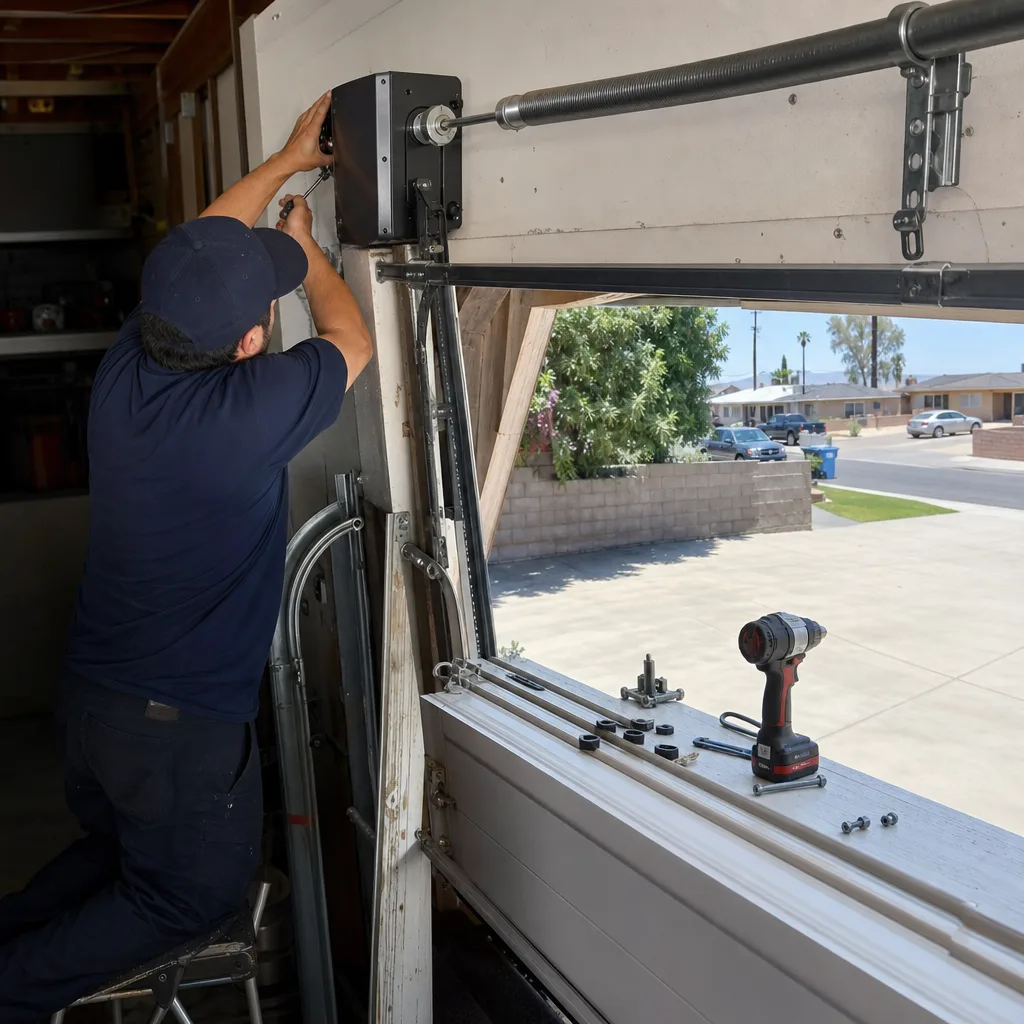
Most homeowners shop for an opener by horsepower. A 1/2 HP motor. A 3/4 HP motor. Maybe a 1 HP motor for a heavy door. But horsepower is only one variable, and in Ontario it is not the one that determines whether your opener lasts. The more relevant specification is the combination of motor torque and the gear ratio in the drive system.
Here is why. Your opener lifts the door weight plus the resistance created by tired springs, worn rollers, and dusty tracks. A door that originally weighed 150 pounds can effectively require 190 to 200 pounds of lift force as components age and weatherstripping and insulation are added. An opener’s HP rating tells you the motor’s peak output. Its gear ratio tells you how efficiently that output is applied to the lifting task. A quality opener from a brand like LiftMaster or Chamberlain with a 3/4 HP motor and a well-matched gear train will often outlast a budget 1 HP opener that uses cheaper gears and a weaker drive system.
Opener Selection by Situation
- Single-car door, standard weight: 1/2 HP is sufficient, but choose a model with a metal gear train. Plastic gears strip under repeated load cycling, and Ontario’s dust accelerates the process.
- Double-car door, insulated: 3/4 HP is the practical minimum. This covers most attached garages in Ontario subdivisions.
- Oversized or custom doors, heavy wood or composite: 1 HP or higher, ideally paired with a screw or belt drive engineered for heavy-duty use.
- Any door with added insulation or weatherstripping: Recalculate lift force. Adding 30 pounds of insulation to an existing door does not change the spring rating, but it does increase the force the opener must apply every cycle.
If your opener is struggling, the issue may not be the motor at all. It may be a spring that has lost tension or a door that is out of balance. A proper diagnosis starts with checking the door’s balance with the opener disengaged. For more detail, see our Garage Door Opener Repair & Installation in Ontario page, which covers motor diagnostics, logic board failures, and the replacement process step by step.
Component-by-Component Lifespan Table for Ontario
Manufacturer lifespan estimates are averages across all North American climates. The table below reflects what we consistently observe in Ontario service data, accounting for local temperature swings, UV exposure, and wind-driven grit.
| Component | Manufacturer Average | Ontario Observed Range | Primary Local Stress Factor |
|---|---|---|---|
| Torsion spring, 10K cycle | 8-12 years | 6-9 years | Temperature swing fatigue |
| Torsion spring, 25K cycle | 15-20 years | 12-16 years | Temperature swing fatigue |
| Galvanized track | 20+ years | 15-20 years | Dust abrasion from Santa Ana winds |
| Nylon rollers | 10-15 years | 8-12 years | Grit in bearings, UV on nylon |
| Steel rollers | 15-20 years | 12-15 years | Bearing wear from dust |
| Weatherstripping | 3-5 years | 2-4 years | UV breakdown, dry heat |
| Logic board / opener electronics | 10-15 years | 8-12 years | Heat build-up in garage interior |
| Cables | 10-15 years | 8-12 years | Cycle fatigue, abrasion at pulleys |
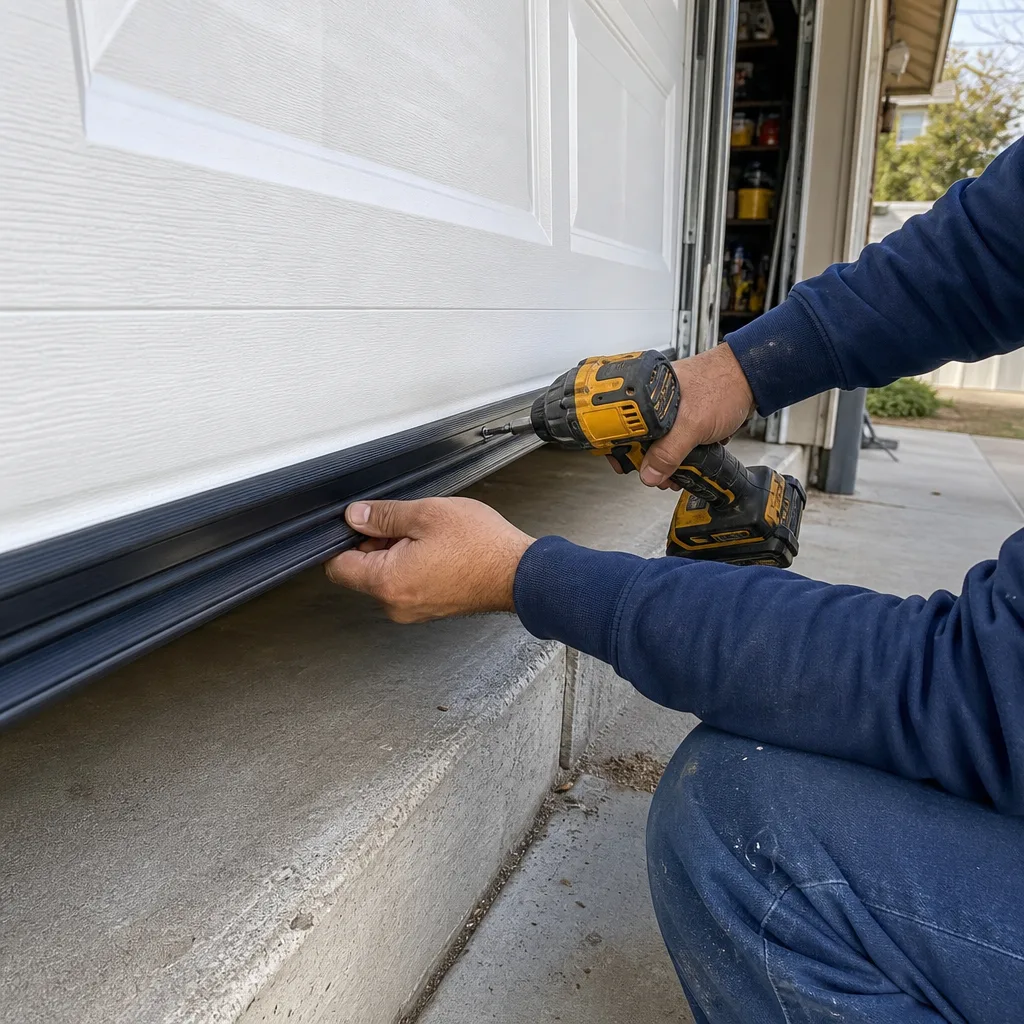
Cables deserve a specific note. Garage door cables look like the cables on a bike brake, but they are under far higher tension. A fraying cable is a failure waiting to happen, and when a cable breaks, the door can drop suddenly. If you see frayed strands or the cable pulling away from the drum, stop using the door and call a professional. Cables should be inspected whenever the door is serviced, not just when something breaks.
Commercial-Grade vs. Residential Hardware: When the Upgrade Makes Sense
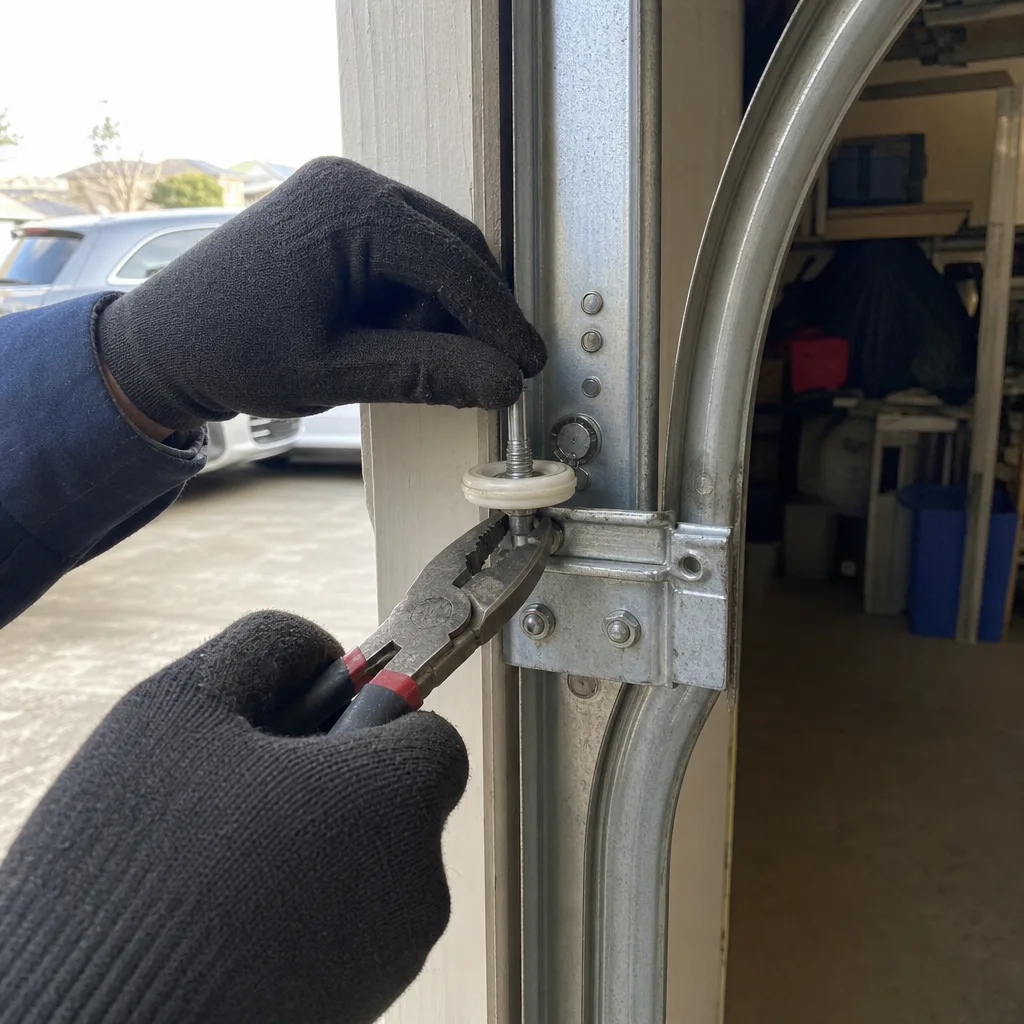
Most residential garage door hardware is engineered for a specific weight range and usage frequency, typically two to four open cycles per day. Commercial-grade hardware uses heavier gauge steel tracks, reinforced hinges, and larger end bearings designed for continuous cycling. The question is when an Ontario homeowner should spend the extra money.
The answer depends on three factors: door size, usage frequency, and location. Homes in industrial-adjacent neighborhoods in Ontario, such as areas near the airport or the 60 and 10 freeway corridors, accumulate dust faster than homes in the residential interior. Larger garages, the three-car and sometimes four-car configurations common in newer Ontario developments in the Ontario Ranch area, put more stress on tracks and hinges because the door itself weighs more and spans a wider opening.
Signs You Might Need an Upgrade
- You open and close the door more than six times per day. Home businesses, hobby workshops, and multi-driver households hit this threshold quickly.
- Your door is oversized, typically 18 feet wide or more, and the current hinges show visible sag.
- You replaced the door but kept the original track. Mismatched components fail early.
- The garage faces an unpaved lot, the freeway, or any source of persistent airborne grit.
An upgrade does not necessarily mean replacing every component. Often it means upgrading the rollers to sealed-bearing commercial units, installing heavier hinges at the stress points, and using a commercial-grade track system rated for the door’s actual weight. The cost is higher, but so is the service life. For Ontario homeowners who plan to stay in the house for another 10 years, the upgrade usually pays for itself in avoided failures.
What Garage Door Work Actually Costs in Ontario
Written pricing is the only pricing that matters. A verbal estimate over the phone is a guess. A written price with a written scope, delivered before any work starts, is the only way to know what a job will actually cost. That is not just good practice. It is how Servo operates, and it is Clause 1 of The Haven Standard.
The ranges below reflect current Ontario market rates for typical residential work. They are not quotes. They are reference points so you can recognize a fair number when you see one.
Typical Ontario Price Ranges
- Spring replacement (single spring): $180 to $340, depending on spring size and cycle rating
- Spring replacement (pair): $280 to $550, with 25,000-cycle springs at the higher end
- Opener motor replacement (parts and labor): $380 to $720, depending on brand and drive type
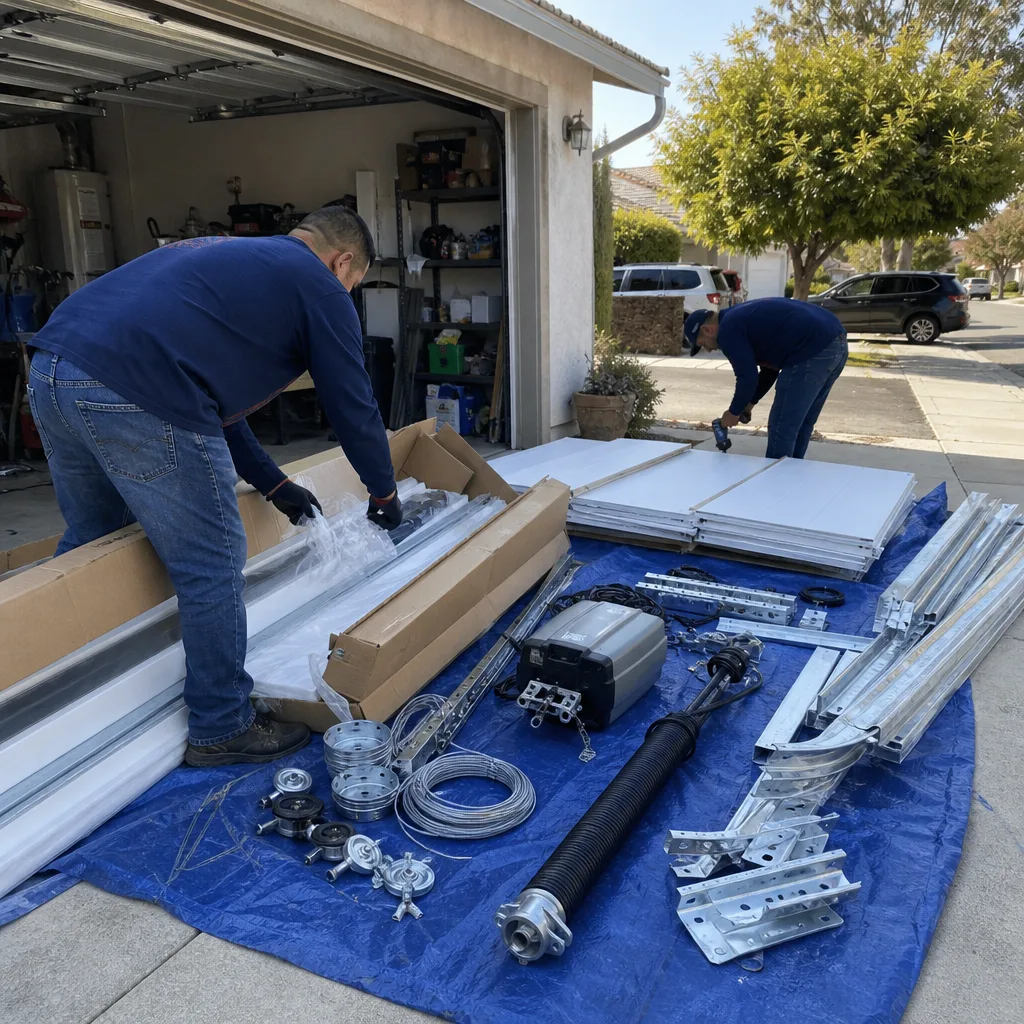
- Full door replacement (standard 16-foot, basic steel): $1,200 to $2,400 installed
- Full door replacement (insulated, higher-end finish): $2,400 to $4,000 installed
- Weatherstripping replacement: $90 to $180 per door
- Emergency service call (after hours): $150 to $300 trip charge, plus repair work
Every one of these prices should be confirmed in writing before the technician touches the door. If a company will not give you a flat number before starting, keep looking. That is not a negotiable nicety. It is the difference between a bill you planned for and a bill you fight.
Servo also offers a free second opinion on any written estimate from another company. Bring the paperwork. We document what we find and quote our own price against it. No coupon, no code, no fine print.
Common Mistakes to Avoid
- Ignoring a door that drifts when released from the opener. A balanced door stays put. A door that drifts open or closed has a spring tension problem that will only get worse, and it will take the opener gears with it.
- Buying the cheapest spring available. A 10,000-cycle spring from a budget supplier will fail measurably sooner in Ontario’s temperature swings, and you will pay for labor twice.
- Lubricating the entire track. The track should stay clean and dry. Lubricant belongs on the rollers, hinges, and spring. Spraying the track attracts dust, and in Ontario’s Santa Ana season that dust turns into a grinding paste.
- Replacing the opener when the real problem is the spring. A tired opener is often a symptom. Diagnose the door balance and track condition before spending $500 on a new motor.
- Skipping insulation because the garage is detached. Detached garages in Ontario still get brutally hot. Insulated panels and proper weatherstripping protect whatever you store, including car batteries and paint.
- Accepting a quote that changes after the technician starts work. If the price is not written down before work begins, you have no basis to object when the number grows. Walk away from any company that will not commit to a number in advance.
When to Call a Professional
A broken torsion spring is not a repair project. The tension stored in the spring is enough to cause serious injury if released incorrectly, and correct replacement requires winding bars, exact spring sizing, and recalibration of door balance. If your spring is broken, the door is off the tracks, or a cable has snapped, stop using the door and call a professional. The same applies to any diagnosis involving the opener’s control board or power supply.
Servo Garage Doors Ontario offers free estimates in Ontario. Call (951) 470-2012 and a live person answers, not a recording. The technician documents what they find with photos, quotes a flat price in writing before any work starts, and you receive a photo record when the job is done. That is the way it works on every visit, no exceptions.
Frequently Asked Questions
Spring replacement in Ontario typically costs $180 to $340 for a single spring and $280 to $550 for a pair, with 25,000-cycle springs at the higher end. Most spring replacements are completed in one visit. Call (951) 470-2012 for a written quote before any work starts.
An insulated steel door in a light color offers the best balance of heat resistance, UV durability, and dent tolerance for Ontario’s climate. Dark colors absorb more heat, and composite panels can delaminate at the edges after years of direct sun. A free estimate can help you compare panel options for your specific orientation.
Yes, in most cases. Spring replacements, roller replacements, and weatherstripping jobs are typically completed the same day. Opener replacements may require ordering a specific model if your current unit is uncommon. Call (951) 470-2012 and a live person will tell you what is possible today.
Not at Servo. The written price and written scope are delivered before any work starts, and that is the price you pay. If the technician finds an additional issue during the job, we stop, show you the evidence, and get written approval before doing anything beyond the original scope. Clause 1 of The Haven Standard requires it.
Yes. Servo trucks carry the most common spring sizes, rollers, hinges, weatherstripping, and opener components for the brands we service, so most repairs are completed in one trip. In the rare case a part is not on the truck, we get it and return, and you know that before the technician leaves.
Every 12 months is the right interval for most Ontario homes. Annual service should include track cleaning, roller and hinge inspection, spring tension assessment, and weatherstripping replacement when needed. Homes in dusty areas near the freeway or airport corridors may benefit from twice-yearly track cleaning. Call (951) 470-2012 to schedule a maintenance visit.
The Bottom Line
Garage door systems in Ontario fail differently than they do in milder climates. Temperature swings fatigue springs early. UV exposure breaks down weatherstripping and panel finishes. Wind-driven dust accelerates wear on tracks and rollers. Understanding those local failure patterns lets you plan for maintenance and replacement instead of being surprised by them. Explore more guides & resources to stay ahead of common issues. The single most important protection you have as a homeowner is a written price before any work starts. If a company will not put the number in writing, that is all you need to know. Servo has operated in Ontario since 2015 under that rule, and it has never been optional here. It is Clause 1 of The Haven Standard, and it matters more than any other promise a garage door company can make.
Written by Marcus Deller, Owner at Servo Garage Doors Ontario, serving Ontario since 2015.